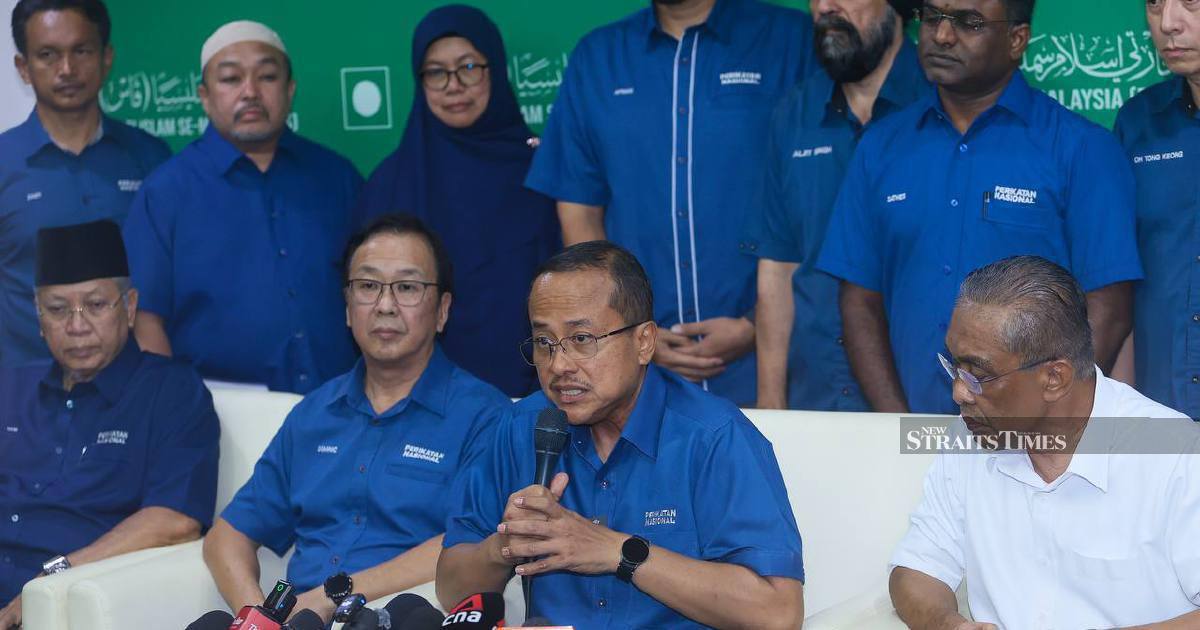
Perikatan Nasional (PN) has expanded its coalition membership by formally accepting two new political parties, PN chairman Datuk Seri Dr Ahmad Samsuri Mokhtar announced following an emergency Supreme Council meeting in Kuala Lumpur. The decision represents a strategic broadening of the opposition bloc's parliamentary and grassroots presence, though the move comes against a backdrop of unresolved internal disagreements that continue to cloud the coalition's unity.
The expansion adds fresh momentum to PN's efforts to strengthen its institutional footprint ahead of what is widely expected to be a closely contested general election cycle. The identity of the two incoming parties has not been disclosed, leaving room for speculation about the strategic calculations that drove their incorporation into the coalition structure. Entry into PN typically signals alignment with the coalition's broader political platform, though individual parties retain significant autonomy over their own constituencies and voter bases.
Yet the timing of the expansion carries particular significance given the coalition's ongoing internal fractures. Rather than seizing the moment to resolve fundamental disputes, PN's leadership opted to postpone discussion of two critical contentious matters: the controversial Wawasan concept and the proposed redesign of the coalition's logo. These issues have emerged as flashpoints within the alliance, reflecting deeper disagreements about PN's political direction and public identity.
The Wawasan initiative—which represents PN's articulated vision for national governance and policy priorities—has generated considerable debate within the coalition over its scope, messaging, and alignment with individual parties' political philosophies. Similarly, proposals to modify the coalition's logo have sparked sensitivities related to symbolism, party representation, and the visual messaging that PN projects to voters. By deferring these discussions, the Supreme Council signalled a preference for incremental coalition-building over confronting the ideological and strategic tensions that simmer beneath the surface.
For Malaysian political observers, the sequence of events underscores a pattern within PN's operational approach: the coalition prioritises administrative expansion and membership consolidation while postponing substantive policy and structural negotiations. This strategy carries both tactical advantages and inherent risks. On one hand, admitting new parties without simultaneously resolving divisive issues allows PN to demonstrate momentum and growth without triggering fresh disputes that could derail negotiations.
On the other hand, the deferral approach risks allowing unresolved tensions to calcify, potentially hardening positions on the Wawasan and logo matters as individual parties invest political capital in defending their preferred outcomes. Coalition partners who have mobilised supporters around particular visions for the logo or Wawasan may face pressure from their respective party bases to achieve tangible results, making future compromise increasingly difficult.
The decision by Ahmad Samsuri to publicly acknowledge that these matters were not discussed demonstrates a degree of transparency about PN's internal constraints. Rather than obscuring the deferral behind vague communiques, the PN chairman explicitly confirmed that the Supreme Council chose not to tackle these issues at this particular juncture. This candour may reflect confidence that the coalition possesses sufficient flexibility to address these matters later, or alternatively, an acknowledgment that the disagreements currently lack sufficient resolution pathways to warrant high-level discussion.
Within Southeast Asia's broader political landscape, PN's coalition dynamics merit attention from observers of multi-party alliance politics. Malaysia's opposition bloc operates in a context where smaller parties wield disproportionate negotiating leverage due to Malaysia's first-past-the-post electoral system, where narrow seat counts can determine coalition viability. The willingness of new parties to join PN despite unresolved internal disputes suggests that prospective members perceive sufficient value in coalition membership to justify the attendant risks and uncertainties.
For Malaysian voters and stakeholders, the expansion raises questions about PN's coherence as a unified political force. If the coalition struggles to align on fundamental matters of vision and symbolism, how effectively can it articulate a compelling alternative governance narrative to voters? The postponement of these discussions may buy time operationally, but it does not eliminate the underlying need for PN to eventually crystallise its identity and strategic direction.
The coming weeks and months will prove revealing about PN's trajectory. If the coalition manages to address the Wawasan and logo issues through structured dialogue and compromise, the expansion may be viewed as a calculated step before resolving internal matters. Conversely, if these disputes remain unresolved indefinitely, the new party admissions may come to be seen as cosmetic changes that masked deeper organisational fragmentation.
Political analysts will continue monitoring how PN calibrates its coalition-building efforts against the simultaneous imperative to present voters with a coherent political alternative. For now, the emergency Supreme Council meeting has achieved its immediate objective—admitting new members—while leaving PN's fundamental questions about identity and vision deferred to an unspecified future date.