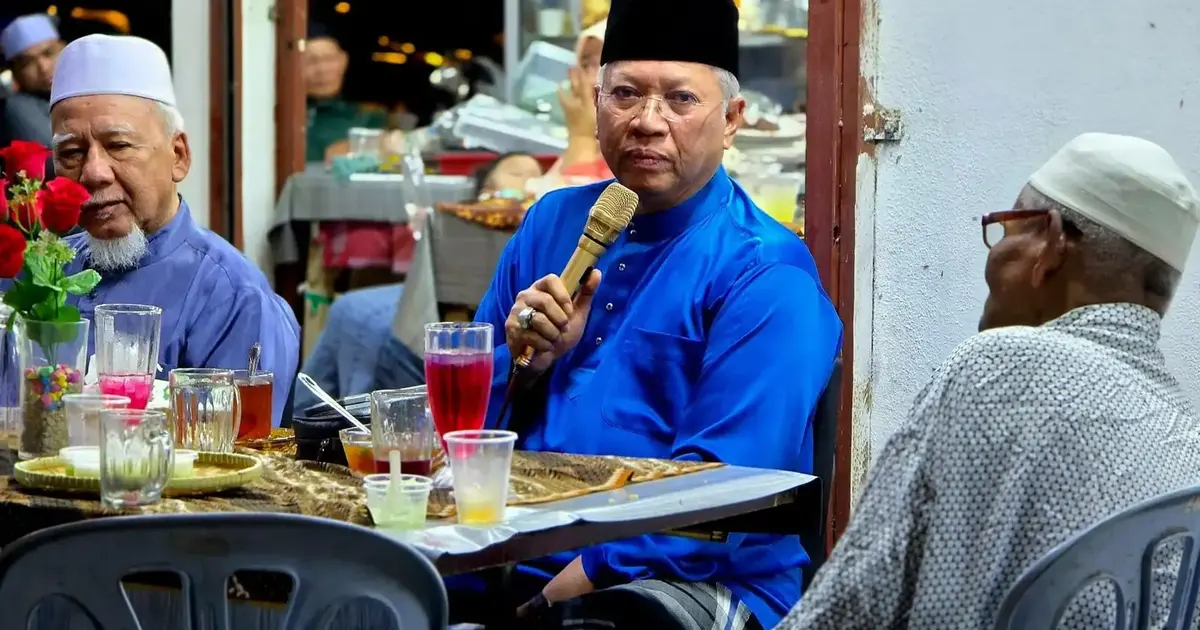
Internal tensions have surfaced within the Perikatan Nasional coalition as seat allocation disputes threaten to derail unity ahead of the Negeri Sembilan state election. Annuar Musa, serving as PAS's information chief, has publicly stated that the coalition cannot practically accommodate Bersatu's request for 15 seats in the state assembly, raising questions about the stability of the opposition bloc and its ability to present a consolidated front to voters.
The demand from Bersatu represents a significant portion of Negeri Sembilan's total state assembly seats, which would substantially limit the allocation available to other coalition partners including PAS and other participating parties. This geographic concentration of seats in a single state reflects broader calculations within Bersatu leadership about strengthening its foothold in peninsular Malaysia, particularly in states where the party has shown electoral potential or retains organizational infrastructure from previous contests.
Annuar's blunt assessment that such an arrangement is unfeasible underscores the practical constraints that coalition builders face when assembling electoral alliances. Unlike tightly controlled parties with hierarchical command structures, multi-party coalitions must negotiate and balance competing interests across different party organizations, membership bases, and regional power structures. The public nature of Annuar's statement suggests that behind-the-scenes negotiations have reached an impasse, with PAS unwilling to compromise further.
For Malaysian observers, the Negeri Sembilan dispute illuminates the inherent fragilities within PN as a coalition construct. Though PN achieved electoral success during the 2022 general election, its components—PAS, Bersatu, Perikatan Selangor ally, and smaller parties—maintain distinct organizational identities, political agendas, and territorial ambitions. Seat allocation negotiations are never merely technical exercises; they reflect deeper questions about party hierarchy, resource distribution, and which components will dominate policy directions in any subsequent state government.
Bersatu's assertiveness in demanding premium seat allocations reflects the party's efforts to rebuild political relevance following its poor showing in certain constituencies during recent elections. Under Muhyiddin Yassin's leadership, Bersatu has attempted to position itself as a significant player within PN's framework, but its actual electoral machinery remains limited compared to PAS's extensive grassroots organization across rural and semi-urban constituencies. The party's demands may thus exceed its actual capacity to contest and win seats in Negeri Sembilan, creating arithmetic problems for coalition planners.
Negeri Sembilan itself represents a microcosm of Malaysian electoral competitiveness. The state has shifted between federal coalition control and opposition influence in recent electoral cycles, with neither bloc commanding overwhelming dominance. A coalition campaign marred by visible discord over seat divisions risks appearing amateurish to voters already fatigued by frequent political volatility. In contrast, the ruling federal coalition, while its own coalitional mechanics are complex, benefits from the cohesion advantages that come with actual control of government resources and machinery.
The timing of public disagreement over seat allocation is particularly damaging because it occurs during the preparation phase before formal nomination and campaigning periods commence. Undecided voters and swing constituencies in Negeri Sembilan will interpret coalition infighting as weakness, potentially shifting their calculations toward the incumbent administration's stability narrative. In state elections where individual candidate quality and local issues carry particular weight, such divisive signals at the coalition level can erode momentum in marginal constituencies.
Bersatu's demands also require understanding in the context of intra-PN dynamics beyond Negeri Sembilan. If PAS concedes substantially higher seat allocations to Bersatu in this state, it establishes precedents that other coalition partners may invoke in future electoral negotiations across different states. Annuar's public rejection of Bersatu's bid thus serves a dual purpose: it addresses immediate Negeri Sembilan circumstances while signaling to all coalition partners that PAS will not accept unreasonable allocation demands that undermine the broader coalition arithmetic.
The dispute raises substantive questions about whether PN possesses the organizational maturity to function effectively as a coalition at the state level. Successful multi-party coalitions typically establish clear allocation mechanisms, agreed-upon formulas, or respected arbitration processes to resolve seat division disputes. If PN continues to hash out such disputes publicly rather than through internal mechanisms, it suggests the coalition lacks institutional development and established protocols—weaknesses that become especially problematic when electoral campaigns demand unified messaging and coordinated strategy.
Looking forward, the Negeri Sembilan situation will likely influence how PN approaches seat negotiations in other upcoming state elections. If the impasse results in a compromise that satisfies both parties, observers will watch whether any established principles emerge that could guide future allocations. Conversely, if negotiations collapse and result in Bersatu contesting independently or in partial coalition arrangements, it would represent a significant fracturing within the opposition bloc and signal broader fragmentation risks ahead.
For Malaysian voters and political analysts tracking coalition stability, the Annuar-Bersatu exchange provides a candid window into the operational tensions within PN. While such disputes are normal in any multi-party alliance, their public airing—rather than discrete resolution—reflects confidence deficits that could ultimately undermine PN's electoral prospects not just in Negeri Sembilan but across multiple state-level contests scheduled in coming years.

