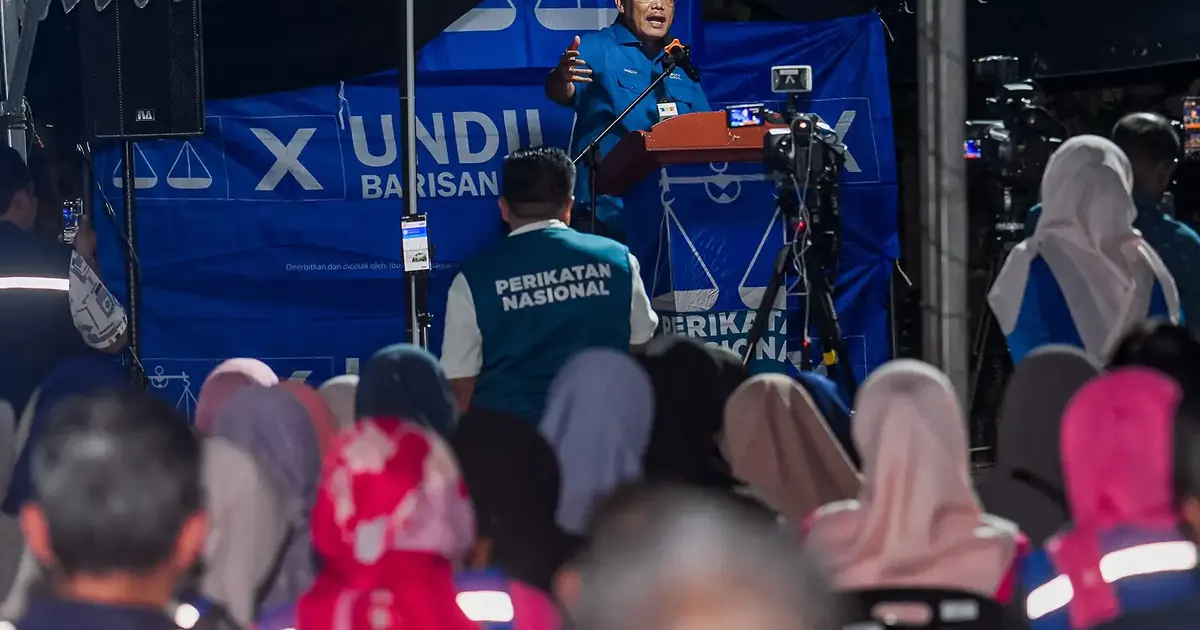
Perikatan Nasional has proposed calling its electoral alliance with Barisan Nasional 'Perikatan Barisan Nasional', signalling a formal consolidation of the political pact that could reshape Malaysia's coalition landscape ahead of the Negeri Sembilan state election on August 1. The move represents a significant step toward unified branding, as the two coalitions seek to present a cohesive front to voters in the state.
Wawasan president confirmed that PN has granted BN the lead role in forming and helming the Negeri Sembilan state government should their joint coalition secure victory at the ballot box. This arrangement underscores the strategic understanding between the two blocs and clarifies the power-sharing framework that underpins their electoral collaboration. The decision also reflects calculated negotiations within PN's leadership hierarchy regarding which coalition partner would take the chief minister's post if they prevail.
The unified nomenclature 'Perikatan Barisan Nasional' carries symbolic weight beyond the immediate Negeri Sembilan contest. By merging the identity of both coalitions into a single branded entity, PN-BN aims to signal permanence and institutional legitimacy to Malaysia's fractious electorate. This branding strategy reflects lessons learned from previous short-lived or ineffective coalition arrangements, where unclear command structures and unclear power-sharing formulas undermined voter confidence and internal cohesion.
Negeri Sembilan presents a particularly significant testing ground for the PN-BN partnership. The state, strategically positioned between Kuala Lumpur and the southern states, has traditionally been a competitive electoral battleground where control frequently shifts between coalitions. A strong showing here would vindicate the partnership's strategy and potentially serve as a template for similar arrangements in future state contests or even at the federal level.
For Barisan Nasional, the agreement to chair the state government offers tangible validation of its political relevance. Despite retaining pockets of state-level authority, BN's electoral fortunes have flagged considerably since the 2018 federal election. This arrangement in Negeri Sembilan provides BN with a concrete opportunity to demonstrate governance capacity and rebuild its reputation among voters who have drifted toward rival coalitions over recent years.
Perikatan Nasional's willingness to cede the chief minister position in Negeri Sembilan, despite being the larger or more dominant coalition in certain contexts, reflects pragmatic coalition mathematics. PN leadership evidently calculated that securing legislative majorities and ministerial portfolios across multiple dimensions outweighs the symbolic value of holding the top executive post in this particular state. This flexibility within PN's negotiating stance could signal receptiveness to similar power-sharing arrangements elsewhere, depending on local political configurations.
The August 1 election will test whether Malaysian voters respond positively to unified coalition branding and clear power-sharing arrangements. Public fatigue with political uncertainty and coalition fragmentation has grown substantially in recent years. A successful PN-BN showing in Negeri Sembilan could demonstrate that voters reward coalitions that communicate transparent governance frameworks and present coherent visions to the electorate.
However, the PN-BN partnership also confronts internal challenges that the simple act of rebranding cannot automatically resolve. Ideological tensions persist between components of PN and BN, and territorial disputes over candidate selection could generate friction before nomination day. Grassroots members from both coalitions may harbour reservations about merging identities or accepting subordinate roles to rival partners. Campaign messaging must navigate these sensitivities while maintaining the appearance of unity.
The naming of the pact as 'Perikatan Barisan Nasional' essentially privileges alphabetical ordering while grammatically treating the entire entity as a single political formation rather than a temporary tactical alliance. This nomenclature choice carries subtle implications about the durability and institutional permanence that both coalitions attribute to their partnership. Whether this unified branding persists beyond the Negeri Sembilan contest will depend heavily on the electoral outcome and the satisfaction of component parties with their respective allocations of power and portfolio positions.
Regionally, Malaysia's evolving coalition dynamics carry implications for Southeast Asian electoral politics more broadly. The PN-BN arrangement demonstrates how fragmented political landscapes eventually consolidate through negotiated partnerships, though not always along ideologically coherent lines. Observers elsewhere in the region watch closely as Malaysian coalitions experiment with new power-sharing frameworks and institutional designs that might offer lessons or cautionary tales for their own multi-party environments.

