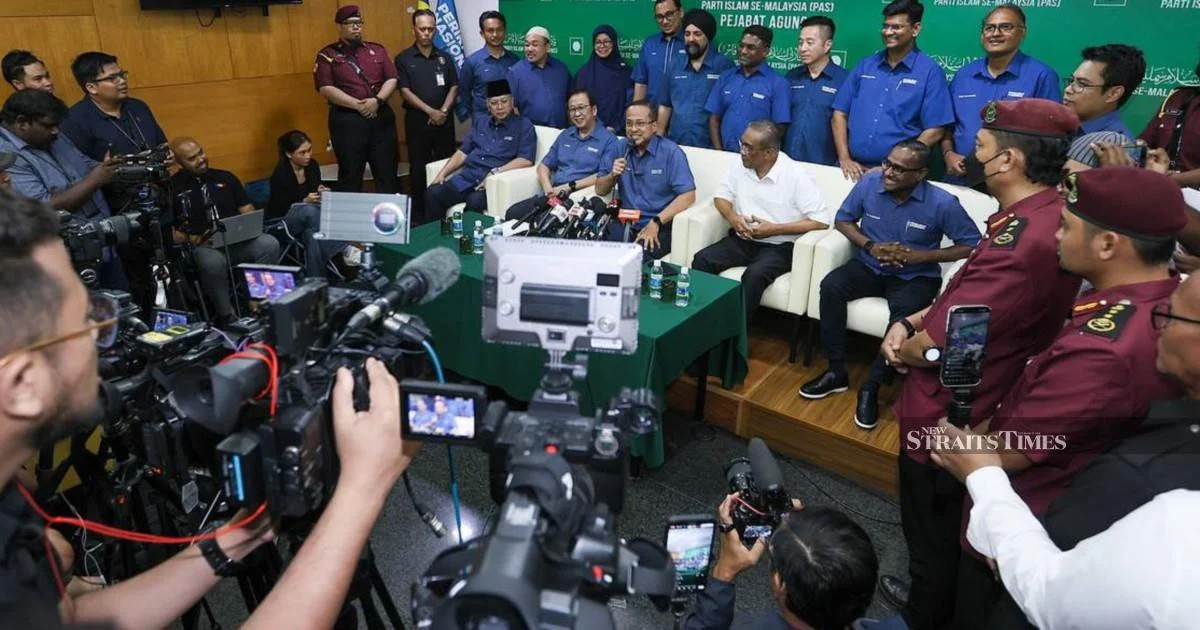
Perikatan Nasional's leadership is convening a special session today in Kuala Lumpur to conclude protracted discussions over seat distribution for the upcoming Johor state election, marking a critical juncture for the opposition coalition's electoral strategy in one of Malaysia's most politically significant states.
The decision to hold the meeting signals an end to weeks of deliberation among PN's constituent parties, which include Parti Islam Se-Malaysia (PAS), Bersatu, and other affiliated organisations. These internal negotiations have involved detailed discussions about which coalition members should contest which seats, balancing factional interests while attempting to maximise the bloc's competitive position against both the ruling Barisan Nasional and Pakatan Harapan.
Johor represents strategic territory for PN's broader political ambitions. The state has traditionally been a stronghold for UMNO and Barisan Nasional, but recent electoral shifts and internal UMNO divisions have created openings for the opposition. A strong performance in Johor would reinforce PN's credibility as a serious alternative government and provide momentum for future national contests.
For Malaysian readers, this allocation process underscores the complex mechanics underlying coalition politics. Unlike single-party systems, multi-party coalitions must negotiate constantly over spoils such as parliamentary and state assembly seats. These distributions often reflect not just strategic considerations but historical grievances, intra-coalition power dynamics, and the leverage individual parties can exert within the broader alliance.
PAS, as PN's largest component by membership and an experienced state administrator in Kedah and Terengganu, typically commands substantial seat allocations. Bersatu, while smaller and newer, carries weight because of its historical links to key personalities and its presence in multiple states. Balancing these interests without triggering public recriminations or resignations requires careful choreography.
The timing of today's meeting is telling. Election commissions across Malaysia often announce polling dates with limited notice, and PN's leadership may have received signals about when the Johor election might be called. Finalising seat allocation before any official announcement allows the coalition to field candidates immediately and avoid the chaos that results when nominations must be submitted within tight deadlines.
For supporters of PN, the seat allocation meeting also provides clarity about who their party's endorsed candidates will be. Party members in various constituencies have likely been anticipating this announcement, as it determines whether they are positioned to contest or whether they must play supporting roles.
The broader regional context matters as well. Johor's political health influences the balance of power in the southeast, which has implications for federal governance. If PN performs unexpectedly well, it might shift the calculus in Parliament or affect the viability of the current government coalition. Conversely, a weak showing could undermine PN's claims to be a credible national alternative and embolden rivals within the opposition spectrum.
Historically, seat allocation meetings in Malaysian coalitions have occasionally triggered public disputes when outcomes disappoint ambitious leaders. The fact that PN's top brass has scheduled a formal session—rather than announcing results through back channels—suggests they are attempting to lend legitimacy to the process and minimise perceptions of backroom favouritism.
Observers should monitor not only which parties receive which seats but also the geographic distribution. PN's success in Johor may depend partly on whether it concentrates its resources in certain constituencies where it has genuine competitive advantages or spreads itself more broadly. This tactical decision often emerges from the seat allocation process.
The coming hours will likely see various party leaders provide statements to the press after the meeting concludes. These remarks frequently contain coded messages—about party unity, fair representation, and optimism—that convey information to party members and the wider public about how tensions were resolved or whether deeper fissures remain.
For Malaysian politics watcher, today's meeting represents a routine yet crucial moment. Election campaigns are won and lost not only through campaigning and messaging but through the foundational mechanics of candidate selection and resource deployment. PN's ability to execute this allocation smoothly will set the tone for its Johor campaign and may offer signals about coalition cohesion heading into what promises to be a vigorous electoral contest.