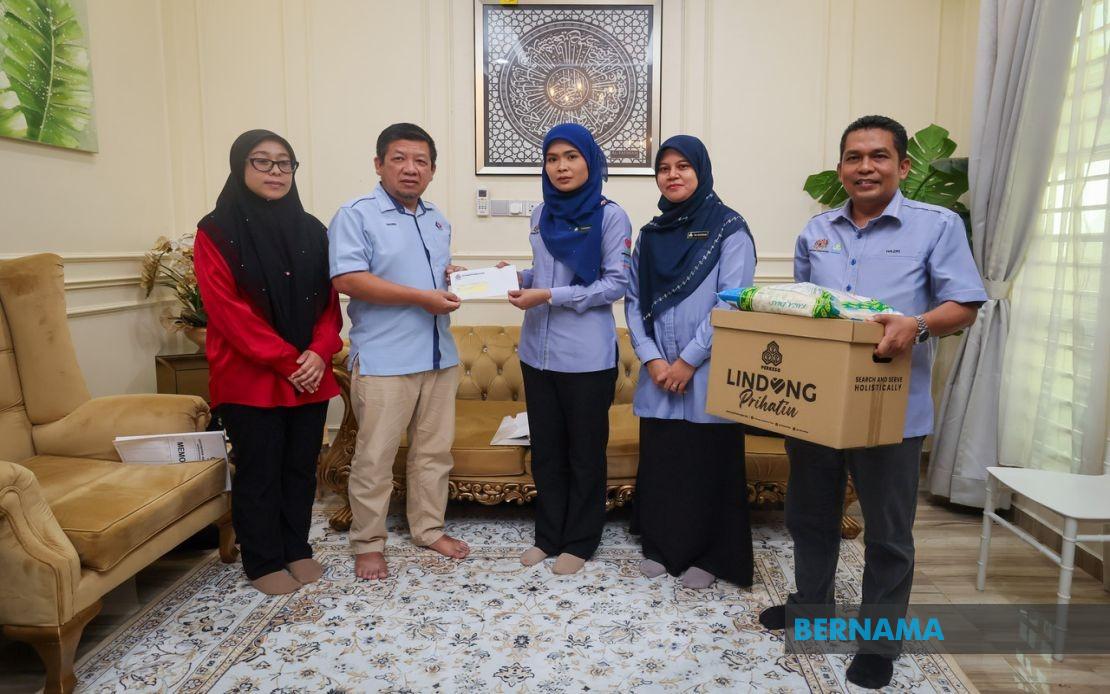
The Social Security Organisation (PERKESO) has delivered substantial financial assistance to Kelantan's workforce and their families, distributing almost RM3.5 million in accumulated benefits during the opening six months of 2024. The figure underscores the critical role that Malaysia's primary social security body plays in protecting workers across the country from employment-related hardships and providing crucial financial relief during times of crisis.
According to Nor Aziemah Ismail, the deputy director of PERKESO's Kelantan operations, the majority of these funds—totalling RM2.388 million—were allocated through the Temporary Disablement Benefit scheme established under the Employees' Social Security Act 1969. This particular benefit targets workers whose jobs have been temporarily rendered impossible due to workplace injuries, representing a fundamental safety net for those unable to generate income during recovery periods. The substantial uptake of this scheme in Kelantan suggests ongoing occupational hazards remain a significant concern within the state's industrial and agricultural sectors.
Beyond temporary disablement coverage, PERKESO extended RM73,000 in Dependants' Benefits specifically to grieving family members of workers whose deaths were directly attributable to workplace accidents. This comparatively modest figure masks profound human suffering, as each claim represents a household that has lost a primary income earner due to employment-related circumstances. The availability of such payments, though limited in quantum, provides essential breathing room for families navigating both emotional trauma and financial instability.
The organisation simultaneously processed nearly RM1 million in Funeral Benefits during the same period, offering RM3,000 per eligible claim to assist families with immediate burial and funeral expenses. This scheme reflects PERKESO's recognition that workplace fatalities impose immediate financial pressures beyond income replacement. The organisation has committed to expediting these particular claims, aiming to approve qualifying applications within a single working day, provided all necessary documentation has been presented. Such efficiency proves critical, as families often face mounting costs and tight deadlines when arranging funeral rites according to religious and cultural requirements.
A particularly noteworthy development in PERKESO's Kelantan operations involves the 24-Hour Employment Injury Scheme, which has already approved nine claims involving sick leave benefit payments totalling RM1,300. This relatively newer initiative distinguishes itself by extending protection to workers injured outside conventional working hours, a significant expansion of traditional employment security frameworks. Rather than limiting coverage to incidents occurring strictly at workplaces or during scheduled shifts, the scheme acknowledges that many workers sustain injuries while commuting, engaging in personal errands, or attending to family responsibilities.
The flexibility of this expanded coverage becomes apparent when examining approved cases. PERKESO Kelantan has processed claims arising from motorcycle convoy participation and even an incident involving a contributor transporting a child to tuition classes—scenarios that conventional schemes might classify as personal activities falling outside employment protection. Such inclusivity recognises the blurred boundaries between work and personal life for many Malaysian workers, particularly those in lower-income brackets who balance multiple employment demands with caregiving responsibilities.
The significance of these benefit disbursements extends beyond simple financial transactions. For Kelantan's industrial workers, agricultural labourers, and informal sector participants, PERKESO benefits often represent the difference between family stability and genuine economic crisis. Unlike voluntary insurance schemes or employer-dependent arrangements, PERKESO provides statutory protection that persists regardless of company fortunes or individual bargaining power. This structural reliability proves particularly valuable in Kelantan, where traditional industries face seasonal fluctuations and economic pressures.
The comparative distribution figures reveal important trends about workplace safety in the state. The dominance of temporary disablement claims suggests that while serious fatalities occur, non-fatal injuries represent the more prevalent occupational hazard confronting Kelantan's workforce. This pattern aligns with national trends showing that most workplace incidents result in temporary incapacity rather than permanent disability or death, though even temporary injuries impose substantial hardship on working families with limited savings.
For policymakers and stakeholders monitoring occupational health across Southeast Asia, Kelantan's benefit distribution patterns offer instructive insights. The state's industrial composition—encompassing manufacturing, agriculture, palm oil processing, and construction—typically generates higher injury rates than service-dominated economies. PERKESO's ongoing expansion of coverage mechanisms, particularly the 24-Hour Employment Injury Scheme, represents institutional adaptation to modern workplace realities where rigid temporal boundaries no longer reflect how contemporary workers experience employment-related risks.
Looking forward, these disbursement figures raise questions about prevention and early intervention. While PERKESO excels at providing post-injury financial support, reducing workplace incidents through enhanced safety protocols, worker training, and employer accountability remains equally critical. The nearly RM3.5 million distributed in Kelantan during six months, whilst substantial, ultimately represents compensation for harm already inflicted rather than prevention of future suffering.
The efficiency of PERKESO's claims processing—particularly the 24-hour approval target for funeral benefits—demonstrates that Malaysian social security institutions can deliver responsive service when properly resourced and motivated. This capacity warrants expansion and reinforcement across all benefit categories. As Kelantan continues industrialising and diversifying its economic base, maintaining robust worker protection mechanisms becomes increasingly vital for ensuring that economic growth translates into genuine prosperity rather than merely shifting occupational risks across new sectors.

