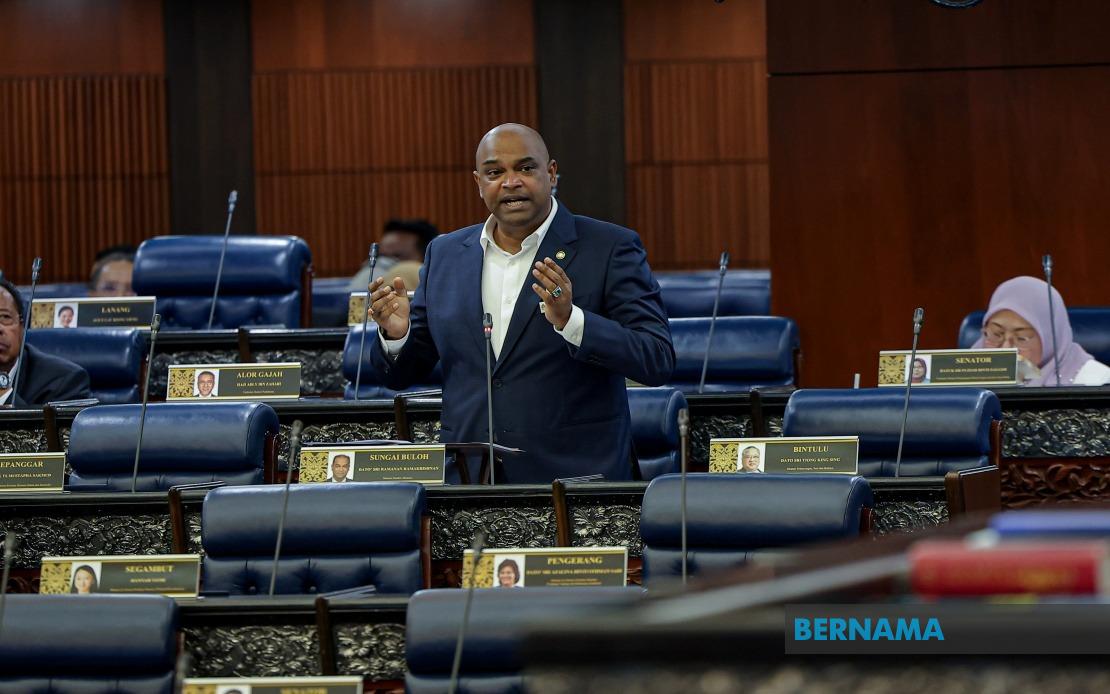
The Social Security Organisation (PERKESO) has demonstrated robust operational performance, achieving an average compliance rate exceeding 96 per cent in processing claims and dispensing benefit payments to contributors throughout the previous financial year, Human Resources Minister Datuk Seri R. Ramanan announced in Parliament on June 24. The achievement underscores the organisation's commitment to maintaining service excellence amid growing demands from Malaysia's expanding contributor base across both formal and informal employment sectors.
Ramanan outlined how PERKESO introduced more rigorous Customer Charter standards starting last year, establishing clear processing timelines across three major schemes: LINDUNG Pekerja, LINDUNG Kendiri, and LINDUNG Kasih. These benchmarks apply once beneficiaries have submitted all required documentation. The Funeral Benefit and Temporary Disablement Benefit categories now operate on a two-day processing cycle, while more complex claims involving Permanent Disablement Benefit, Invalidity Pension, Survivor's Pension, and Dependant's Benefit require a three-day turnaround from receipt of complete applications.
Under the LINDUNG Kerjaya scheme specifically, which caters to self-employed workers and informal sector participants, PERKESO's 2025 Customer Charter commits to processing all benefits within two days of receiving complete applications. Performance against this standard proved exceptional, with the scheme achieving a 99.68 per cent average compliance rate. This distinction reflects the organisation's particular focus on reducing delays for Malaysia's growing informal economy, where timely benefit disbursement carries heightened importance given the vulnerability of self-employed contributors.
The parliamentary exchange occurred when Datuk Mohd Isam Mohd Isa from Tampin posed questions regarding PERKESO's official processing periods, actual compliance performance metrics, and the role of digital transformation in accelerating claims handling. Ramanan's comprehensive response revealed the minister's recognition that transparency about service delivery standards helps build public confidence in the social security system, a critical factor as PERKESO works to expand coverage and participation among harder-to-reach populations.
Digitalisation has emerged as a cornerstone of PERKESO's modernisation strategy. The organisation deployed the LINDUNG Faedah PERKESO portal to streamline claims submission and tracking, while simultaneously overhauling its internal processing infrastructure through the 1Best system, which achieved full rollout this year. These technological investments directly address processing bottlenecks that historically plagued benefit claims. The introduction of the PRIHATIN mobile application further democratises access to PERKESO services, allowing contributors to obtain information about benefits, check claim status, and understand their entitlements without visiting physical offices.
Beyond digital platforms, PERKESO established the Prihatin Squad (SPP), a dedicated advisory workforce tasked with guiding contributors, beneficiaries, and insured persons through claims procedures. This human-centric complement to technology acknowledges that complex benefit rules and documentation requirements often perplex claimants, particularly among elderly or less educated populations. By pairing algorithmic efficiency with personalised assistance, PERKESO addresses a fundamental service delivery challenge facing Malaysian social security administration.
Accident claims processing has received particular attention, with Ramanan highlighting the INSPIRE System as a critical innovation linking hospitals directly to PERKESO's infrastructure. This real-time connectivity eliminates paper-based handoffs that previously created delays, enabling medical facilities to flag workplace injury cases immediately. For genuine emergencies, simplified protocols allow PERKESO to complete claims processing within 24 hours, a substantial improvement over legacy processes that frequently extended to weeks or months, leaving injured workers without income support during critical periods.
Fraud prevention constitutes an ongoing challenge for PERKESO and social security organisations across Southeast Asia. In response to parliamentary questioning from Dr Abd Ghani Ahmad representing Jerlun, Ramanan disclosed that PERKESO employs a multi-layered assessment methodology combining artificial intelligence with human verification. The AI system performs preliminary screening to identify suspicious patterns and documentation inconsistencies, while manual review processes provide secondary validation before approval. This hybrid approach balances automation's efficiency with human judgment's nuance, recognising that overly automated systems sometimes reject legitimate claims based on algorithmic errors.
The 96% compliance achievement carries significance for Malaysian policymakers evaluating social protection system adequacy. PERKESO serves as the primary safety net for Malaysia's workforce, covering both employees and self-employed individuals across the formal and informal economies. With Malaysia's labour force exceeding 15 million workers and informal employment comprising roughly 40 per cent of total employment, PERKESO's operational capacity directly impacts millions of households' economic security. Performance improvements thus transcend bureaucratic metrics, touching the lived reality of workers navigating income loss from disability, illness, or bereavement.
Regionally, PERKESO's performance benchmarks compare favourably with social security organisations across Southeast Asia, many of which struggle with claims backlogs and processing delays exceeding six months. Malaysia's achievement of sub-three-day processing for most benefit categories positions it among regional leaders in social security administration efficiency. This performance advantage partly reflects Malaysia's relatively developed IT infrastructure and higher bureaucratic capacity, though it also demonstrates successful institutional reform when political will and adequate resourcing align.
Looking forward, PERKESO's trajectory suggests continued emphasis on digital integration and process optimisation. The organisation faces mounting pressure from demographic trends, including workforce ageing and rising disability prevalence, which will proportionally increase claims volumes. Current compliance rates, while impressive, depend on adequate staffing, system reliability, and sustained investment. Malaysian policymakers monitoring PERKESO's performance should recognise that maintaining service quality amid growing demand requires proactive capacity planning and resourcing decisions beyond the current financial year.
The organisation's efforts to enhance accessibility through multiple channels—digital platforms, mobile applications, and dedicated advisory squads—reflect modern social security administration best practices increasingly adopted by counterparts throughout East and Southeast Asia. By removing friction from claims processes and providing support throughout application journeys, PERKESO reduces the burden on vulnerable populations precisely when they most need assistance, strengthening both individual economic resilience and broader social stability across Malaysia's diverse working population.

