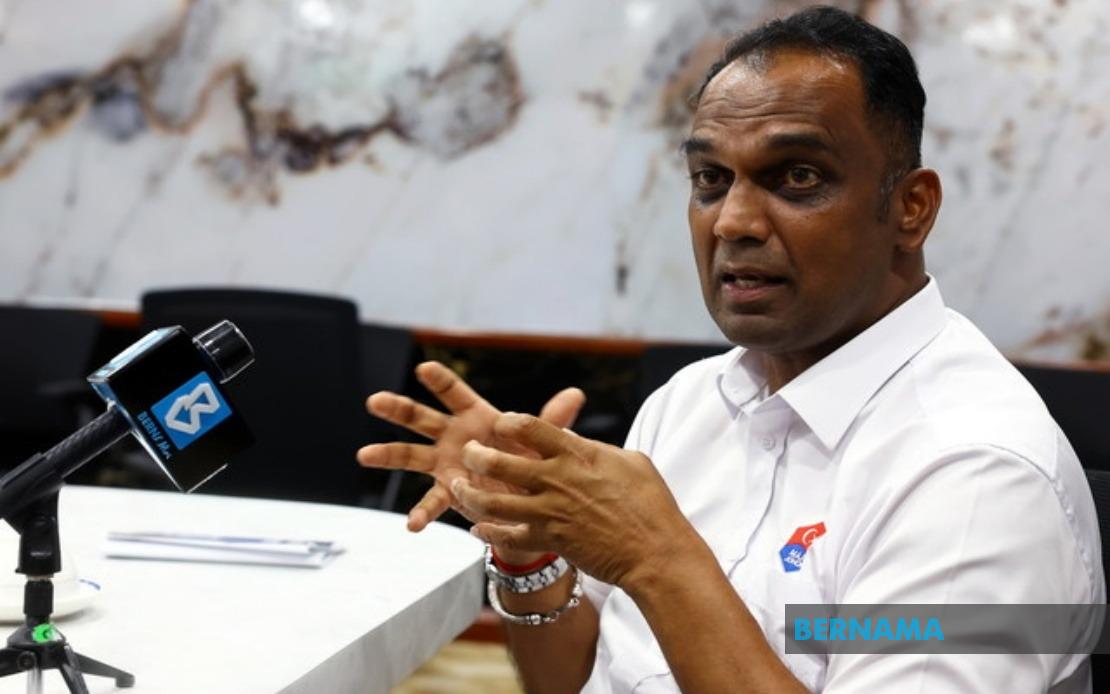
P. Pannir Selvam, contesting the Perling seat for Barisan Nasional in the 16th Johor State Election, is adopting an intensely personal campaign methodology that privileges direct interaction over digital channels. Rather than relying exclusively on social media's reach, the first-time state-level candidate is conducting a series of intimate "pocket talks" with constituents, betting that the traditional grassroots approach will prove more persuasive and memorable to voters making their electoral choices on July 11.
The candidate's strategy reflects a calculated belief that while technology shapes contemporary political discourse, the lasting impressions formed through genuine one-to-one conversation continue to wield considerable influence over voting decisions. Pannir Selvam maintains that these small-group sessions accomplish multiple strategic objectives simultaneously: they bridge the psychological distance between representative and constituent, create informal settings where community members feel comfortable articulating concerns, and permit the candidate to demonstrate accessibility and authenticity in ways that broadcast messaging cannot replicate.
According to Pannir Selvam, his pocket talks serve as an invaluable intelligence-gathering mechanism, enabling him to absorb the textures of local grievances and aspirations firsthand rather than filtered through intermediaries or polling data. This approach positions the candidate not merely as someone seeking votes but as someone genuinely invested in understanding the constituency's lived experiences. The voter feedback he has gathered during these sessions has reportedly bolstered his confidence as campaigning intensifies, suggesting that the ground reception has validated his chosen methodology.
A significant element of Pannir Selvam's personal narrative centres on his father, Datuk KS Balakrishnan, a political veteran whose career encompasses five terms as Permas Assemblyman and previous service on the Johor state executive council. The elder Balakrishnan's active involvement in his son's campaign at age 84 carries symbolic weight beyond family support, embodying a continuity of political commitment across generations and anchoring the candidate's credibility within the established BN ecosystem. The father's willingness to traverse campaign locations regardless of weather conditions becomes, in the candidate's telling, evidence of both familial dedication and a deeper transmission of values regarding public service.
The mentorship dimension proves equally crucial to Pannir Selvam's political positioning. He credits his father with imparting essential lessons about navigating public office: serving communities without regard to racial divisions, managing criticism constructively, and maintaining personal integrity as foundational to trustworthy governance. These inherited precepts function as the ideological bedrock upon which he frames his campaign promises, suggesting that his candidacy represents not a departure from BN tradition but rather its continuation through a new generation grounded in proven principles of public stewardship.
Pannir Selvam's prior experience as a member of the Johor Bahru City Council provides concrete administrative background distinguishing him from entirely novice candidates. He leverages this municipal-level exposure as evidence of capability to translate grassroots concerns into practical municipal solutions, positioning himself as someone already versed in the mechanics of local governance rather than someone entering elected office purely theoretically. This experiential foundation buttresses his credibility when addressing specific infrastructure and service delivery challenges.
Among his principal campaign pledges, Pannir Selvam identifies two interconnected problems affecting Perling residents: traffic congestion and inadequate parking infrastructure around Taman Perling Public Market. These issues transcend mere inconvenience; they reflect broader urban development and traffic management challenges endemic to growing Malaysian cities. By highlighting his intention to prioritise their resolution, he signals awareness of the constituency's most immediate pain points and implicitly argues that his prior municipal experience equips him to coordinate with relevant authorities toward concrete solutions rather than offering empty rhetoric.
The Perling constituency itself represents a substantial electoral battleground, encompassing 109,992 registered voters and attracting a three-cornered contest involving Pannir Selvam, Pakatan Harapan's Alan Tee Boon Tsong, and Parti Bersama Malaysia's Boo Wei Han. This multi-candidate scenario intensifies the strategic importance of granular voter persuasion efforts. In fragmented contests where winning margins may prove modest, the cumulative impact of pocket talks generating personal connections and perceived attentiveness to community concerns potentially tilts electoral outcomes. The diversity of opposition candidates means BN cannot assume its traditional voter base remains monolithic.
The broader Johor election context encompasses 172 candidates competing for 56 state assembly seats, with early voting scheduled for July 7 preceding the July 11 polling day. The statewide contest carries significance extending beyond Johor itself, as state-level electoral dynamics increasingly influence national political calculations. Performance in Johor, Malaysia's southernmost peninsular state and economically significant population centre, reverberates through broader assessments of coalition strength heading toward eventual federal electoral contests.
Pannir Selvam's emphasis on pocket talks rather than rally-dominated campaigns also reflects evolving campaign finance considerations and the premium increasingly placed on demonstrating grassroots appeal rather than merely staging large events. His approach generates content and narratives emphasising authentic engagement, messaging that gains particular traction among voters increasingly sceptical of conventional political theatre. The strategy simultaneously conserves resources by focusing organisational energy on targeted voter segments rather than dispersing efforts across blanket outreach initiatives.
The candidate's narrative framework—combining youthful energy with inherited political credibility, prior administrative experience, and genuine commitment to addressing specific municipal frustrations—constructs a coherent campaign identity. By rooting his candidacy in familial political tradition while demonstrating novel engagement methodologies, Pannir Selvam positions himself as representing evolution rather than rupture within BN's institutional continuity, potentially appealing to both traditional party loyalists and voters seeking renewed engagement from their political representatives.

