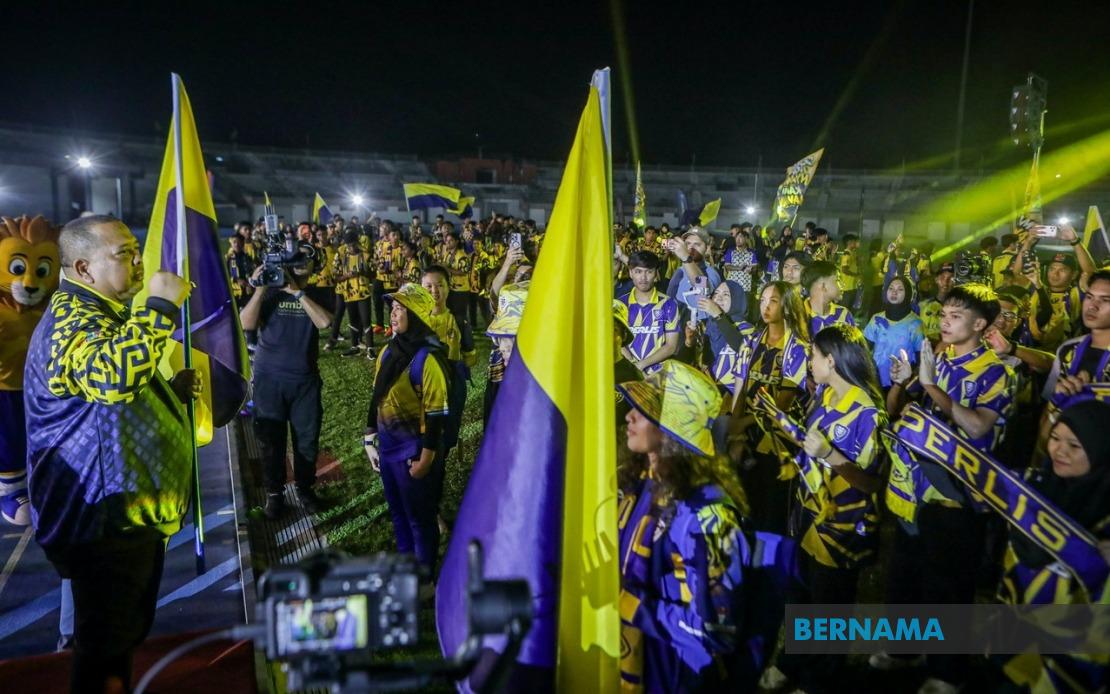
Perlis has etched its name into the annals of Malaysian sporting achievement by clinching 17 gold medals at the 2026 Malaysia Games (SUKMA) held in Selangor—a historic milestone that represents the state's finest performance across the biennial competition's history. The accomplishment underscores a deliberate, multi-year investment by the Perlis state government in developing athletic talent and supporting competitive sporting infrastructure across disciplines ranging from weightlifting to track and field events.
Menteri Besar Abu Bakar Hamzah characterised the medal haul as tangible proof that the state's strategic approach to sports development is working. Speaking at a press conference in Kangar following an Exco meeting at Kompleks Seri Putra, Abu Bakar attributed the breakthrough to sustained collaboration between multiple stakeholders—state government agencies, individual athletes, coaching staff, sports associations, and the State Sports Council. This layered institutional support appears to have created the conditions necessary for competitive athletes to reach peak performance at a national championship level.
Among the standout achievements from Selangor were record-breaking performances by Perlis competitors in specific events. The state's shot put athletes surpassed the existing SUKMA record, demonstrating technical excellence and training rigour in technical field events. Equally impressive, Perlis's weightlifting contingent dominated the overall championship standings in their sport at SUKMA Selangor 2026, capturing the team title and signalling the state's particular strength in a discipline requiring specialised coaching, strength conditioning, and athlete development pathways.
The complete medal tally reveals the breadth of Perlis's competitive reach: 42 total medals comprising 17 gold, seven silver, and 18 bronze. This distribution suggests success across multiple sports rather than concentration in one or two disciplines—a sign of healthy sporting ecosystem development. For a smaller state with more limited population and resources compared to larger neighbours such as Selangor and Kuala Lumpur, this performance carries particular significance as evidence that strategic investment and planning can yield results regardless of size.
The breakthrough carries implications beyond Kangar's state boundaries. Perlis's emergence as a competitive force at SUKMA reflects broader trends in Malaysian sports administration, where states increasingly recognise that sustained development funding and institutional coordination produce measurable returns. Other smaller states watching Perlis's trajectory may glean lessons about talent identification systems, coach recruitment and retention, and financial incentive structures that enable competitive performance at national games level.
Abu Bakar indicated the state government will maintain its current policy framework, committing to continued emphasis on talent development pipelines, high-performance training regimens, coaching expertise, sports science integration, competitive facilities, and comprehensive athlete welfare provisions. This multi-dimensional approach—balancing immediate competitive needs with long-term human capital development—represents sophisticated state sports administration. The decision to frame investment around these elements rather than ad-hoc spending suggests institutional learning about what drives sustained excellence.
The state government is currently formulating incentive structures to reward the athletes and coaching staff responsible for the breakthrough result. These incentives, whether monetary bonuses, scholarships, or recognition awards, serve multiple functions: they acknowledge achievement, signal state commitment to sports, and create motivation for future talent to pursue athletic development. The presentation ceremony will follow the conclusion of Para SUKMA Selangor 2026, ensuring recognition occurs within a comprehensive celebration of athletic achievement across both able-bodied and paralympic competitions.
For Malaysia's broader sporting architecture, Perlis's success at SUKMA 2026 demonstrates that competitive outcomes reflect institutional capacity and investment consistency more than inherent geographical advantage. The state's performance provides a model other regional governments might study when developing their own sports policies. Malaysian sports observers will watch whether this achievement proves a one-off peak or the beginning of sustained competitive elevation—a question that will become clearer at SUKMA 2028 and beyond.
The implications extend to Malaysian athletes themselves. The visibility of Perlis's success may inspire younger competitors from smaller states who previously assumed elite performance remained the preserve of more populous regions. This psychological dimension—the demonstration that excellence is achievable regardless of scale—may generate increased sports participation and talent pool growth across Malaysia's smaller states. Abu Bakar's public commitment to continued investment signals to potential athletes and their families that the state government views sports development as a legitimate policy priority warranting sustained resources. For Malaysian competitive sports broadly, this represents encouraging movement toward decentralised excellence and dispersed talent development rather than concentrated success limited to a handful of wealthy urban centres.

