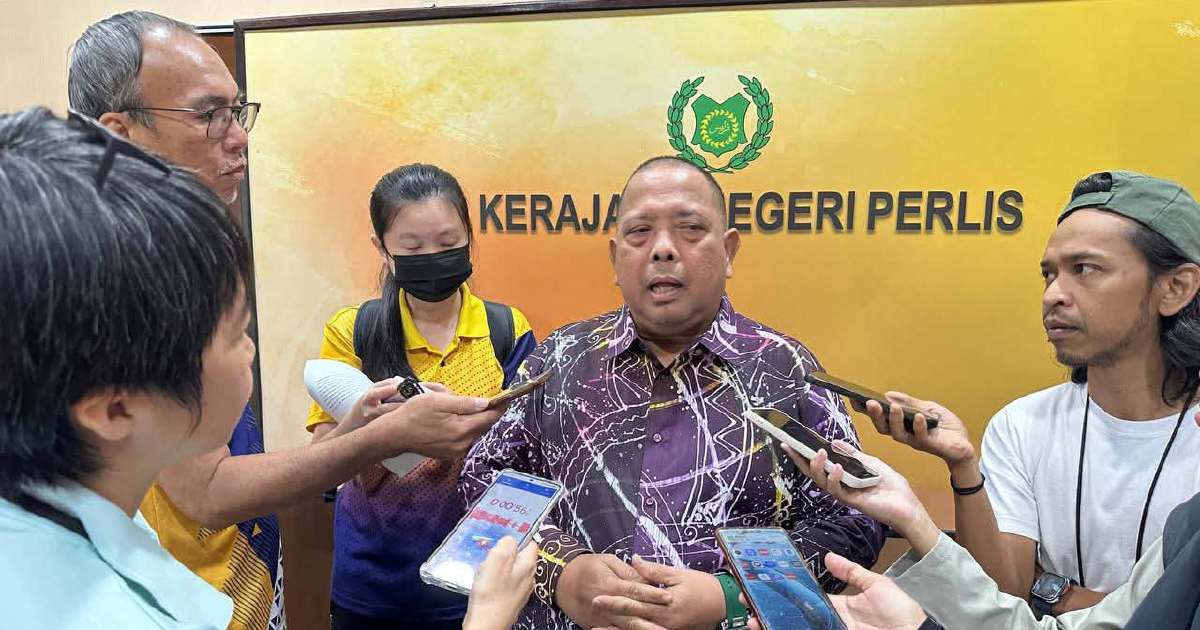
Perlis Menteri Besar Abu Bakar Hamzah moved swiftly to extinguish speculation about his political future on Wednesday, publicly denying rumours that he is preparing to leave Bersatu after being dropped from the party's Supreme Council. Speaking in Kangar, the state chief denied that his recent departure from the council signalled any broader intention to defect or switch allegiances, a common concern in Malaysian politics where leadership transitions frequently trigger fears of party-hopping among senior figures.
Abu Bakar Hamzah's clarification carries particular weight given the volatile nature of party politics in Malaysia, where shifts in factional power or organisational restructuring have historically preceded significant defections. His explicit restatement of loyalty—emphasising both his membership status and continued chairmanship of Bersatu's Perlis division—appears designed to reassure party members and supporters that no hidden agenda underpins his removal from the Supreme Council, a body that typically comprises senior party figures and state leaders.
The timing of such denials can itself prove politically significant, particularly in Perlis where Bersatu's organisational presence remains relatively concentrated. By addressing the matter directly rather than allowing speculation to fester, Abu Bakar Hamzah has attempted to control the narrative surrounding his position. This proactive approach contrasts with instances elsewhere in Malaysian politics where similar transitions have gone unexplained, subsequently breeding distrust and rumour-mongering.
Bersatu itself has undergone considerable organisational changes since its formation and subsequent evolution within Malaysia's coalition landscape. The party, which once positioned itself as a transformative force in national politics, has had to navigate shifting alignments and internal power struggles. State-level leaders like Abu Bakar Hamzah often find themselves navigating these broader currents while managing local interests and grassroots expectations, creating a delicate political balancing act.
The distinction Abu Bakar Hamzah drew between his Supreme Council exit and his party membership reflects a common misunderstanding about Malaysian party structures. While Supreme Council positions carry significant prestige and influence, they do not constitute the entirety of a leader's standing within a party. State chairmen—particularly of major divisions in strategic states—often retain substantial authority and grassroots support independent of national council positions. The clarification thus serves to establish that his removal from one body does not diminish his political standing elsewhere within the organisation.
For Perlis specifically, Abu Bakar Hamzah's continued governance as Menteri Besar remains the substantive issue, irrespective of his council status. As a state of roughly 270,000 residents in Malaysia's northwestern corner, Perlis has long depended on stable leadership to address its particular development challenges and infrastructure needs. Any genuine uncertainty about leadership continuity would ripple through state administration, affecting civil servants, businesses, and the broader public sector.
The episode also illuminates how party structures at national level sometimes create confusion at the grassroots. Members and observers may lack clarity about the distinction between various party positions—whether appointments to the Supreme Council represent core party authority or honorary roles, whether removal signals censure or merely reflects organisational restructuring. Abu Bakar Hamzah's public statement thus performs an educational function, helping to ground understanding of party mechanics.
Regionally, Bersatu's internal dynamics carry implications beyond Perlis. The party operates as a coalition partner in several state governments and maintains presence across Malaysian politics. How leaders like Abu Bakar Hamzah navigate internal organisational changes—and communicate about such transitions—sets precedents for how similar situations are handled elsewhere. Clear messaging and transparency help prevent the erosion of party discipline and member confidence.
The broader political context also matters here. Malaysia's party system has historically suffered from instability partly because transitions and structural changes have gone unexplained or been perceived as opaque. When senior figures experience sudden organisational shifts, the absence of clear public explanation invites speculation about factional battles, power struggles, or positioning for future changes. Abu Bakar Hamzah's forthright denial thus represents a counterweight to that pattern of opacity, even if his statement merely confirms that routine organisational changes have occurred rather than signalling any dramatic development.
Moving forward, the critical test will be whether Abu Bakar Hamzah's assurances prove durable through continued administrative performance and party engagement. Political denials carry credibility only insofar as subsequent behaviour reinforces them. His maintenance of state leadership duties, visible presence within Bersatu's Perlis structures, and continued political engagement will demonstrate whether his Wednesday statement reflects genuine commitment or represents merely tactical crisis management.
For Perlis residents and Bersatu supporters more broadly, this episode underscores the importance of institutional clarity within political parties. The proliferation of titles, councils, and leadership positions, whilst reflecting party complexity, also creates potential for confusion and rumour. As Malaysian politics matures, clearer communication about organisational structures and the implications of various positions might help reduce unnecessary uncertainty about political stability.

