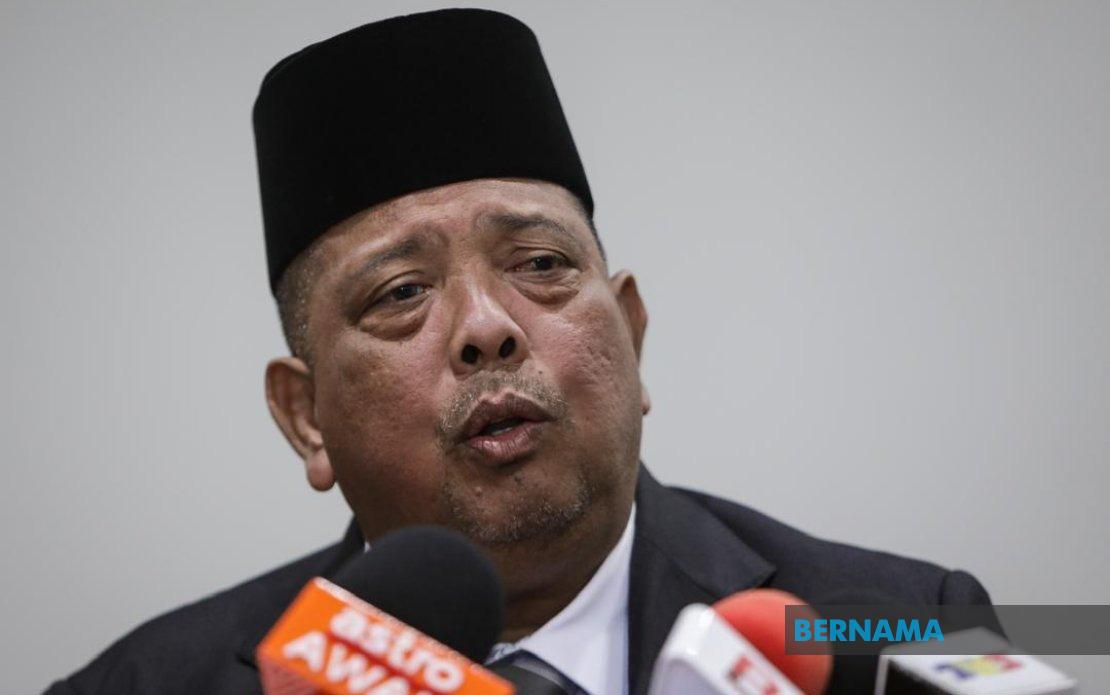
Perlis Menteri Besar Abu Bakar Hamzah has stepped down from his role on the Parti Pribumi Bersatu Malaysia (Bersatu) Supreme Leadership Council, a move he formalized through a resignation letter submitted to the party's central leadership the previous week. The announcement came during a reception ceremony for a Thai delegation at Kuala Perlis on July 9, marking the resumption of the cross-border ferry service connecting the port to Satun province—a route that had remained suspended throughout the COVID-19 pandemic.
Abu Bakar maintains his positions as Perlis state chief and Kangar division chief within Bersatu despite his departure from the party's highest decision-making body. His decision to relinquish the supreme council appointment reflects a deliberate prioritization of his executive responsibilities in managing the state's affairs. The timing of the move carries particular significance, as the Perlis state assembly will reach the end of its current fifteen-month term in 2025, creating a critical window for policy implementation and economic development initiatives.
The Menteri Besar articulated his reasoning for the resignation in unambiguous terms, emphasizing the incompatibility between serving on the supreme leadership council and delivering on the state's development agenda. His workload encompasses multiple demanding portfolios, from steering economic investment and modernization projects to meeting performance benchmarks across various government departments. With approximately one year remaining in his tenure, Abu Bakar determined that maintaining his council seat would dilute his effectiveness in these core functions, necessitating a strategic withdrawal from the higher party organ.
This development arrives against the backdrop of a formal directive from the Raja of Perlis, Tuanku Syed Sirajuddin Jamalullail, issued during the state legislative assembly opening on June 3. The ruling monarch explicitly decreed that Abu Bakar should operate without interference and be afforded the necessary space to govern the state through the conclusion of the 15th assembly term. The royal guidance implicitly acknowledged the tension between competing demands on the chief minister's time and attention, effectively validating his need to concentrate on state-level governance rather than factional party politics.
The ferry service reopening ceremony provided an apt venue for this announcement, illustrating Abu Bakar's commitment to regional economic connectivity and cross-border cooperation. The resumption of the Kuala Perlis-Satun route addresses years of disruption caused by the pandemic and signals the state government's focus on rebuilding trade links and tourism infrastructure vital to Perlis's development trajectory. Such infrastructure projects exemplify the calibre of work demanding the chief minister's direct oversight and strategic attention.
Abu Bakar's resignation also aligns with a broader pattern within Bersatu's leadership. He disclosed that Sena assemblyman and Perlis state executive councillor Datin Marzita Mansor had similarly stepped down from her position as a supreme leadership council member, though his office was unable to secure her confirmation at the time of reporting. This concurrent movement suggests a coordinated approach among Perlis's political leadership to concentrate resources on state administration rather than national party machinery, or alternatively, reflects dissatisfaction with the party's direction at the central level.
For Malaysian political observers, the resignation underscores an enduring tension within federal systems where chief ministers juggle dual commitments to state governance and national party structures. The supreme leadership council constitutes one of Bersatu's most influential bodies, typically comprising senior figures responsible for strategic policy direction. Abu Bakar's departure from this tier means the party loses direct input from one of its state strongholds during a period when Bersatu navigates its own internal consolidation following the broader coalition shifts that characterized Malaysian politics in recent years.
The move carries implications for Perlis's positioning within the Bersatu party structure and potentially within the broader Perikatan Nasional coalition, should those dynamics shift before the 2025 state election. By explicitly prioritizing state administration, Abu Bakar positions himself as focused on delivery rather than intra-party maneuvering, a framing that could prove advantageous in a competitive electoral environment. The appeal to voters of a chief minister dedicated single-mindedly to development and investor attraction represents a calculated political message.
Looking ahead, Abu Bakar's remaining months as Menteri Besar will likely emphasize measurable outcomes in infrastructure, foreign investment, and state revenue generation. The cross-border cooperation symbolized by the ferry service reopening hints at his broader strategic vision for Perlis as a gateway region. Economic diversification and improved connectivity align with development priorities relevant to northern Malaysian states seeking to compete more effectively in the region's value chains and tourism markets.
The resignation decision also reflects practical realities about bandwidth and effectiveness. Party supreme councils, while prestigious, demand attendance at meetings, involvement in strategic discussions, and participation in factional negotiations. For an executive charged with delivering tangible results within a compressed timeframe, such commitments represent genuine opportunity costs. Abu Bakar's frank acknowledgement of these constraints suggests a mature political perspective prioritizing accountability to state constituents over symbolic party status.
As Perlis heads toward the next state election cycle, the political landscape will reflect choices made during this final year of the incumbent administration. Abu Bakar's decision to downsize his party commitments represents a calculated wager that voters will reward clear focus on governance outcomes over high-profile participation in national party leadership. Whether this approach strengthens his political position or proves disadvantageous will depend on the scale of achievements he delivers and the broader electoral environment that materializes in 2025.

