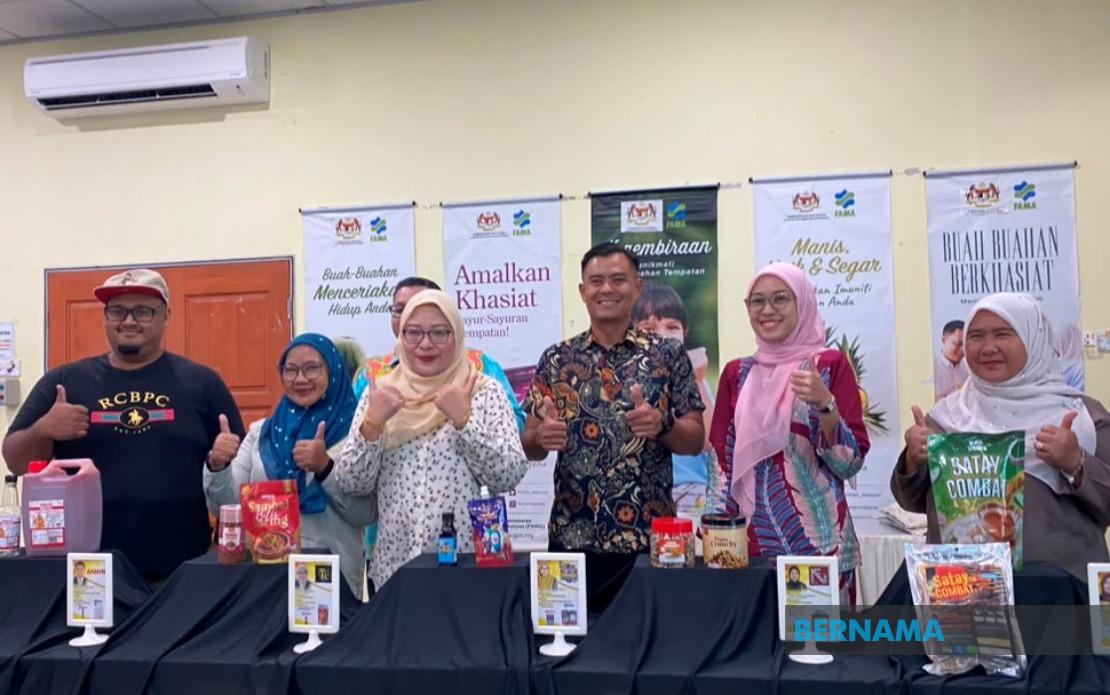
The Perlis branch of the Federal Agricultural Marketing Authority (FAMA) has injected RM510,500 into the state's emerging agro-food sector, supporting nine entrepreneurs through a suite of targeted financial grants designed to elevate product standards and widen distribution channels. This allocation represents a strategic commitment to strengthening Malaysia's rural agricultural economy at a time when many small producers face intense competition from larger established players and regional imports.
The funding breakdown reveals FAMA's multi-pronged approach to enterprise development. Agro-tourism initiatives received the largest share at RM392,000, reflecting recognition that farm-based tourism experiences have become increasingly attractive to both domestic and international visitors. The remaining funds were distributed across three complementary programmes: RM25,000 for outlet and retail space improvements, RM10,000 for marketing equipment purchases, and RM83,500 dedicated to enhancing product packaging and visual branding. This diversified allocation acknowledges that modern agro-food businesses require support across production, presentation, and customer experience dimensions.
According to Mohd Anzara Azizan, director of FAMA Perlis, these grants form part of a comprehensive strategy to boost entrepreneurial competitiveness while maintaining relevance with contemporary consumer preferences. The packaging and branding improvement scheme, in particular, falls under FAMA's broader IMAT Market Development and Product Matching Project, which specifically targets small and medium enterprises at various growth stages. By focusing on Stage One through Stage Three SMEs, the programme addresses businesses at precisely the point where professional packaging and marketing assistance can make the greatest impact on sales performance and market perception.
The practical effects of this support are already measurable. Across Perlis, 319 IMAT-registered agro-food entrepreneurs have collectively generated RM4.8 million in sales as of the reporting date, marking a robust 30 per cent increase compared to the equivalent period in the previous year. This growth trajectory suggests that FAMA's combination of direct financial assistance and ongoing business guidance is yielding tangible results for participating enterprises. The year-on-year improvement demonstrates that targeted investment in product quality, presentation, and market access can substantially lift the performance of rural-based agricultural businesses.
Beyond direct grant provision, FAMA maintains an active monitoring function across the agro-food supply chain. The authority oversees both the marketing strategies and pricing mechanisms employed by its client entrepreneurs, ensuring products remain competitively positioned while maintaining fair-value positioning for consumers. This dual oversight prevents race-to-the-bottom pricing dynamics that could undermine long-term sustainability while simultaneously protecting customers from inflated costs. For Malaysian consumers increasingly conscious of supporting local producers, this oversight provides assurance that quality improvements do not translate into excessive price premiums.
The breadth of FAMA's assistance portfolio extends considerably beyond the current grant cycle. The authority currently administers nearly nine distinct grant and support service categories, each calibrated to address specific business development challenges. By diversifying its offerings, FAMA acknowledges that different enterprises face different constraints. A business struggling with product presentation requires packaging support, while one lacking access to suitable retail space needs outlet improvement funds. This portfolio approach maximises the likelihood that entrepreneurs facing varied obstacles can locate an appropriate intervention within FAMA's ecosystem.
For Perlis specifically, agriculture remains economically significant despite the state's smaller population and land area compared to major agro-producing states like Johor and Kedah. The northern state's agro-food sector encompasses diverse products from paddy rice and aquaculture to specialty crops and value-added agricultural goods. Grant distribution in Perlis therefore reflects national commitment to ensuring that entrepreneurial opportunities and state support reach beyond the largest economic centres, promoting more geographically distributed economic development across Malaysia's regions.
The timing of this initiative aligns with evolving consumer preferences across Southeast Asia toward locally-sourced, artisanal, and regionally-distinctive food products. Malaysian agro-entrepreneurs who invest in quality branding and professional presentation increasingly find receptive markets not only domestically but across regional export corridors. FAMA's support for packaging and product imaging improvement directly facilitates this upward trajectory, enabling producers to project competence and professionalism that justify premium positioning and expand distribution beyond traditional wet markets into modern retail channels and e-commerce platforms.
Looking forward, FAMA's call for greater uptake of available grants suggests that awareness and application barriers may still limit programme participation. Many small agricultural enterprises, particularly those operated by farmers with limited formal business training, may lack familiarity with application procedures or confidence in their capacity to meet administrative requirements. Enhanced outreach and simplified application processes could potentially unlock additional growth among eligible entrepreneurs currently unaware of or intimidated by existing support mechanisms.
The sustainability of this grant-led growth model depends partly on demonstrating that recipients achieve lasting competitiveness improvements rather than temporary sales spikes followed by regression. FAMA's emphasis on product quality enhancement and market positioning suggests awareness that authentic business transformation requires structural improvements rather than mere cash injections. By linking financial support to capacity building and monitoring, the authority attempts to create conditions for self-sustaining enterprise development beyond the grant period itself.
For Malaysian policymakers and regional observers, the Perlis FAMA initiative illustrates how targeted agricultural financing can amplify rural entrepreneurship and regional economic development. As Malaysia positions itself to compete regionally in high-value agricultural products and agro-tourism experiences, support mechanisms that help small producers professionalize their operations and market positioning become increasingly important. The RM510,500 distributed represents not merely grant expenditure but investment in Malaysia's capacity to develop competitive agro-based enterprises capable of sustaining rural incomes and contributing meaningfully to national agricultural output.

