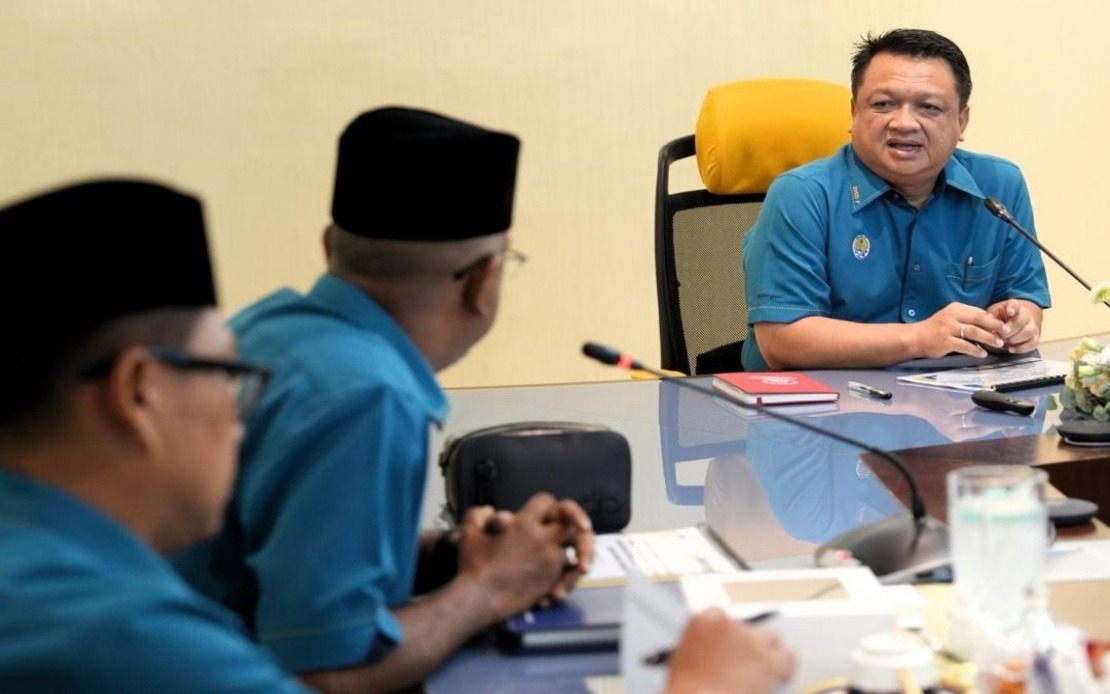
The Raja Muda of Perlis, Tuanku Syed Faizuddin Putra Jamalullail, has endorsed a strategic vision positioning the state as Malaysia's premier testing ground for environmental sustainability policies, with the ambition of transforming Perlis into a comprehensive 'Green Smart State'. His Royal Highness made the proposal during an audience with officials from the Kangar Municipal Council at the Arau Royal Gallery, spotlighting the state's unique geographical and administrative advantages for pioneering climate action.
Tuanku Syed Faizuddin Putra emphasised that Perlis' relatively modest territorial dimensions present a compelling opportunity to establish itself among Malaysia's vanguard states in maximising renewable energy deployment. The focus areas identified include substantial investment in solar photovoltaic systems and biomass energy generation, complemented by sophisticated waste management infrastructure. Achieving zero-carbon status, he contended, would position Perlis as a demonstrable model for Malaysia's broader climate commitments while aligning with international efforts to combat climate change.
The momentum behind Perlis' sustainability transformation stems largely from the Green City Action Plan, a comprehensive strategic document developed collaboratively by multiple stakeholders. The Kangar Municipal Council spearheaded this initiative in partnership with the Ministry of Economy, the IMT-GT Joint Business Council, ICLEI—Local Governments for Sustainability, and the Asian Development Bank. Following approval by the Municipal Council in February, the GCAP now serves as the foundational roadmap for orchestrating Perlis' evolution towards environmental excellence and low-carbon urban development.
The GCAP's architecture reflects a holistic understanding that sustainable development requires balancing economic growth, social welfare, and environmental stewardship simultaneously. Rather than pursuing ecological objectives at the expense of prosperity, the framework integrates climate action within a development paradigm that maintains economic viability whilst reducing environmental degradation. This approach resonates with Malaysia's commitment to the Sustainable Development Goals and the nation's pledged greenhouse gas emission reduction targets, creating synergy between local action and national policy frameworks.
Five catalytic projects constitute the operational core of Perlis' transformation agenda. The installation of solar photovoltaic systems across government buildings, public facilities, and private structures represents the most visible renewable energy initiative, enabling distributed generation and reducing reliance on conventional grid electricity. Complementing this renewable infrastructure investment, authorities have prioritised developing a Low Carbon Transport Plan specifically tailored to Perlis' mobility needs, addressing transportation's substantial contribution to carbon emissions in most Malaysian municipalities.
Urban mobility reimagining extends beyond conventional transport planning. The proposed Micro-Mobility Zones and Non-Motorised Transport facilities aim to fundamentally alter commuting patterns by creating infrastructure that encourages cycling, pedestrian pathways, and alternative last-mile solutions. Such interventions prove particularly valuable in compact states like Perlis, where distances between population centres remain manageable, rendering non-motorised transport genuinely viable for substantial portions of daily travel rather than merely supplementary to automotive movement.
Solid waste management constitutes another critical pillar of Perlis' sustainability strategy. The planned Material Recovery Facility, designed with an 80-tonne-per-day processing capacity, targets enhanced recycling rates and more sophisticated segregation of waste streams. Rather than consigning organic and recyclable materials to landfills, this facility would recover valuable resources, extending material lifecycles and reducing extraction pressure on virgin raw materials. Implementation of such infrastructure in a relatively small state creates opportunities for optimising collection logistics and achieving higher recovery rates than larger, more dispersed populations might manage.
Water resource management and disaster resilience receive equal strategic emphasis within Perlis' sustainability framework. Comprehensive rainwater harvesting systems deployed across the state address long-term water security whilst reducing demand on conventional supplies. Simultaneously, the Perlis State Disaster Management Plan and strengthening of the Perlis Integrated Command Centre represent forward-looking investments in climate adaptation, acknowledging that extreme weather events will intensify regardless of mitigation success. This dual approach—pursuing both emissions reduction and preparedness—reflects sophisticated climate strategy recognising that some climate impacts remain unavoidable.
The implications of Perlis' sustainability blueprint extend well beyond the state's borders. As Malaysia's smallest state by area, Perlis' success in achieving comprehensive green transformation would provide replicable evidence that larger, more industrialised states could accomplish analogous transitions. The state effectively becomes a living laboratory where policymakers, urban planners, and sustainability practitioners can observe real-world implementation challenges, cost structures, community adoption patterns, and measurable outcomes. This demonstration effect carries particular relevance for Southeast Asian nations grappling with similar development pressures and environmental constraints.
For Malaysian readers and policymakers, Perlis' trajectory carries significant precedent-setting potential. If the state successfully achieves zero-carbon operations whilst maintaining economic functionality and population welfare, it would decisively counter arguments that environmental sustainability necessitates economic sacrifice. The model would demonstrate that thoughtfully designed green infrastructure—renewable energy, efficient transport, advanced waste management, water conservation—can integrate into existing urban systems without requiring fundamental disruption to productive activity.
The Raja Muda's endorsement signals royal backing for what might otherwise remain a technical bureaucratic exercise. His Royal Highness' advocacy elevates sustainability from specialist environmental concerns to matters of state importance deserving resources and political attention. This positioning proves crucial in Malaysia's governance context, where royal patronage legitimises policy directions and mobilises institutional cooperation essential for executing complex, multi-departmental initiatives spanning years of sustained implementation.
The success metrics for Perlis' green transformation will inevitably attract regional and international scrutiny. Development institutions including the Asian Development Bank have invested analytical resources in preparing the GCAP, signalling confidence in the initiative's potential and creating external accountability mechanisms. International climate finance mechanisms and regional cooperation frameworks may view demonstrated success in Perlis as justification for expanded resource commitments to Malaysian environmental projects, potentially catalysing broader Southeast Asian sustainability investment.
Looking forward, Perlis' role as sustainability testing ground positions the state at the intersection of environmental imperative and economic opportunity. Success would validate that small-state agility, in conjunction with strategic planning and multi-stakeholder collaboration, can deliver meaningful climate outcomes. The state would transition from occupying the margins of Malaysia's economic geography to leading nationally in environmental governance—a trajectory few subnational entities achieve, yet one that Perlis appears determined to pursue.

