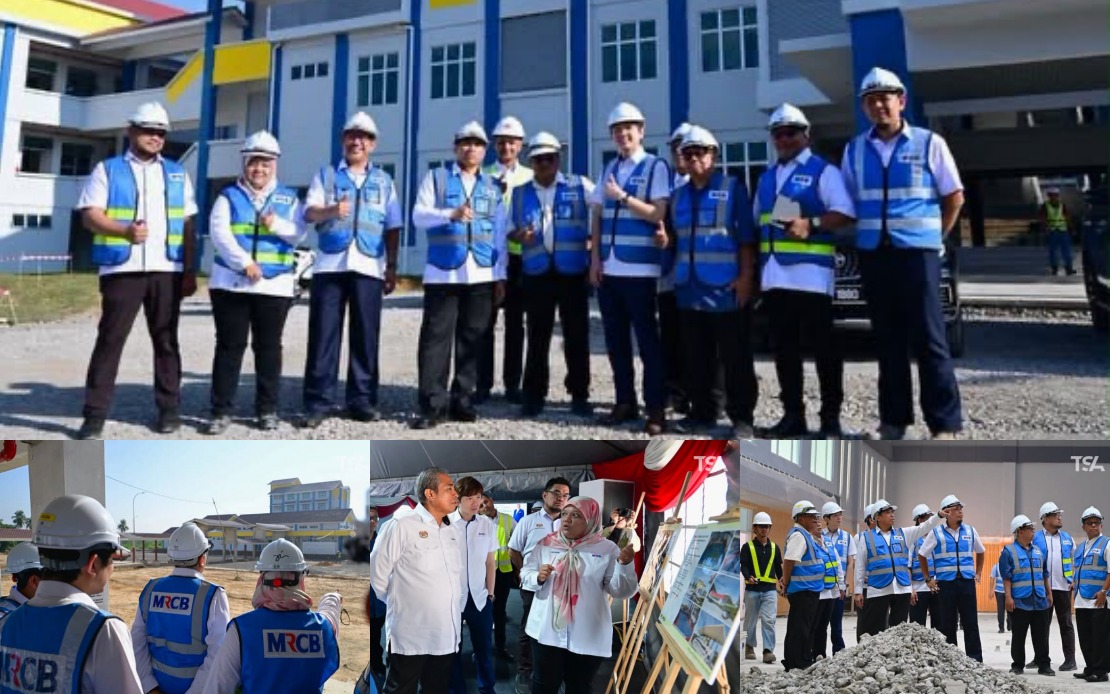
The Perlis Malaysia Sports School, a project that has languished for over a decade, appears finally poised for completion. Located in Bukit Chabang, Padang Besar, the facility is now between 85 and 90 per cent finished and should be fully operational by January 2027, according to Tan Sri Shamsul Azri Abu Bakar, the Chief Secretary to the Government. The announcement, made during his address at the Iltizam 2026 Convention at Universiti Utara Malaysia in Sintok on August 3, signals renewed momentum for a project that has frustrated stakeholders for years.
The journey to this point has been difficult. The sports school was effectively abandoned in 2013, becoming a symbol of incomplete infrastructure and mismanagement. However, Prime Minister Datuk Seri Anwar Ibrahim's intervention in April last year proved pivotal. He ordered that the project be transferred from its previous management to a government-linked company with demonstrated capability to deliver. This strategic handover was designed to break the cycle of delays and cost overruns that had plagued the initiative for so long.
Shamsul Azri's confidence in the January 2027 timeline rests on concrete progress. A formal survey of the construction site revealed that most obstacles that previously derailed the project have been resolved. Manpower shortages, which had constrained progress in earlier years, are no longer a bottleneck. Contractor issues that complicated procurement and delivery schedules have similarly been addressed through the change in management structure. The Chief Secretary's firsthand inspection provided him with the assurance necessary to commit publicly to the deadline.
For Perlis and northern Malaysia more broadly, the completion of this sports school carries symbolic as well as practical significance. The state has lagged behind more developed regions in sports infrastructure investment. A fully functional sports academy in Padang Besar would offer young athletes from Perlis, Kedah, and surrounding areas access to world-class training facilities without requiring expensive relocation. The school's establishment could help identify and nurture sporting talent at the grassroots level, potentially feeding athletes into national programmes.
The broader context of this project completion reflects the government's wider reform agenda for the civil service. Shamsul Azri used the occasion to highlight the Government Service Efficiency Commitment Act 2025, which came into full force on December 1, 2025. This legislation aims to reduce administrative bottlenecks and accelerate government service delivery across all sectors. Rather than serving as mere policy guidance, Act 867 functions as a binding legal instrument that holds the public sector accountable for performance and efficiency standards.
The efficiency initiative shows measurable results. Since its launch in 2024, the Bureaucratic Red-Tape Reform programme, implemented under the broader Public Service Reform Agenda, has completed 439 projects designed to streamline government operations. These reforms have generated estimated compliance cost savings of RM2.95 billion for the private sector and general public. The Perlis sports school represents exactly the type of project that should benefit from these efficiency improvements—a facility whose construction delays previously cost taxpayers money and delayed service delivery.
These efficiencies extend beyond individual projects to reshape the investment climate. By reducing bureaucratic friction and improving the speed of government decision-making, Malaysia aims to become more attractive to both domestic and foreign investors. The successful handover and accelerated completion of the Perlis sports school demonstrates that government-linked companies, when properly managed and freed from excessive red tape, can deliver infrastructure on schedule and within budget.
The Chief Secretary also addressed the contentious issue of civil service neutrality during election cycles. Shamsul Azri emphasised that civil servants remain bound by regulations that prohibit political engagement. He reported that no complaints regarding inappropriate political involvement by government employees have been lodged to date. This reassurance is important for maintaining public confidence in the impartiality of the civil service, a concern that tends to intensify during election periods.
The Perlis sports school project encapsulates the government's push to demonstrate competence through delivery. After years of false starts and missed deadlines, the facility's imminent completion would represent tangible progress on infrastructure development in a state that has historically received less investment attention than Selangor or Kuala Lumpur. If the January 2027 timeline holds, it will validate the decision to consolidate project management under capable government entities and to implement efficiency reforms that reduce unnecessary delays.
For Malaysian readers in other states, the Perlis experience offers lessons about infrastructure governance. Project continuation requires political will, effective institutional change, and removal of structural bottlenecks. The transfer from problematic contractors to a government-owned company, combined with targeted civil service reforms, created conditions for progress. As Malaysia competes for regional investment and aims to improve living standards across all states, the ability to reliably deliver infrastructure becomes increasingly critical.
Looking ahead, the sports school's completion should be monitored not just for its opening date but for its operational quality. A facility that opens on time but lacks proper staffing, equipment, or maintenance protocols would underserve its purpose. The test of the efficiency reforms will be whether they sustain quality delivery beyond the initial handover. If the Perlis Malaysia Sports School becomes a hub for sporting excellence by 2027 and beyond, it will represent a genuine success story in Malaysian infrastructure development.

