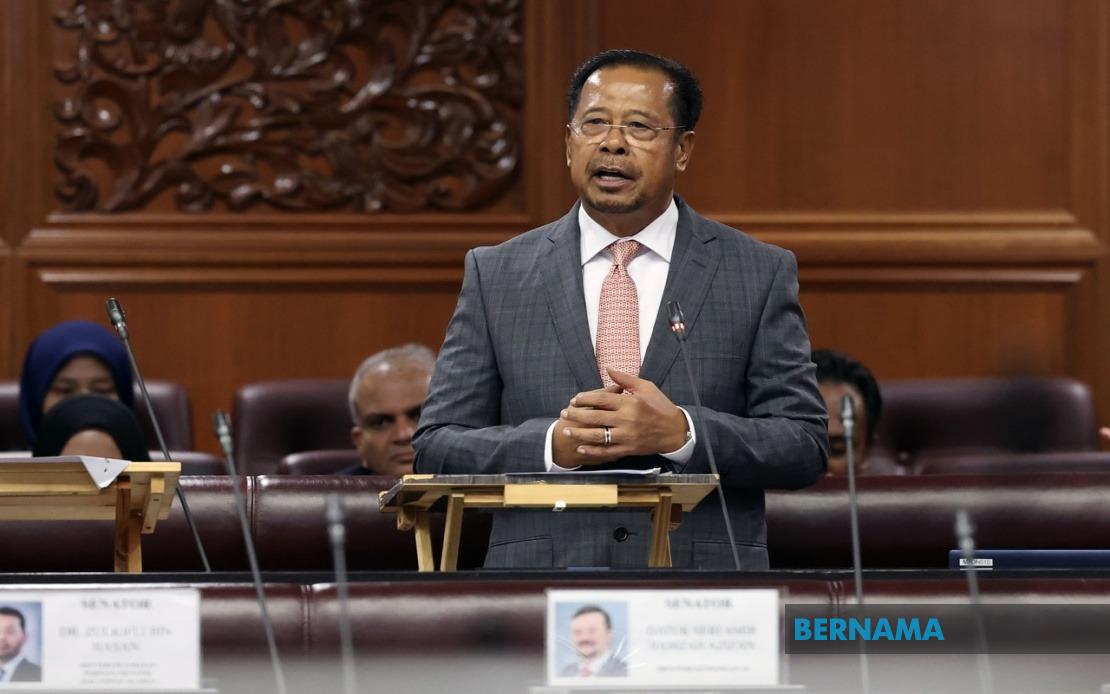
The Ministry of Energy Transition and Water Transformation (PETRA) has announced plans to undertake an extensive 12-month examination aimed at formulating a coherent Industrial Water Reclamation Policy, a move designed to fortify Malaysia's approach to managing finite water resources and enhancing operational efficiency across sectors dependent on significant water consumption. Deputy Minister Datuk Seri Abdul Rahman Mohamad revealed the initiative during parliamentary proceedings in the Dewan Negara, responding to inquiries from Senator Musoddak Ahmad regarding the timeframe and mechanisms for rolling out the National Water Reclamation Policy.
The strategic push reflects growing recognition within government circles that Malaysia's industrial landscape—spanning food and beverage manufacturing, high-technology data centre operations, semiconductor production facilities, and municipal sanitation services—requires a structured framework to utilise reclaimed water. Rather than treating all water applications uniformly, the policy framework will permit industries that do not demand potable-grade water to access treated wastewater, thereby conserving precious freshwater supplies for essential consumption and reducing pressure on existing water infrastructure.
Deputy Minister Mohamad articulated the broader governmental philosophy underpinning this initiative, emphasising that encouraging reclaimed water adoption represents one of several complementary strategies to enhance how efficiently industries deploy water resources. By redirecting treated effluent toward industrial processes—cooling systems, cleaning operations, and product manufacturing—Malaysia can simultaneously advance its water security objectives while demonstrating prudent stewardship of a resource increasingly vulnerable to climate variability and competing demands from rapid urbanisation.
The comprehensive research framework will encompass technical feasibility analyses, examining which reclamation and treatment methodologies best suit Malaysian conditions and industrial requirements. Legal specialists will navigate the complex regulatory environment, determining how existing statutes and licenses must adapt to accommodate reclaimed water markets. Financial and economic researchers will model the investment thresholds, operational costs, and potential savings for early adopters, ensuring policy recommendations reflect realistic commercial incentives rather than theoretical ideals.
Critically, the study will address infrastructure assessment—identifying which treatment plants, distribution networks, and storage facilities require construction or upgrading to deliver reclaimed water at scale. Quality control mechanisms form another pillar, with researchers developing robust testing protocols and safety standards to guarantee that reclaimed water meets stringent specifications appropriate to each industrial application. This technical rigour is essential for building industry confidence and preventing contamination events that could damage public perception of water recycling initiatives.
The consultation process already underway represents a deliberate effort to build consensus across Malaysia's fragmented water governance landscape. State governments, which retain constitutional authority over water resources in their jurisdictions, must endorse any policy framework affecting regional implementation. Water operators managing existing supply and treatment infrastructure will contribute operational expertise, whilst Indah Water Konsortium (IWK), the national sewerage specialist, brings technical knowledge of current effluent quality and treatment capacity. Engaging industry players directly ensures that eventual policy recommendations address real commercial constraints and opportunities rather than imposing impractical requirements.
The timing carries particular significance for Southeast Asia's most industrialised nation. Malaysia's water infrastructure, while generally reliable, faces mounting strain from industrial expansion, population growth concentrated in urban corridors, and increasing frequency of dry spells affecting major reservoirs. The semiconductor manufacturing sector, representing Malaysia's highest-value industrial export, consumes enormous quantities of ultra-pure water. Data centre operations, an emerging strategic industry as artificial intelligence and cloud computing expand, similarly demand reliable water supply for cooling. A reclamation policy addressing these demands could secure Malaysia's competitive advantage whilst reducing vulnerability to supply disruptions.
International context shapes this initiative as well. Water-stressed nations across the Asia-Pacific region—from Singapore's near-total reliance on reclaimed water to Australia's mandatory recycling in drought-prone states—have demonstrated that reclamation policies, when properly implemented, simultaneously enhance supply resilience and environmental outcomes. Malaysia, possessing greater natural water abundance than city-states or arid regions, has historically prioritised freshwater development. Yet adopting reclamation frameworks positions the country advantageously as climate scenarios become less predictable and industrial demand intensifies.
The policy development process reflects a more sophisticated water governance approach than Malaysia has historically pursued. Rather than reactive crisis management triggered by droughts or contamination events, the study represents strategic foresight—establishing systems before acute shortages force hasty, inefficient decisions. This proactive posture aligns with broader regional trends toward integrated water resource management, where governments coordinate across water supply, wastewater treatment, industrial demand, and environmental protection rather than treating these domains in isolation.
Implementation challenges will undoubtedly emerge during the 12-month study period. Stakeholders may disagree on acceptable reclaimed water quality standards, cost allocation between government and industry, and liability frameworks governing failures. Some states may resist policies perceived as threatening existing water allocations or control. Industries accustomed to abundant freshwater may resist behaviour change unless financial incentives substantially offset operational adjustments. Successfully navigating these tensions requires skilful engagement and evidence-based policy design—precisely what PETRA's comprehensive research framework aims to provide.
Beyond immediate industrial applications, the policy carries longer-term implications for Malaysia's water security trajectory. Normalising reclaimed water use in acceptable applications reduces competition for freshwater in sensitive ecosystems, potentially allowing restored environmental flows in over-abstracted rivers and aquifers. Economic productivity in water-dependent industries becomes less vulnerable to supply shocks. Public water authorities gain operational flexibility during droughts or maintenance periods. These cascading benefits explain why water-conscious countries have invested heavily in reclamation infrastructure despite significant upfront costs.
The 12-month timeframe, while substantial, reflects the genuine complexity of policy design in a federal system with multiple stakeholders and technical specialties. Compressing the study period risks omitting crucial stakeholder perspectives or underestimating implementation difficulties. Extending beyond 12 months risks losing governmental momentum and stakeholder engagement. The announced timeline thus represents a realistic commitment to both rigorous analysis and decisive action—characteristics essential for policy success in Malaysia's increasingly water-conscious governance environment.

