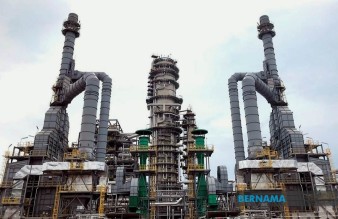
Malaysia's plans to establish a petroleum reserve must be integrated into a comprehensive national economic security framework rather than pursued as an isolated energy policy, according to investment strategy director Mohd Sedek Jantan of IPPFA Sdn Bhd. Speaking in response to Prime Minister Datuk Seri Anwar Ibrahim's proposal to study creating a petroleum reserve stock to shield the country from global supply disruptions and geopolitical tensions, Mohd Sedek emphasised that future economic crises are likely to originate from multiple sectors beyond energy alone, necessitating a multifaceted approach to national resilience.
The economist's remarks reflect growing concerns among policymakers that siloed approaches to supply security leave nations vulnerable to cascading disruptions. While acknowledging that strengthening energy security deserves prominence in Malaysia's long-term economic strategy, Mohd Sedek stressed that petroleum cannot be examined in isolation from other critical dependencies. The lesson from recent global upheavals—from pandemic-driven supply chain collapses to geopolitical conflicts affecting food and commodity flows—demonstrates that economic shocks rarely announce themselves in advance or confine themselves to a single sector.
Critical minerals and semiconductors merit particular attention in Malaysia's strategic planning, given their foundational role in modern manufacturing and technological advancement. Unlike petroleum, which traditionally received substantial policy focus, these inputs have only recently emerged as focal points for national security frameworks worldwide. Malaysia's electronics and automotive sectors depend heavily on uninterrupted access to semiconductor components, while emerging industries increasingly require rare earth elements and other critical minerals for battery technology, renewable energy systems, and advanced manufacturing. A petroleum reserve without corresponding stockpiling strategies for these materials would leave significant gaps in economic resilience.
Food security presents perhaps the most pressing vulnerability for Malaysian households and social stability. The nation imports substantial portions of essential food commodities including wheat, dairy products, and certain proteins, making the population acutely exposed to global price volatility and supply disruptions. Unlike petroleum, where Malaysia maintains some domestic production capacity and possesses refining infrastructure, food security rests almost entirely on global market access and stable supply chains. Disruptions to agricultural output in major exporting nations directly translate to inflation in Malaysian supermarkets and pressure on household purchasing power, particularly for lower-income families. Equating petroleum security with food security in policy priority would therefore constitute a fundamental misallocation of resources.
Mohd Sedek outlined three foundational principles that should guide Malaysia's approach to any strategic reserve policy. First, clear articulation of purpose is essential: reserves should protect the economy during genuine supply crises rather than serve as tools for short-term market price manipulation. This distinction matters considerably, as reserves deployed for speculative purposes generate fiscal inefficiencies and can distort markets. The Indonesian experience with its cocoa stockpile and various nations' efforts to manage rice supplies demonstrate how reserves can backfire when objectives remain ambiguous or politically motivated.
Second, policymakers must construct frameworks flexible enough to evolve as global vulnerabilities shift. Today's priority might reasonably focus on petroleum, but emerging technologies, supply chain restructuring, and climate-driven agricultural challenges may rapidly elevate other sectors. Rather than establishing permanent reserves for specific commodities, Malaysia should develop institutional capacity and methodologies to identify emerging vulnerabilities and respond adaptively. This approach acknowledges that strategic foresight inevitably proves imperfect and allows course corrections as circumstances change.
Third, implementation demands rigorous cost-benefit analysis to ensure fiscal sustainability. Determining optimal reserve sizes, designing storage facilities, arranging financing, and establishing governance structures all carry substantial budgetary implications. Public resources devoted to maintaining strategic reserves represent capital unavailable for other productivity-enhancing investments. Malaysia must therefore calibrate reserve decisions against realistic cost projections and transparent accounting of expected benefits, avoiding the trap of accumulating inventory without clear strategic rationale.
International experience offers instructive models for Malaysia's consideration. Japan's approach integrates strategic reserves with diversified supply chain strategies, resilient logistics networks, and structured public-private cooperation. Rather than relying solely on stored inventory, Japan has cultivated alternative suppliers, invested in domestic production capacity where feasible, and developed sophisticated coordination mechanisms between government and industry. South Korea similarly combines physical stockpiles with strategic supply agreements and continuous supply chain monitoring. These examples suggest that reserve accumulation works most effectively when embedded within broader supply security architectures.
The implications for Malaysia extend beyond technical policy design to fundamental questions about national economic strategy. A truly resilient economy requires integrated approaches spanning energy, food systems, technology supply chains, and digital infrastructure. Sectoral silos perpetuate vulnerability; comprehensive frameworks create genuine security. As geopolitical competition intensifies and global supply chains face mounting pressures from trade tensions and climate impacts, Malaysia's policymakers face a choice between treating each crisis reactively or developing proactive, integrated systems.
Implementing this broader framework demands institutional coordination that has historically challenged Malaysian governance. Energy policy typically resides with one ministry, agriculture with another, and digital infrastructure with yet another. Genuine economic security strategy requires breaking down these barriers and establishing whole-of-government processes for identifying vulnerabilities, prioritising interventions, and allocating resources. This represents a significant departure from traditional silos but aligns with approaches increasingly adopted by peer nations recognising that modern economic threats transcend traditional sectoral boundaries.
Mohd Sedek's emphasis on outcome measurement provides another crucial insight often overlooked in policy implementation. Rather than benchmarking success by the number of barrels stored or tonnes of food in reserve, Malaysia should measure resilience by its capacity to withstand genuine shocks. This distinction reorients focus from input metrics to output outcomes: does the reserve structure actually enhance economic stability? Can it be mobilised quickly enough to matter during genuine crises? Does it reduce volatility in essential commodity prices? These outcome-focused questions demand more sophisticated evaluation than simple inventory counts.
Moving forward, Malaysia would benefit from establishing a dedicated interagency task force charged with developing a comprehensive economic security strategy. This body should assess vulnerabilities across all critical sectors, model various disruption scenarios, and propose integrated solutions combining strategic reserves with supply diversification, domestic capacity building, and international cooperation frameworks. Such an effort would position Malaysia not merely to react to future crises but to shape resilience systematically across its entire economy.

