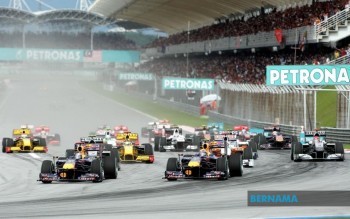
Petroliam Nasional Bhd (Petronas) moved to dispel confusion about its responsibilities regarding the Sepang International Circuit, emphasising that while it owns the naming rights, the actual ownership and operational control of the facility remain with government entities. The national oil giant issued the statement after mounting public curiosity surrounding plans to bring Formula 1 back to Malaysia's premier racing venue, with the Bahrain Grand Prix set to race at the circuit in October 2026.
The corporate clarification reveals a layered ownership structure typical of Malaysia's major infrastructure assets. Sepang International Circuit Sdn Bhd, the legal owner of the facility, operates under the Minister of Finance Incorporated (MOF Inc), while day-to-day operations fall under an agency reporting to the Ministry of Youth and Sports. This arrangement means Petronas's role is essentially restricted to brand association and naming rights, arrangements it secured in October 2023 for a three-year period. The distinction is crucial for stakeholders seeking to understand decision-making authority regarding the circuit's future.
Petrolas stressed that as it does not serve as the event organiser for F1 races at the venue, it bears no responsibility for managing ticket allocation, controlling distribution channels, or overseeing sales operations. These functions rest entirely with whoever serves as the official event organiser and their authorised sales partners. The statement underscores a common misunderstanding among Malaysian fans and media who may have conflated Petronas's high-profile involvement in global motorsport with operational authority at the domestic circuit.
Youth and Sports Minister Dr Mohammed Taufiq Johari signalled the government's intent to resurrect Malaysia's F1 Grand Prix presence just days before Petronas issued its clarification. The minister revealed that his ministry is actively engaged in discussions and preliminary assessments exploring whether the circuit could host the international championship race. Such governmental engagement represents a significant shift, given that Malaysia's last Grand Prix took place in 2017, ending a 19-year consecutive hosting streak that had established the country as one of Asia's premier racing destinations.
The Sepang circuit itself has maintained the infrastructure credentials necessary to support Formula 1 competition. It continues to hold an FIA Grade 1 licence, the highest international racing certification, and remains a fixture on the MotoGP calendar. This established capability means the track requires no major upgrades or facility enhancements to meet F1's demanding technical and safety specifications, reducing barriers to hosting the championship. The circuit's readiness contrasts sharply with many emerging racing nations that must undertake substantial capital investment to achieve F1 standards.
Formula 1's 2026 season calendar creates the opportunity for Malaysia's involvement. Originally scheduled as a 24-race championship, the sport's governing bodies have confirmed Malaysia will host the Bahrain Grand Prix at Sepang, subject to final governmental approvals and ratification by the World Motor Sport Council. The race would be slotted between the Azerbaijan Grand Prix and the Singapore Grand Prix, positioning Malaysia within a strategically important Asian cluster of races that enhances logistics efficiency and regional broadcast value.
Petrolas's long-standing commitment to Formula 1 has positioned Malaysia prominently within the sport's global ecosystem. Since 2010, the national oil company has served as title sponsor of the Mercedes-AMG Petronas F1 Team, one of the championship's most successful and recognisable programmes. This deep partnership has elevated Malaysia's international motorsport profile and created natural synergies with F1's commercial and operational frameworks. However, Petronas's sponsorship arrangements with Mercedes operate independently from its naming rights to Sepang, a distinction the company emphasised in its clarification.
The return of Formula 1 to Malaysia holds significant commercial and diplomatic implications for the country. F1 races generate substantial tourism revenues, international media exposure, and prestige for host nations. Malaysia's previous Grand Prix hosting experience demonstrated the event's capacity to attract global audiences and establish the nation as a serious player in premium international sports. The economic multiplier effects extend beyond the race weekend itself, supporting hospitality, transportation, and ancillary service sectors throughout the region.
For Malaysian motorsport enthusiasts, the prospective return represents vindication of decades of investment in facilities and institutional capacity. The Sepang circuit has evolved into a testing ground and venue for multiple international racing series, providing Malaysian drivers and engineers with world-class competitive opportunities. A return to F1 would reinvigorate public interest in motorsport and potentially inspire the next generation of Malaysian talent to pursue professional racing careers.
The complexity of the ownership and operational structure reflects Malaysia's broader approach to managing major sporting infrastructure through public-private partnerships and government agencies. While this arrangement provides stability and ensures alignment with national sporting objectives, it also creates the communications challenges evident in recent weeks. Clear delineation of responsibilities among Petronas, the Ministry of Youth and Sports, and the circuit operator will be essential as negotiations progress toward finalising the 2026 race agreement.
Singapore's established position on the F1 calendar since 2008 has reinforced Southeast Asia's attractiveness to the championship's organisers. Malaysia's potential re-entry into the calendar would create a two-nation Asian sub-region hosting consecutive F1 races, enhancing the sport's commercial viability in one of the world's fastest-growing automotive markets. This clustering also facilitates team logistics and allows broadcasters to optimise coverage schedules across the region's significant media markets.
Pending World Motor Sport Council approval, Malaysia's return to Formula 1 appears increasingly probable. The government's stated willingness to negotiate, combined with the Sepang circuit's existing technical credentials and Petronas's international motorsport standing, suggests the necessary foundations exist for successful agreement. However, the timeline remains compressed, requiring rapid progress through governmental approvals and contractual arrangements to confirm the October 2026 race date. Malaysian motorsport administrators and government officials will need to demonstrate the administrative capability and diplomatic coordination necessary to translate preliminary agreements into a confirmed calendar entry.

