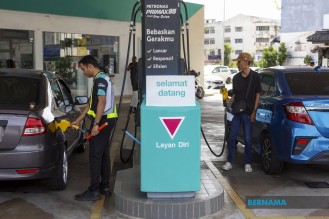
Malaysia's fuel supply chain faces no immediate disruptions, with state-owned oil giant Petronas confirming that petrol and diesel inventories will sustain the country through at least August, according to a senior government official briefing lawmakers this week. Datuk Seri Azalina Othman Said, the Minister in the Prime Minister's Department responsible for law and institutional reform, delivered the reassurance during the National Economic Action Council's regular meeting, citing direct communications from the petroleum company's leadership.
The stability of Petronas's vast retail network holds strategic importance for Malaysia's broader energy security picture. The company operates approximately half of all petrol stations nationwide, making it the dominant player in domestic fuel distribution and a crucial buffer against supply disruptions. This commanding market position means Petronas's operational status directly shapes household and industrial access to affordable fuel across Peninsular Malaysia, Sabah, and Sarawak. The company's subsidiary, Petronas Dagangan Bhd, which operates the retail brand, manages the complex logistics of storing and delivering refined products to hundreds of locations countrywide.
The government's confidence in fuel availability through the northern hemisphere summer reflects broader strategic planning to insulate Malaysia from external energy shocks. Geopolitical tensions in West Asia have created unpredictable crude oil markets, threatening supply chains throughout Southeast Asia. Malaysia, despite being an oil exporter in absolute terms, relies on complex refining and import arrangements to meet domestic consumption patterns. The explicit commitment to August availability suggests Petronas has either secured sufficient crude feedstock or drawn down strategic reserves to weather anticipated disruptions during the forthcoming months.
Beyond the immediate timeframe, the government has established institutional mechanisms to monitor energy security continuously. The Crisis Management Task Force operating under MTEN's umbrella represents a coordinated response to what officials characterize as an ongoing global energy crisis. This body functions as both an early-warning system and an operational command centre, tracking real-time supply situations across fuel, petroleum, and broader energy infrastructure. The task force's mandate extends beyond merely ensuring adequate supply; it encompasses price stability, prevention of smuggling, and countering irregular market activities that could undermine official distribution channels.
Diversification of crude oil sourcing has emerged as a cornerstone of Malaysia's energy resilience strategy. Rather than depending on traditional Middle Eastern suppliers, government officials and Petronas are actively cultivating relationships with exporters in West Africa and the Americas. Angola, Nigeria, and Brazil represent alternative sources with substantial production capacity and relatively stable political environments. However, securing these supplies involves technical considerations beyond simple commercial negotiation. Different crude grades possess distinct refining characteristics, requiring Malaysian refineries to adjust processing parameters and potentially recalibrate output mixes. The contractual frameworks governing long-distance maritime shipments also demand careful structuring to ensure price competitiveness and delivery reliability.
The question posed by Member of Parliament Khairil Nizam Khirudin specifically referenced Petronas's earlier statement that supply guarantees extended only to the end of June 2026, creating an apparent discrepancy with the government's August timeline. This apparent tension may reflect differing definitions of "guarantee"—Petronas might reserve the right to issue formal guarantees based on contracted supplies, while the government's assessment encompasses broader inventory management and procurement flexibility. Such definitional gaps between corporate statements and governmental assurances sometimes cause public confusion about energy security, though both entities are likely describing the same underlying operational picture from different institutional vantage points.
Malaysia's fuel supply predicament exists within a distinctly Southeast Asian context. Neighbouring economies face comparable pressures, but with varying resilience levels depending on domestic refining capacity, strategic reserves, and regional relationships. Singapore's position as a refining hub provides leverage unavailable to most ASEAN members, while Thailand's significant refining sector offers some buffer against disruptions. Indonesia's dual status as both major producer and consumer creates different strategic calculus. Malaysia's advantage lies in Petronas's integrated operations spanning exploration, production, refining, and retail distribution, providing multiple adjustment points when external conditions shift.
The price control dimension of the task force's mandate carries particular political sensitivity in Malaysia. Fuel pricing has historically triggered intense public reaction, with subsidy structures representing a substantial fiscal commitment. The government's stated intention to control prices while managing supply reflects an attempt to balance competing objectives—maintaining affordability for ordinary Malaysians while providing Petronas adequate commercial returns for necessary investments in infrastructure and exploration. International crude price volatility could complicate this balancing act substantially if West Asian tensions escalate further, potentially forcing difficult policy choices between budgetary sustainability and social stability.
Smuggling represents an underappreciated challenge in Malaysia's energy security architecture. The differential between domestic regulated prices and prices in neighbouring jurisdictions creates incentives for black-market trade, diverting fuel from legitimate consumption and creating revenue leakage. The task force's commitment to preventing smuggling reflects recognition that supply adequacy means little if significant volumes leak into underground networks or cross borders illicitly. This enforcement dimension requires coordination between energy authorities, customs officials, and law enforcement agencies operating at maritime and land frontiers.
The August timeline itself warrants scrutiny regarding what occurs thereafter. While government officials have provided visibility only through summer, the underlying question concerns Malaysia's energy trajectory through 2026 and beyond. Petronas's original June 2026 reference point suggests the company has visibility into supply commitments extending over the coming year. Medium-term energy planning must address whether current procurement strategies and refining configurations sufficiently support projected demand growth in a developing economy. Industrial expansion, rising vehicle ownership, and power generation requirements typically push fuel consumption upward, potentially outpacing supply growth if new reserves or alternative energy sources fail to materialize.
The government's establishment of specialized task forces and proactive engagement with oil exporters internationally demonstrates heightened consciousness of energy risks that many developed economies have historically taken for granted. Malaysia's vulnerability to external shocks—whether geopolitical disruptions, price volatility, or maritime supply chain disruptions—requires continuous strategic focus. The coming months will test whether Petronas's operational excellence and the government's coordination mechanisms prove sufficient to navigate whatever challenges the global energy environment presents, while setting foundations for longer-term sustainability of Malaysia's energy security posture.

