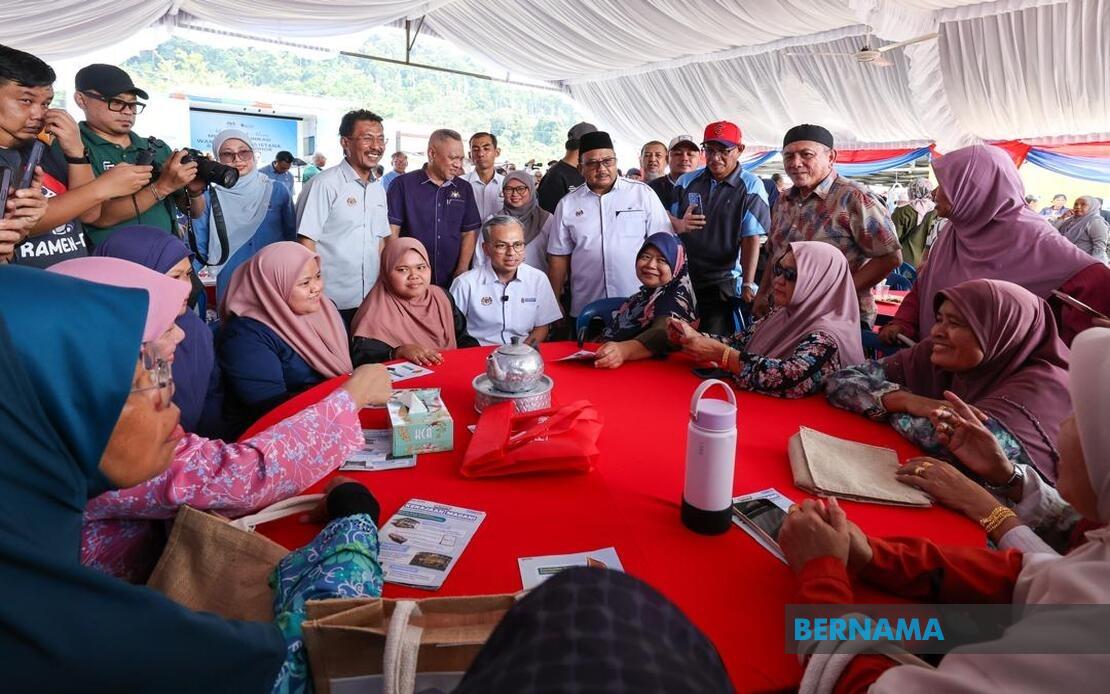
Pakatan Harapan's Communications Director Datuk Fahmi Fadzil has rejected criticism that the coalition's decision to launch its 'Johor for All' manifesto represented poor campaign strategy, insisting instead that the timing aligned with the coalition's rigorous approval process and the natural rhythm of the electoral campaign. Speaking during a grassroots engagement in Batu Pahat on July 4, Fahmi—who also serves as Communications Minister—argued that releasing the manifesto only after comprehensive vetting and endorsement from the coalition's highest levels demonstrated responsible governance rather than campaign weakness.
The manifesto launch on Friday coincided with the beginning of the campaign's second week, a period when both major coalitions were pivoting from candidate introductions to detailed policy presentations. Fahmi contended that this sequencing allowed voters sufficient time to become familiar with PH's candidates before engaging with substantive policy proposals, creating a logical narrative arc that should strengthen rather than weaken the coalition's messaging. He characterised concerns about timing as disconnected from the electoral realities on the ground, where grassroots participation suggested genuine public engagement with PH's campaign.
Fahmi's remarks directly addressed criticism from former Bangi MP Ong Kian Ming, who had predicted a Barisan Nasional landslide victory based partly on PH's supposed campaign disadvantages, including the delayed manifesto unveiling. Ong had also cited PH's failure to name a menteri besar candidate and the absence of senior figures contesting as additional liabilities. Rather than defending against these specific charges point-by-point, Fahmi reframed the manifesto delay as a deliberate choice reflecting PH's commitment to quality over speed—a distinction that frames the coalition's approach as principled rather than reactive.
The manifesto approval process involved endorsement from the coalition's top leadership, including Prime Minister Anwar Ibrahim, suggesting that any delay reflected not organisational dysfunction but rather the complexity of achieving consensus among multiple parties with distinct policy preferences. This detail becomes significant when considering that PH comprises parties with sometimes divergent constituencies and ideological commitments. The requirement for top-level approval, while potentially time-consuming, provides legitimacy and ensures that campaign promises carry the weight of the coalition's entire leadership structure rather than individual faction preferences.
Fahmi also seized the opportunity to critique Khairy Jamaluddin's description of the PH manifesto as merely derivative of Barisan Nasional's platform. Rather than defend the manifesto's originality directly, Fahmi questioned why the former UMNO Youth chief appeared to be shouldering more of the campaign burden than Johor Menteri Besar Datuk Onn Hafiz Ghazi. This rhetorical move shifted focus from policy substance to questions about BN's campaign organisation and leadership visibility, suggesting that if Khairy possessed greater stature than his own candidate, perhaps his energy would be better directed toward strengthening the menteri besar's campaign presence.
The jab at Khairy contained a playful inversion of the "copy and paste" accusation. Fahmi suggested that rather than the manifesto being derivative, Onn Hafiz might benefit from copying and pasting Khairy's campaign vigour and political standing into his own performance. This rhetorical manoeuvre served multiple purposes: it deflected the originality criticism while simultaneously questioning whether BN's campaign machinery was functioning optimally if its designated leader required such supplementary support from a rival figure.
The election represents a significant test of PH's regional competitiveness and organisational strength ahead of the next federal polls. The 16th Johor State Election encompasses 56 state seats with 172 candidates competing, scheduled for July 11 with early voting available on July 7. Johor's significance extends beyond the state level—as Malaysia's second-largest economy and a demographically diverse region, electoral performance there carries implications for how both coalitions are tracking with different voter segments and whether ground-level momentum exists.
Fahmi expressed confidence that internal DAP controversies would not derail PH's campaign trajectory, citing robust grassroots attendance at coalition events as evidence of sustained public interest. The reference to DAP tensions centred on allegations that party figures had supported pardoning former Prime Minister Datuk Seri Najib Tun Razak, claims that had prompted former Skudai assemblyman Marina Ibrahim to announce her retirement from politics citing disillusionment with what she described as DAP leadership hypocrisy on the issue. Such internal party conflicts potentially present liabilities for a coalition already battling perceptions of instability.
Fahmi's assertion that grassroots response remained strong rested on observable turnout at PH campaign events across the state during the preceding days. He specifically noted that even the DAP representative contesting for the Bentayan state seat, Ng Yak Howe, continued to receive community support despite the pardon-related controversy. This observation suggests that while social media discussion of internal party tensions might generate headlines, they had not translated into measurable public alienation from PH candidates at the community level—a distinction between digital discourse and electoral reality that deserves closer examination throughout the campaign.
The Communications Ministry secretary-general Datuk Abdul Halim Hamzah's presence at the Kampung Istana event alongside Fahmi and PH's Penggaram candidate Felicia Poh Rui Ling underscored the institutional commitment to PH's Johor campaign. This signalling of high-level governmental support, while within legitimate bounds of campaign engagement, also highlighted how the ministry's resources were being deployed to support the ruling coalition's electoral efforts.
Fahmi's defence of the manifesto timing ultimately rested on arguing that democratic elections involve competing goods—comprehensive policy development versus rapid campaign rollout—and that PH had prioritised the former. Whether voters weighted these considerations similarly would become apparent on polling day. The campaign's first two weeks had established baseline dynamics: a ruling coalition emphasising institutional competence and policy substance, opposition forces questioning both the substance and the campaign's organisational cohesion, and grassroots networks that appeared engaged but whose ultimate voting preferences remained uncertain.
For Malaysian political observers, the Johor election offered insights into post-election political dynamics and coalition durability. PH's manifest commitment to internal consultation and leadership approval, while possibly extending timelines, suggested an attempt to address perceptions of factional competition that had plagued the coalition during its previous federal government tenure. Whether this institutionalised approach to decision-making proved electorally advantageous remained to be determined as the campaign entered its decisive phase.

