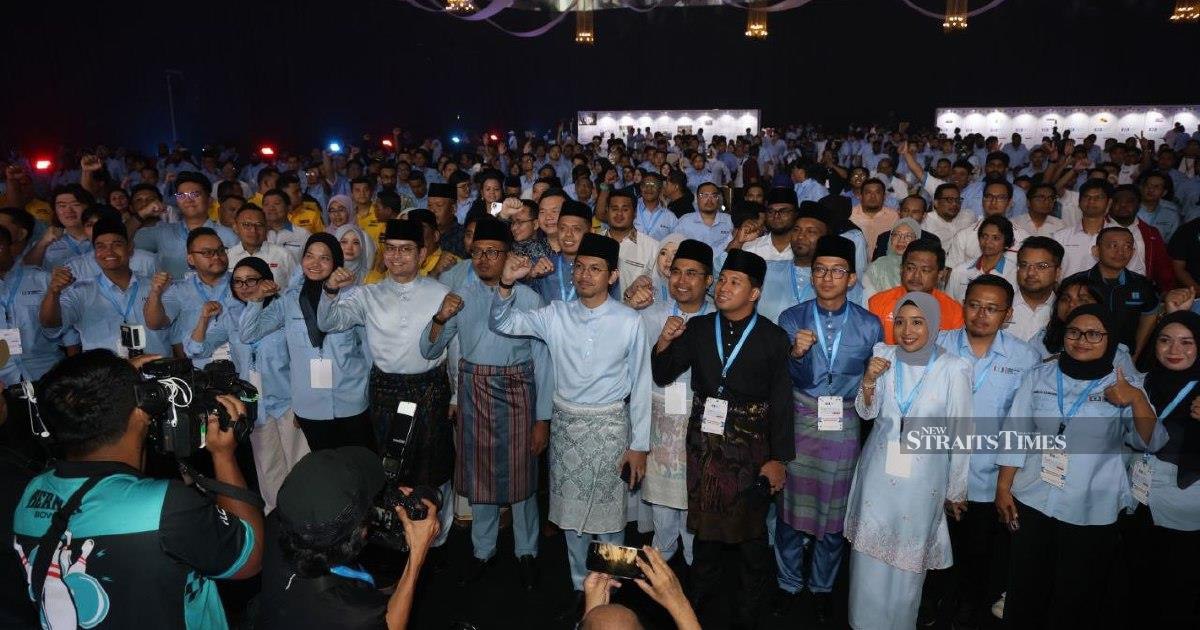
Pakatan Harapan faces an introspective moment following disappointing election results in Johor and Negri Sembilan, with the coalition's youth leadership pushing for honest self-examination rather than external scapegoating. Speaking in Ayer Keroh, PKR Youth chief Muhammad Kamil Abdul Munim delivered a pointed message to the broader PH leadership: the electorate's rejection at the ballot box reflects real grievances that the coalition must address directly and comprehensively.
The stance adopted by Kamil represents a significant acknowledgment within PH's ranks that voter dissatisfaction stems from substantive policy performance gaps and political delivery failures, rather than from public misunderstanding or external interference. This recognition carries particular weight given that PKR Youth occupies a crucial mobilisation role within the coalition's grassroots machinery. By acknowledging that voters acted rationally based on their assessment of the coalition's tenure, Kamil signals that PH's recovery strategy must prioritise genuine reform over defensive public relations exercises.
The electoral reversals in Johor and Negri Sembilan serve as crucial barometers of public sentiment across Malaysia's political landscape. These states represent important competitive terrain where PH has traditionally maintained significant influence and infrastructure. Losses in these constituencies suggest that the coalition's accumulated governance record—encompassing economic management, service delivery, and political stability—has failed to meet voter expectations sufficiently. The coalition cannot discount these signals as mere electoral noise or attribute them solely to opposition mobilisation tactics.
For Malaysian voters broadly, PH's openness to self-critique carries implications extending beyond internal party mechanics. Public confidence in political institutions depends partly on whether ruling coalitions demonstrate accountability when electoral outcomes disappoint them. Kamil's position that voters deserve respect for their choices, rather than dismissal or blame, reinforces democratic norms that remain vital during periods of political transition and institutional stress. This stance also creates space for constructive policy debate about what voters genuinely want from their representatives.
The coalition's youth wing has historically served as an important counterbalance to establishment pressures within PH, often championing more progressive positions and greater responsiveness to younger demographic constituencies. Kamil's intervention suggests that this internal dynamic continues functioning, with junior leadership willing to challenge senior figures toward greater accountability. This internal plurality itself may contribute to rebuilding trust, as it demonstrates that PH contains critical voices demanding improvement rather than lockstep messaging discipline.
Regaining voter confidence requires PH to conduct detailed constituency-level analysis of why supporters switched allegiances or abstained from voting. Such diagnostic work must transcend vague attributions to external factors and instead examine tangible grievances—whether related to economic opportunity, infrastructure delivery, healthcare quality, educational standards, or perceptions of corruption and political patronage. Without this granular understanding, coalition strategies for recovery will lack credibility with electorate segments that have demonstrated willingness to punish poor performance.
The timing of Kamil's remarks carries significance for PH's broader political positioning ahead of federal-level developments. Should the coalition recognise that voter dissatisfaction reflects real governance shortcomings rather than irrational behaviour, this creates opening for more ambitious reform agendas addressing systemic issues. Conversely, if PH leadership continues attributing losses to external circumstances, the coalition risks entrenching approaches that voters have already rejected, perpetuating the performance gaps that triggered electoral punishment.
For Southeast Asian observers, PH's trajectory remains instructive regarding coalition sustainability and voter expectations across the region. Democratic electorates increasingly demand tangible improvements in living standards, service quality, and transparent governance rather than accepting ideological appeals or revolutionary narratives alone. PH's experience demonstrates that winning office requires demonstrating competent administration and delivering material benefits, particularly for economically vulnerable constituencies facing cost-of-living pressures and limited social mobility pathways.
The coalition's recovery pathway necessarily involves communicating new policy commitments backed by credible implementation frameworks. Voters in Johor and Negri Sembilan have signalled that previous PH messaging and governance record failed to convince them of the coalition's fitness for continued trust. Rebuilding requires moving beyond apologies or personnel changes toward structural policy shifts addressing the specific concerns that drove electoral outcomes. This means concrete proposals on economic restructuring, targeted subsidy reform, sectoral competitiveness, and enhanced anti-corruption mechanisms with institutional teeth.
Kamil's intervention also reflects broader recognition within PH that the coalition's internal cohesion depends partly on shared commitment to voter-responsive governance rather than narrow factional interests. By centering voter agency and rationality, PH's youth leadership implicitly argues that the coalition's long-term sustainability requires choosing difficult reforms over comfortable complacency. This positioning may help galvanise broader coalition efforts toward genuine renewal rather than superficial adjustments that fail to address underlying electoral dissatisfaction.
Looking forward, how PH responds to these electoral setbacks will significantly influence Malaysian politics for the next electoral cycle. Should the coalition embrace critical self-assessment and pursue substantive policy reform, the results may demonstrate to voters that electoral punishment produces responsive institutional change. Conversely, dismissing voter decisions while maintaining existing approaches would signal that PH has become disconnected from public concerns—a perception likely to deepen electoral losses in future contests across competitive states.

