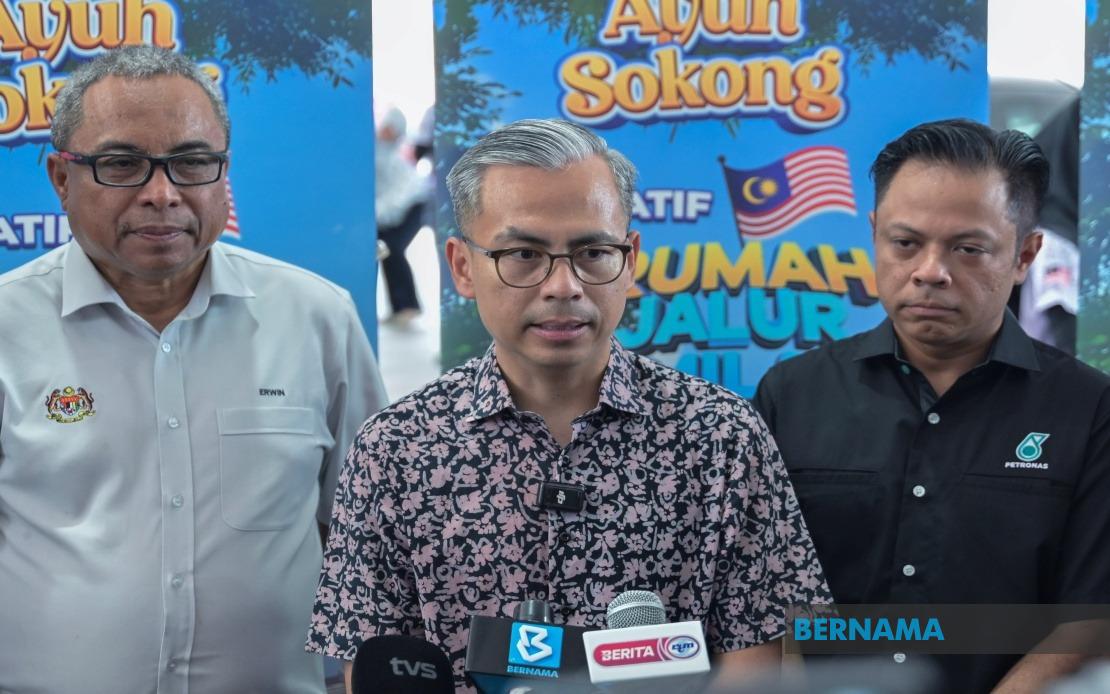
The prospect of negotiated seat arrangements in Melaka's forthcoming state election has gained traction after Pakatan Harapan signalled receptiveness to discussions with Barisan Nasional, marking a significant shift toward collaborative politics in one of Malaysia's most strategically contested states. Communications Minister Datuk Seri Fahmi Fadzil stated that PH views Barisan Nasional's openness to seat distribution talks as a meaningful opportunity worthy of serious examination, emphasising that such pragmatism could benefit both the state and the nation's broader political stability.
The terrain for these negotiations is notably uneven, reflecting the current political reality in Melaka following recent electoral cycles. Barisan Nasional presently holds 21 seats in the 36-member Melaka State Legislative Assembly, while Pakatan Harapan commands only five seats, leaving significant ground for BN to defend and potentially expand. This disparity underscores the practical constraints within which any seat-sharing arrangement must operate, as Fahmi acknowledged, suggesting that any deal would need to respect these fundamental numbers rather than attempt to artificially rebalance them through mere redistribution.
Direct engagement between coalition leadership has already commenced at the state level, with Keadilan Melaka chairman Yang Berhormat Adam Adli establishing contact with Melaka Chief Minister Datuk Seri Ab Rauf Yusof to explore possibilities for coordinated candidate placement. This line of communication represents a pragmatic mechanism for testing the parameters of potential cooperation, allowing both sides to gauge commitment and identify areas of mutual interest without public declarations that might constrain negotiating positions. The fact that such talks are occurring at all signals that both coalitions recognise the electoral mathematics favour coordinated action over fragmented competition in certain constituencies.
Barisan Nasional's position, as articulated by coalition chairman Datuk Seri Dr Ahmad Zahid Hamidi, establishes clear boundaries within which flexibility might operate. While BN signalled willingness to discuss not merely seat distribution but even the exchange of seats between coalition partners, Ahmad Zahid framed these discussions with a fundamental principle: seats already won by any party deserve protection and respect, and cannot be casually transferred to coalition allies. This stance guards against the scenario where larger or more influential partners might pressure smaller ones to surrender hard-won constituencies, a concern that has historically plagued multi-party coalitions across Southeast Asia.
The timing of these overtures carries particular significance for Malaysian politics. Both coalitions appear motivated by the imperative to present unified fronts in contested states where fragmentation could benefit opposition challengers, particularly Perikatan Nasional and local parties with strong community roots. The negotiation framework extends beyond merely selecting which parties contest which seats; it contemplates the possibility of seat exchanges where strategic considerations favour repositioning candidates across party lines while maintaining overall coalition seat targets. Such arrangements require extraordinary trust and clear documentation to prevent post-election disputes about which party has delivered which constituencies.
Fahmi's comments reveal that discussions need not be confined to state-level mechanics but could involve federal-level coordination, suggesting that coalition partnership frameworks extending beyond Melaka might be explored simultaneously. This horizontal integration of negotiations—examining state-specific arrangements alongside broader national coalition architecture—reflects sophisticated political management by PH leadership. By maintaining flexibility on state-level seat arrangements while potentially leveraging federal resources or coordination mechanisms, PH positions itself as a pragmatic partner willing to subordinate short-term individual ambitions to longer-term coalition viability.
The Melaka state election emerges as a testing ground for coalition discipline and cooperation principles that may reverberate across other state contests and the federal political arena. A successful negotiated arrangement in Melaka, if it produces tangible coalition gains or effectively demonstrates united opposition to rival coalitions, would establish a model that both PH and BN might reference in future electoral cycles. Conversely, failure to reach agreement or post-election disputes about seat allocations could accelerate coalition fracturing and fuel scepticism about the durability of these inter-party arrangements.
For Malaysian voters, particularly those in Melaka, these backstage negotiations represent the practical machinery through which democratic competition operates in a multi-party, coalition-based system. Rather than viewing seat negotiations as mere backroom deals, they reflect the necessary compromises required when no single party commands majority support and electoral success requires temporary alliances between parties with sometimes divergent interests and ideologies. The transparency with which both coalitions are discussing these arrangements—through public statements by senior leaders rather than hidden negotiations—suggests an attempt to build legitimacy for whatever arrangement eventually emerges.
The success of PH-BN negotiations in Melaka will likely depend on whether both coalitions can distinguish between those constituencies where cooperation serves mutual interests and those where competitive advantage demands independent candidatures. Effective seat-sharing requires sophisticated political analysis of local demographic trends, incumbent performance records, and challenger viability—analysis that must be conducted expeditiously given electoral timelines. Any agreement must also account for smaller coalition partners who might feel sidelined or disadvantaged by arrangements negotiated primarily between PH and BN heavyweights, requiring inclusive dialogue that respects all coalition members' baseline interests.

