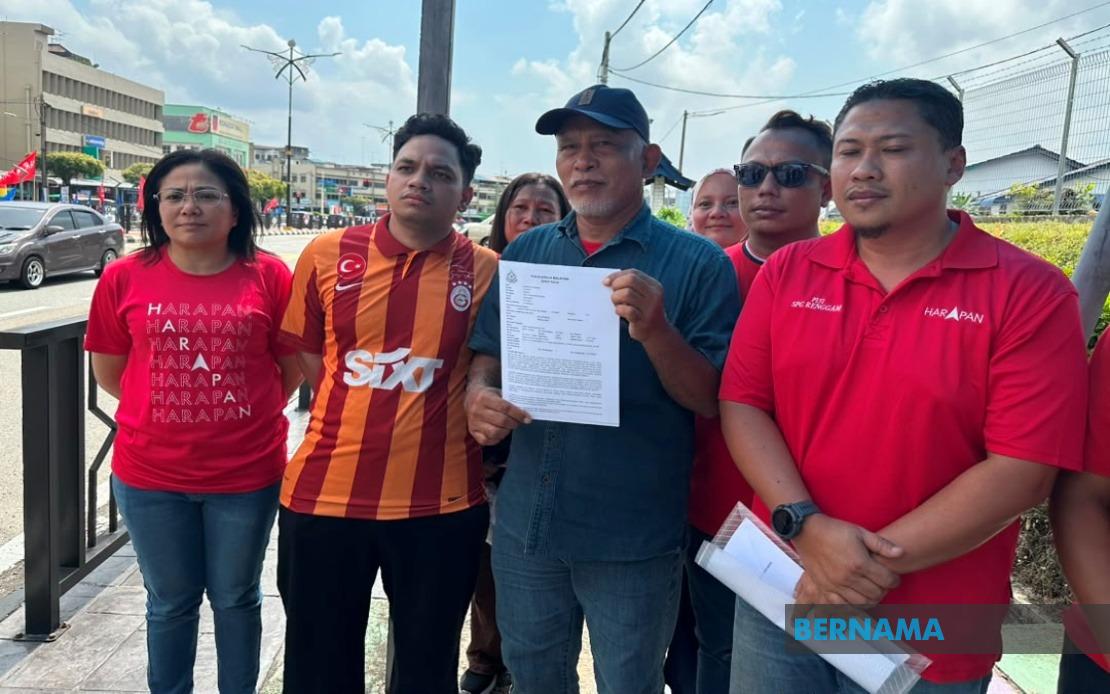
A representative of the Pakatan Harapan candidate contesting the Machap seat has escalated allegations of improper campaign conduct by lodging a police complaint against Johor Menteri Besar Datuk Onn Hafiz Ghazi. The report, filed at Simpang Renggam district police headquarters, centres on what PH officials characterise as a systematic attempt to channel students from technical and vocational institutions towards politically motivated activities designed to benefit Barisan Nasional candidates during the ongoing state election campaign.
Khiru Nasir Rohani, who brought the formal complaint, detailed allegations that local TVET institutions' students were coordinated to participate in what ostensibly were educational programmes but functioned primarily as campaign platforms. The July 4 event held in Kluang featured over 100 vocational students who were allegedly encouraged, or possibly compelled, to attend what became an overt political rally supporting BN contenders. This sequence of events prompted serious questions about whether state apparatus and public educational facilities were being weaponised for partisan advantage.
The accusations strike at the heart of democratic integrity concerns. If validated, the alleged conduct would represent a troubling intersection of institutional authority and electoral manipulation—precisely the type of systematic advantage that election laws seek to prevent. The Election Offences Act 1954 explicitly prohibits undue influence and proscribes the misuse of official position or public institutions to advance campaign objectives. The allegations, if substantiated through investigation, could therefore constitute multiple statutory violations deserving careful legal scrutiny.
Khiru Nasir, serving also as Simpang Renggam Amanah deputy division chief, deliberately framed this matter as requiring coordinated action across multiple enforcement agencies. His explicit call for simultaneous investigation by police, the Malaysian Anti-Corruption Commission, and the Election Commission reflects the sophisticated nature of the alleged transgression. When public institutions, educational facilities, and official authority potentially converge in service of partisan goals, no single agency possesses complete investigative capacity. Such coordination becomes necessary to establish whether the alleged conduct involved resource misallocation, breach of duty, or systematic corruption.
The timing and scale of the alleged activity deserve particular attention in assessing severity. The July 4 programme occurred merely days before election polling, suggesting any influence exerted would carry heightened electoral consequence. The assembly of over 100 vocational students represented a meaningful block of potential voters, many of whom may have been less politically sophisticated and thus potentially more susceptible to institutional messaging. The deliberate targeting of this demographic raises questions about whether the campaign deliberately sought to exploit perceived vulnerabilities.
Johor's electoral landscape has witnessed intensifying partisan competition, making this allegation particularly significant within the state's political context. The Machap constituency itself represents closely contested ground where marginal advantages can determine outcomes. In such environments, the temptation to leverage institutional resources becomes correspondingly acute, even as the democratic consequences of yielding to such temptation grow proportionally severe. The allegations against Onn Hafiz, should they gain evidentiary support, would illuminate the pressures bearing upon office-holders in competitive electoral contests.
The broader implications extend across Malaysia's electoral system. If TVET students and educational institutions can be instrumentalised for campaign purposes without consequence, the integrity of every future election comes into question. Educational establishments exist to serve pedagogical missions independent of political cycles. Their independence from partisan pressure constitutes an essential precondition for equitable electoral competition. The instant allegations, if overlooked, would establish a problematic precedent normalising such interference.
For Malaysian voters contemplating electoral choices, these allegations underscore the importance of vigilance regarding campaign practices. Citizens encountering pressure to attend politically motivated events organised through educational or official channels face a civic duty to report such conduct. The Malaysia Anti-Corruption Commission's public reporting channels and election observer mechanisms exist precisely to facilitate such accountability. Voter participation in oversight mechanisms strengthens democratic institutions more effectively than passive acceptance of improper conduct.
The Election Commission faces particular responsibility in this instance. Its mandate encompasses safeguarding fair electoral processes. When credible allegations surface regarding institutional resources supporting specific candidates, the Commission must act with determination to investigate and, where warranted, enforce consequences. Election offences demand proportionate penalties to maintain the legitimacy of democratic contests. Lenient treatment of institutional misuse would effectively incentivise future breaches by demonstrating minimal risk.
Onn Hafiz's position as Menteri Besar magnifies the seriousness of these allegations. Chief ministers wield substantial institutional authority and control significant resource allocation decisions. If such authority becomes deployed for electoral advantage, the asymmetry of competition becomes fundamentally distorted. Opposition candidates operating without ministerial apparatus find themselves competing against not merely fellow politicians but against the machinery of state itself. Such imbalance corrodes democratic principles regardless of which coalition wields such power.
The ongoing Johor state election, featuring 172 candidates contesting 56 seats with polling scheduled shortly after these allegations emerged, creates temporal urgency for investigative authorities. Voters deserve clarity regarding campaign conduct before casting ballots. Investigations delayed until after elections lose practical significance regarding electoral fairness. The Election Commission and police must prioritise these inquiries to ensure voters can assess the integrity of competing candidates and coalitions based on current information rather than belated post-election findings.
As Malaysia continues navigating increasingly competitive electoral environments, these allegations serve as a cautionary moment. Democratic health depends upon all participants—regardless of coalition—respecting boundaries separating legitimate campaigning from institutional abuse. The investigation into allegations against Onn Hafiz, conducted thoroughly and transparently, will contribute meaningfully to establishing whether such boundaries remain respected or whether Malaysia's electoral system has shifted toward acceptance of systematic institutional misuse. The stakes for democratic governance extend well beyond a single state election.

