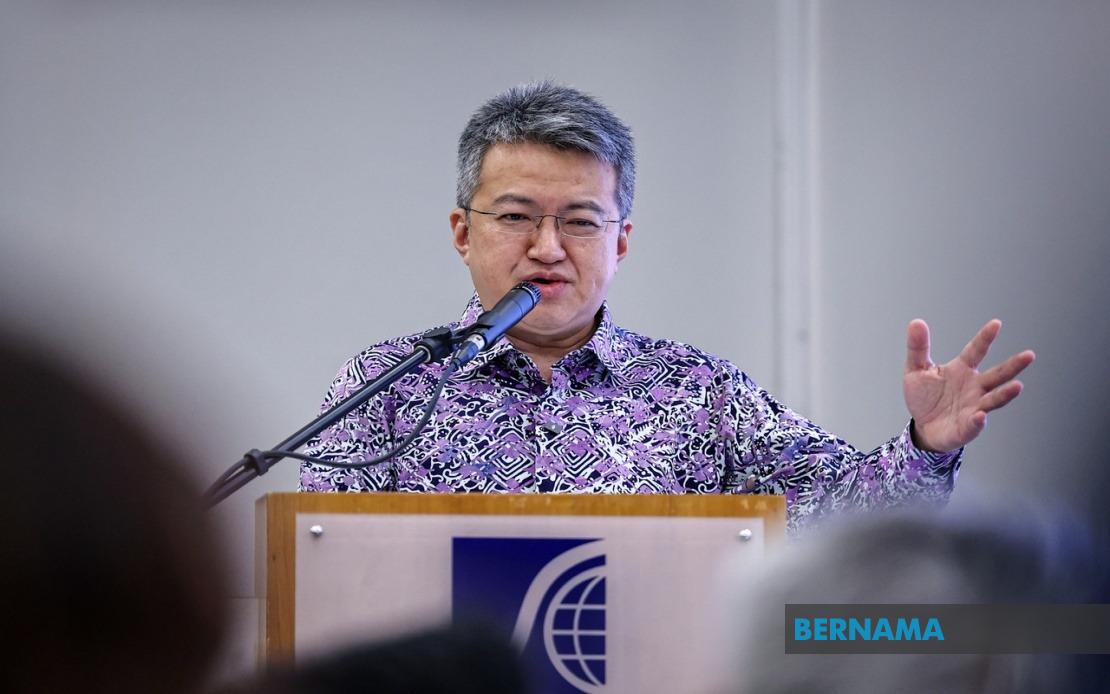
Pakatan Harapan is treading carefully as it prepares for the Johor state election, acutely aware that the absence of Perikatan Nasional candidates from 23 constituencies could create an unpredictable voting environment. The coalition's concern reflects a fundamental challenge in Malaysian electoral politics: when voters lose their preferred option at the ballot box, their next choice becomes a significant unknown. DAP Strategic Director Liew Chin Tong articulated this anxiety in his assessment ahead of the July 11 polling day, suggesting that the traditional calculation of vote distributions becomes fraught with uncertainty when a major political force withdraws from specific contests.
The strategic dilemma facing PH hinges on whether PN supporters in those 23 seats will migrate to competing coalitions or parties, and crucially, where they will ultimately place their votes. This matters enormously because several constituencies are expected to be tightly contested, where even modest shifts in voter preference could determine the winner. Liew, who serves as Deputy Finance Minister, underscored that DAP candidates in particular face heightened risks in such circumstances. The absence of a credible third option could theoretically benefit Barisan Nasional, which traditionally contests most seats, but voter psychology is rarely so predictable. Some disaffected PN voters might abstain entirely, while others could surprise analysts by voting for candidates they might previously have overlooked.
Liew's candid observation that "every election presents risks and possibilities that we may not anticipate" reflects the genuine uncertainty pervading PH's campaign calculations. Rather than claiming confidence in their ability to convert PN voters, the coalition's leadership is adopting a more defensive posture, acknowledging that complacency would be imprudent. This measured approach stands in contrast to triumphalist messaging that sometimes characterises Malaysian political campaigning. The emphasis on remaining vigilant, campaigning diligently, and continuously articulating new ideas suggests PH recognises that voter trust cannot be taken for granted, particularly in a political landscape where consolidation among coalitions has left fewer safe seats.
PH's overall campaign strategy for Johor reflects an attempt to compensate for structural uncertainties through human capital. The coalition has deliberately fielded younger candidates combined with established figures, betting that a refreshed slate can appeal to voters seeking change while maintaining experience where needed. This dual approach acknowledges generational shifts in the electorate and the growing demand for new leadership particularly among younger voters who came of age after the 2018 political tsunami. By presenting candidates deemed best suited to their respective constituencies, PH aims to offset the mechanical advantage that might otherwise accrue to competitors through vote leakage from the uncontested seats.
One emblematic example of PH's leadership renewal is occurring in Perling, where Liew Chin Tong has decided not to defend the seat he won in 2022. The Perling state assembly constituency, encompassing 109,992 registered voters, represents a microcosm of broader coalition dynamics. Liew's decision aligns with DAP's formal principle against allowing elected representatives to simultaneously hold parliamentary and state assembly positions. This constraint, while promoting focus and preventing dual-office holding, nevertheless removes an incumbent advantage that might otherwise assist PH in a marginal constituency. Liew's explicit desire to facilitate generational transition within DAP demonstrates the coalition's commitment to institutionalising renewal rather than treating it as a rhetorical device.
The beneficiary of Liew's withdrawal is Alan Tee Boon Tsong, a former Senai assemblyman who inherits both the opportunity and burden of defending a relatively secure PH-held seat. Tee's previous legislative experience provides some insulation against the wider uncertainties afflicting other constituencies. Nevertheless, Perling's three-cornered configuration introduces genuine unpredictability. Barisan Nasional's candidate P. Pannir Selvam represents the traditional opposition, while Parti Bersama Malaysia's Boo Wei Han offers a potentially disruptive third option. Should PN voters in Perling coalesce around either the BN candidate or the Bersama option, they could theoretically complicate Tee's path to victory, despite the seat's historical lean towards PH.
The emergence of Parti Bersama Malaysia as a contesting force in multiple constituencies represents another layer of complexity for PH's calculations. As a newer political entity, Bersama's vote-pulling capacity remains unclear, making it difficult for established coalitions to model outcomes with confidence. In seats where PN is absent, voters with specific grievances or seeking a genuinely alternative voice might gravitate toward Bersama, particularly if the party has articulated positions resonating with local concerns. This potential fragmentation of the opposition vote could theoretically benefit PH in some seats while harming it in others, depending on local dynamics and campaign effectiveness.
The structural context of PN's decision to contest fewer seats in Johor deserves attention. While not explicitly stated in PH's public messaging, this withdrawal likely reflects strategic calculations by PN regarding resource allocation and seat-winning probability. By concentrating on constituencies where PN believes it has stronger prospects, the coalition attempts to maximise efficiency. However, this strategy creates the very uncertainty now troubling PH planners. The 23 uncontested constituencies become political free agents where voter behaviour becomes less predictable and where ground-level campaign work becomes disproportionately important.
For Malaysian electoral observers and regional analysts, the Johor contest illustrates how coalition politics increasingly shapes electoral outcomes beyond the traditional binary left versus right framework. With PH, PN, and BN all competing alongside smaller parties like Bersama, the electorate faces a more fragmented landscape than existed even in 2022. The risk-reward calculus for voters becomes more complex, and the challenge for coalition managers intensifies correspondingly. PH's cautious tone suggests the coalition recognises it cannot rely on structural advantages or traditional voting patterns to ensure victory, necessitating more sophisticated campaign strategies attuned to local variation and voter sentiment.
The Johor election, scheduled for July 11 with early voting on July 7, will provide crucial data on how PN voters behave when their coalition is absent from the ballot. The results could reshape understanding of voter loyalty and coalition strength across Malaysia. Should PH perform worse than expected in the 23 uncontested seats despite superior campaign organisation, it would signal that PN retains stronger voter attachment than previously assumed. Conversely, if PH's candidates perform robustly, it might suggest that voters have genuinely shifted allegiances or that the coalition's renewed candidate roster successfully appeals across traditional divides. Either outcome carries implications for future elections and for the broader trajectory of Malaysian coalition politics.

