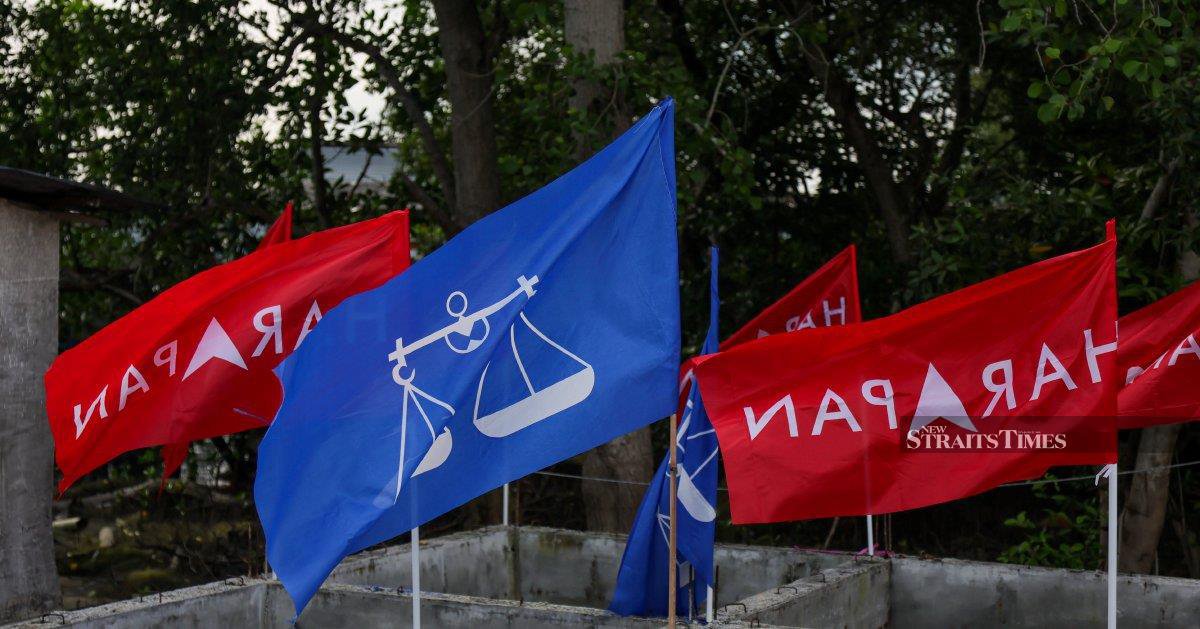
The Pakatan Harapan youth wing has escalated political tensions by demanding that every Barisan Nasional minister and deputy minister step down from the Cabinet, citing a fundamental breach of the unity government's foundational principles. The move represents a dramatic escalation in internal coalition friction, as PH youth leaders argue that BN's recent electoral coordination with Perikatan Nasional in Johor and Negri Sembilan elections constitutes a betrayal of the governing alliance that has held since 2023.
The controversy centres on what PH perceives as BN's duplicitous positioning within the unity government framework. While maintaining ministerial positions that depend on the broader PH-BN coalition, Barisan Nasional has simultaneously pursued electoral cooperation with Perikatan Nasional, an opposition bloc fundamentally at odds with PH's political direction and policy agenda. This apparent double allegiance has become untenable to younger party members, who view it as incompatible with good-faith coalition governance.
The Johor and Negri Sembilan state elections have become flashpoints for these disagreements. Rather than presenting a unified slate against fragmented opposition forces, BN's actions have suggested a willingness to work pragmatically with PN in specific electoral contexts, a manoeuvre that flies in the face of the national coalition's stated commitment to stable, predictable governance. For PH's youth wing, such tactical flexibility signals that BN's commitment to the unity government is conditional rather than principled.
Understanding the broader context is crucial for Malaysian political observers. The unity government itself emerged from unprecedented circumstances following the 2022 general election, when no single coalition achieved a clear parliamentary majority. The arrangement between PH and BN represented a pragmatic accommodation between historically bitter rivals, each bringing significant parliamentary numbers to create governmental stability. However, this marriage of convenience has always contained inherent tensions, particularly given the differing voter bases and policy preferences of the constituent parties.
Barisan Nasional's historical dominance in Malaysian politics means that many traditional BN constituencies view Perikatan Nasional as ideologically and programmatically closer than Pakatan Harapan. The party's electoral calculations at state level often reflect these ground realities, creating friction with the national-level unity government framework. BN leaders have argued that local electoral contexts sometimes demand flexible approaches, particularly in states with distinct political dynamics.
The youth wing's ultimatum reflects generational frustrations within PH more broadly. Younger party members, who may have entered politics through anti-establishment sentiments or reformist movements, view the current coalition arrangement as compromised and exhausted. They see BN as a self-interested actor unwilling to genuinely commit to transformative governance, instead using ministerial positions to maintain influence while pursuing alternative arrangements when politically advantageous.
For the Malaysian political system, this rupture carries significant implications. If BN ministers were to resign en masse, the Cabinet would lose substantial experience and representational breadth. However, such resignations would also force a reckoning with the fundamental viability of the unity government itself. The coalition lacks an overwhelming parliamentary majority, meaning that wholesale BN departures could create genuine instability, potentially triggering snap elections or allowing PN to position itself as the alternative governmental option.
The timing of these demands reflects broader pre-election positioning. Malaysia will face general elections within the next two years, and every coalition component is simultaneously preparing for potential post-election scenarios. BN's electoral cooperation with PN in state contests may represent early alliance-building for that ultimate confrontation, a strategy that fundamentally contradicts PH's expectation of unified governance until the polls.
Regionally, Malaysia's political volatility carries importance beyond domestic borders. Neighbouring countries have interests in Malaysian stability, and electoral uncertainty or governmental dysfunction could affect ASEAN cohesion and regional economic confidence. The tension between PH and BN, mediated so far through institutional frameworks, risks descending into more destabilising confrontation if youth movements push the coalition toward rupture.
Barisan Nasional's response will prove critical. The coalition has substantial reasons to maintain Cabinet positions, given the ministerial prerogatives and institutional access that such roles provide. However, maintaining that position while collaborating with PN electorally becomes increasingly untenable if PH presses the resignation demand. BN leadership may need to choose between genuine commitment to the unity government or a more independent electoral strategy.
For ordinary Malaysians, these internal coalition machinations affect practical governance. If ministerial instability increases, it could slow policy implementation, infrastructure development, and economic initiatives that depend on executive coherence. The unity government, for all its compromises, has provided sufficient stability for Malaysia's economy to continue functioning and developing.
The PH youth wing's ultimatum likely represents opening negotiation positions rather than final demands, but it signals that the unity government's internal contradictions have become acute enough to demand resolution. Whether through BN accommodation, PH compromise, or outright governmental restructuring, Malaysian politics faces a clarification moment that will shape not only coalition dynamics but the broader question of how the country's most recent democratic experiment will ultimately conclude.

