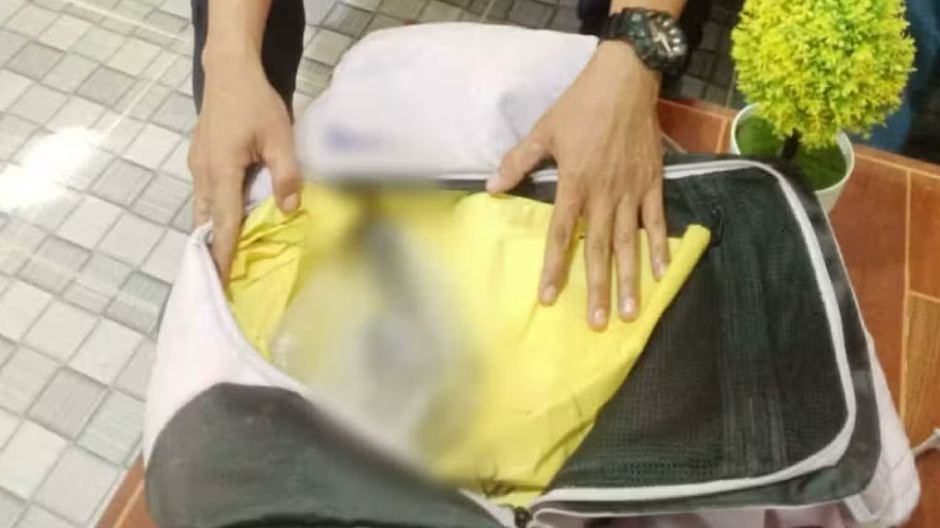
A shocking discovery at a school in Pinamungajan, Cebu has thrust the spotlight back onto firearm safety and youth security in Philippine educational institutions. During a routine surprise inspection of student bags on Thursday, 20 August, school staff uncovered a .357-calibre revolver hidden in the satchel of a 14-year-old boy, reigniting alarm over weapons accessibility in households and the vulnerability of school environments across the region.
The discovery took place at approximately 3:50 pm when a teacher conducting the precautionary safety check opened the student's school bag and found the loaded weapon inside. School administrators wasted no time in contacting local police, who arrived to verify the report and secure the firearm. Officers determined the weapon to be a .357 Smith & Wesson Magnum revolver without ammunition present, though the mere presence of the gun raised serious questions about how a minor gained access to a functioning firearm.
Investigation revealed that the revolver actually belonged to the student's grandfather and had been stored in a cabinet at their family home. Without the knowledge or consent of his parents, who were both working outside the municipality at the time, the teenager removed the firearm from its storage location and brought it to school on the morning of the incident. The student was being cared for by his grandparents while his parents worked away, highlighting a common domestic arrangement in the Philippines that may not always include adequate supervision of potentially dangerous household items.
Following standard procedures for cases involving minors, police transferred the boy to the Municipal Social Welfare and Development Office pending the arrival of his parents or legal guardian. As investigations continued into Friday, authorities coordinated with the MSWD to determine appropriate interventions and support services for the teenager, whose actions, whether impulsive or intentional, represented a serious breach of school safety protocols.
The timing of this incident underscores mounting anxiety within Cebu's education sector regarding weapons in schools. The discovery came in the immediate aftermath of a fatal shooting at a senior high school in Zamboanga that claimed two lives, prompting regional officials to reassess security frameworks across all educational institutions. These recent incidents have shattered any assumption that such dangerous situations occur only in conflict-affected regions or within criminal enterprises, revealing instead how easily weapons can infiltrate school environments through negligence or juvenile misjudgement.
In response to the escalating security crisis, Cebu Governor Pamela Baricuatro issued explicit directives to provincial police leadership and municipal police chiefs to substantially elevate protective measures in both public and private schools throughout the province. Her instructions included mandates for enhanced police visibility on campus grounds, the implementation of more frequent and thorough security inspections, and the establishment of stronger collaborative mechanisms between law enforcement and school management.
Police Colonel Abubakar Udang Mangelen Jr, the provincial director of the Cebu Police Provincial Office, swiftly operationalised the governor's directives through a one-police-to-school deployment scheme developed in coordination with local government units and individual school administrations. This initiative aims to embed at least one police officer within each school to provide continuous security coverage, rapid response capability, and a visible deterrent to anyone attempting to bring weapons or contraband onto campus.
Beyond immediate law enforcement responses, the incident has galvanised official messaging around responsible firearm ownership and secure storage practices. Police authorities have now emphasised the critical importance of proper weapon security within households where children are present, particularly in multi-generational living arrangements common throughout the Philippines. Statements from law enforcement highlight that firearm owners must utilise appropriate storage mechanisms and maintain absolute measures to prevent juvenile access, whether through locked cabinets, combination safes, or other secure containment methods.
The broader implications of this case extend well into questions about firearm culture and regulation in Philippine society. While the Second Amendment equivalent protections do not apply in the Philippines, civilian ownership of firearms remains legal under strict licensing conditions. However, the incident exposes potential gaps between regulatory requirements and actual household compliance, particularly regarding storage standards and intergenerational responsibility within families owning weapons.
For Malaysian observers, the situation in Cebu presents instructive lessons about the risks inherent in any community where firearms exist and supervision structures prove inadequate. While Malaysia maintains far more stringent controls on civilian firearm possession, the fundamental principle—that secure storage and active parental vigilance represent non-negotiable responsibilities—applies universally. The case demonstrates how rapidly a moment of juvenile poor judgement, combined with inadequate weapon security, can escalate into a critical incident affecting entire school communities.
The recovery and proper disposition of the revolver marked one success within a troubling pattern. However, the underlying factors—a teenager's access to his grandfather's weapon, the absence of parental awareness, and the general vulnerability of school perimeters—continue to demand sustained attention from policymakers, law enforcement, and communities themselves. Cebu's enhanced security measures represent necessary immediate steps, yet longer-term progress will ultimately depend on fundamental shifts in how households, particularly those with multiple generations, approach the responsibility of weapon ownership and youth supervision.

