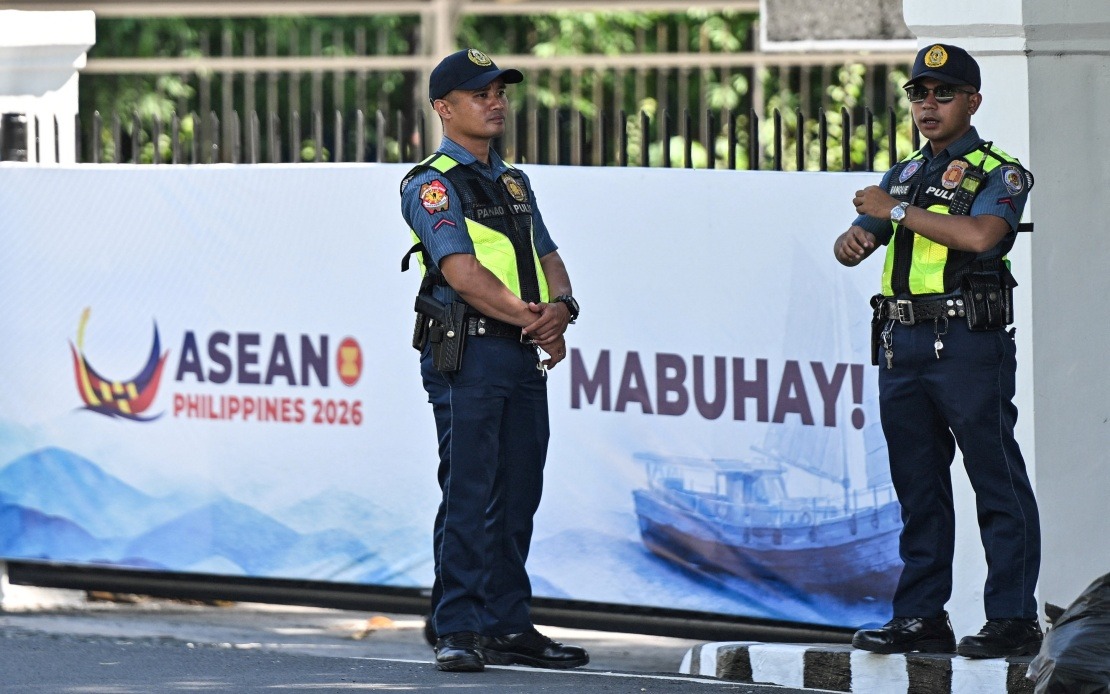
The Philippines is steering a week-long diplomatic forum that will test ASEAN's ability to maintain unity and dialogue amid global tensions and regional flashpoints. The 59th ASEAN Foreign Ministers' Meeting (AMM) and Related Meetings, running from July 20 to 24 in Manila, represent a critical moment for the bloc to reaffirm its role as a neutral platform for engagement on sensitive issues ranging from Myanmar's political crisis to contested maritime boundaries in the South China Sea. Foreign Affairs Assistant Secretary Dominic Xavier Imperial, speaking as ASEAN Spokesperson, framed the gathering as an opportunity to reinforce community identity while advancing shared development priorities that transcend the immediate geopolitical turbulence affecting the region.
The agenda reflects the complexity facing Southeast Asian diplomacy. A preliminary session brought ASEAN foreign ministers and the ASEAN Intergovernmental Commission on Human Rights (AICHR) together for their 16th face-to-face interface, signalling sustained commitment to elevating human rights within the bloc's institutional framework. This early meeting underscores an ongoing tension within ASEAN—the organisation's principles emphasise non-interference and sovereignty, yet members have gradually accepted the need for structured human rights dialogue. The AICHR interface demonstrates that despite ideological differences among member states, there is consensus on the value of discussing protections for vulnerable populations, even if enforcement mechanisms remain limited by ASEAN's consensus-driven culture.
Parallel to human rights discussions, regional ministers convened for the Southeast Asia Nuclear Weapon-Free Zone (SEANWFZ) Commission meeting to evaluate implementation of the 2023–2027 action plan and examine potential accession of additional states to its Protocol. This forum represents a distinctive ASEAN achievement—the bloc's four-decade-old commitment to keeping the region free from nuclear weapons has provided strategic stability and reinforced Southeast Asia's identity as a zone of peace in an era of great-power competition. Gaining endorsement from major powers for this principle remains an ongoing priority, particularly as tensions between nuclear-armed nations reverberate across the Indo-Pacific.
The formal opening of the 59th AMM on Tuesday will bring together foreign ministers, diplomatic representatives, and resident missions for an external session designed to review progress across ASEAN's three pillars of integration: political security, economic cooperation, and socio-cultural engagement. Ministers will assess how effectively ASEAN is advancing its community-building agenda while managing external relations with increasingly assertive dialogue partners. Two significant outcome documents are expected to emerge: the Joint Communiqué, which traditionally encapsulates ASEAN positions on regional and international developments, and the Guidelines on the Modalities for Engagement with High Contracting Parties to the Treaty of Amity and Cooperation (TAC), a landmark deliverable of the Philippine chairmanship.
The TAC guidelines carry particular weight for Southeast Asian diplomacy. By establishing a structured framework for engagement with states lacking formal ASEAN partnerships, the guidelines formalise pathways for cooperation with non-aligned or newly interested powers without requiring full accession to ASEAN frameworks. This innovation allows the bloc to deepen relationships with countries seeking dialogue while preserving the exclusivity and strategic value of ASEAN membership. Imperial stressed that the guidelines reinforce the TAC's foundational role as Southeast Asia's cornerstone for peace and confidence-building, a principle increasingly important as regional states navigate their relationships with competing great powers.
The Post-Ministerial Conferences scheduled for Wednesday expand the diplomatic circle substantially. ASEAN will engage directly with dialogue partners including India, the United States, Canada, Russia, China, South Korea, Japan, Australia, New Zealand, the United Kingdom, and the European Union. These conversations offer a rare multilateral space where ASEAN can collectively express regional concerns and priorities to major powers. For Malaysia and other Southeast Asian economies, these forums provide channels to emphasise ASEAN centrality in regional architecture and to advocate for rule-based order, particularly relevant given maritime disputes and trade frictions affecting the region.
Thursday's agenda encompasses the 27th ASEAN Plus Three meeting, 33rd ASEAN Regional Forum, and 16th East Asia Summit, broadening engagement to include China, Japan, and South Korea, plus dialogue with developed nations. These meetings create graduated levels of multilateral engagement, allowing ASEAN to calibrate discussions based on participants and sensitivity of issues. The sequencing reflects diplomatic sophistication—bilateral sessions and smaller groupings precede larger forums, enabling preliminary alignment before broader discussions. For Malaysian policymakers, these staggered meetings provide opportunities to influence outcomes through bilateral channels before formal positions are announced in plenary settings.
A notable bilateral between Philippine Foreign Affairs Secretary Ma. Theresa Lazaro and Chinese Foreign Minister Wang Yi signals that despite regional tensions, high-level dialogue channels remain open. Imperial characterised this meeting as addressing bilateral relations while considering regional ramifications of global developments, indicating that Philippine-Chinese engagement extends beyond bilateral commercial and diplomatic issues to encompass broader Southeast Asian interests. This reflects a delicate balancing act that characterises contemporary ASEAN diplomacy: managing major-power relationships while attempting to prevent bilateral grievances from fracturing regional unity.
Two perennial issues will dominate ministerial discussions: Myanmar's political trajectory and South China Sea disputes. The ongoing enforcement of ASEAN's Five-Point Consensus on Myanmar—which aims to facilitate dialogue, humanitarian assistance, and eventual political transition—faces persistent implementation challenges. Imperial acknowledged that ASEAN continues engaging not only with Myanmar's State Administration Council but also with opposition stakeholders, reflecting the bloc's attempt to maintain inclusive dialogue despite international pressure. This nuanced approach contrasts with Western sanctions-focused strategies but has delivered limited tangible progress, highlighting the limitations of ASEAN's consensus-based and non-coercive diplomacy when confronting entrenched military governance.
The Code of Conduct (COC) negotiations for the South China Sea remain a permanent fixture on ASEAN agendas despite slow progress. These discussions pit smaller claimant states' interests in constraining Chinese actions against larger economies' concerns about alienating Beijing. The COC's evolution from initial concept to substantive framework has consumed years of negotiation, and disagreement persists over dispute resolution mechanisms and binding force. For Malaysia, with significant maritime interests and economic dependence on China, COC discussions represent efforts to formalise rules that might protect freedom of navigation and resource rights without igniting military confrontation. Imperial's confirmation that COC discussions will continue indicates ASEAN's commitment to the negotiating process despite minimal recent breakthroughs.
The ministerial week concludes Friday with commemorative activities marking the TAC's 50th anniversary. This ceremonial closing underscores that despite regional challenges, the treaty framework remains central to ASEAN's identity and Southeast Asia's approach to international relations. The TAC's emphasis on mutual respect for sovereignty, peaceful settlement of disputes, and non-interference has enabled diverse ASEAN members to coexist while accepting external powers on equal terms. As geopolitical competition intensifies and great powers compete for influence, the TAC's principles offer ASEAN a vehicle for maintaining strategic autonomy and collective voice.
For Malaysian observers, this ministerial gathering illustrates both ASEAN's enduring value as a diplomatic platform and its structural limitations. The bloc's consensus requirement means positions often reflect lowest-common-denominator agreement rather than robust collective action. Yet ASEAN's inclusive dialogue mechanisms, TAC framework, and ability to convene diverse stakeholders at multilateral forums remain irreplaceable in Southeast Asian architecture. The meetings' success will be measured less by dramatic breakthroughs than by sustained commitment to dialogue, reaffirmation of ASEAN principles, and demonstration that the bloc remains relevant in mediating regional tensions and safeguarding Southeast Asia's interests amid great-power competition.

