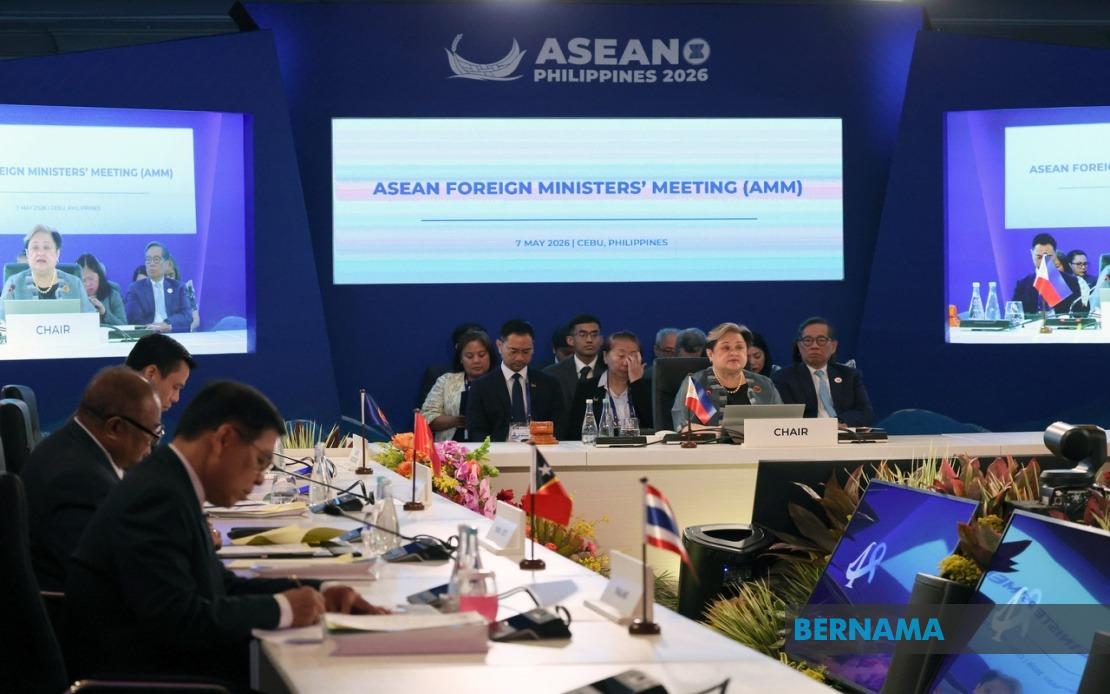
The Philippines has signalled that ASEAN's approach to resolving Myanmar's deepening political crisis must become more nimble and responsive, even as the bloc reaffirms its commitment to the foundational framework established three years ago. Speaking to regional media in Kuala Lumpur, Philippine Foreign Affairs Secretary Ma. Theresa P. Lazaro indicated that while the Five-Point Consensus remains non-negotiable as ASEAN's overarching strategy, the mechanisms for putting it into practice require substantial reconsideration in light of developments since the military seized power in February 2021.
The Five-Point Consensus, adopted in April 2021, contains five cardinal elements designed to de-escalate the Myanmar crisis: an immediate halt to violence, inclusive dialogue involving all relevant parties, appointment of an ASEAN Special Envoy to broker mediation, delivery of humanitarian relief, and the envoy's systematic engagement with all stakeholders. Despite near-universal acknowledgement of the framework's validity across ASEAN capitals, implementation has proven frustratingly difficult, as the situation on the ground has deteriorated markedly and the parties to the conflict have shown little genuine commitment to negotiation.
Lazaro's position reflects a growing consensus among several ASEAN governments that the bloc's existing diplomatic mechanisms have not yielded meaningful results. Rather than abandoning the consensus entirely—which would constitute a profound loss of face and strategic coherence for ASEAN—the Philippines advocates a recalibration of how the consensus is operationalised. This distinction is crucial: it preserves ASEAN's unified diplomatic posture while tacitly acknowledging that previous tactics have been insufficient to arrest Myanmar's slide into sustained civil conflict.
The statement acquired particular significance given that the Philippines assumed the ASEAN Chair in 2023, placing it in the position of convening the bloc's diplomatic machinery on Myanmar. Lazaro emphasised that chairmanship decisions regarding Myanmar policy would be "intentional and shaped by the realities as they transpire on the ground." This language suggests the Philippines intends to inject greater strategic pragmatism into ASEAN's Myanmar engagement, moving away from formulaic rhetoric towards concrete calibration of pressure and incentives.
A key test of this approach concerns Myanmar's participation in ASEAN forums. Since the coup, the bloc has barred the country's military leadership and political authorities from attending high-level summits, restricting Myanmar representation to non-political figures. The Philippines has indicated that any restoration of Myanmar's full diplomatic standing would hinge upon demonstrable progress in three specific areas: de-escalation of armed conflict, genuine advancement of dialogue among competing factions, and tangible improvement in humanitarian access. This conditionality preserves ASEAN's leverage while establishing clearer benchmarks for progress than previous policy iterations.
The humanitarian dimension merits particular attention for Southeast Asian observers. Myanmar faces one of the region's most acute humanitarian emergencies, with displacement, food insecurity, and healthcare collapse affecting millions. ASEAN's capacity to facilitate aid delivery has been severely constrained by the military junta's restrictions and the proliferation of armed groups beyond government control. The Philippines' emphasis on humanitarian assistance as a measurable implementation metric suggests recognition that civilian suffering must become central to ASEAN's strategic calculus, not merely peripheral to diplomatic posturing.
The broader context involves ASEAN's historic commitment to the principle of non-interference in member states' internal affairs, a doctrine that has increasingly strained as Myanmar's crisis has spilled across borders, creating refugee flows and security implications for neighbouring Thailand, Laos, and Bangladesh. Malaysia's concurrent statement, issued by Foreign Minister Datuk Seri Mohamad Hasan in late June, underscored this tension. Malaysia pledged continued engagement with all armed parties—the military government, the National Unity Government, the People's Defence Force, and ethnic armed organisations—to support ASEAN-led efforts. This inclusive approach recognises that legitimate power in Myanmar now resides in multiple centres, a reality the military junta refuses to acknowledge but which has become operationally undeniable.
The Philippines' emphasis on annual reviews and assessment mechanisms reflects an attempt to build iterative learning into ASEAN's Myanmar policy. Rather than treating the Five-Point Consensus as a static blueprint, the annual Leaders' Review and Decision process enables member states to evaluate progress incrementally, adjust tactics, and maintain unified positions despite divergent national interests. This procedural approach may seem bureaucratic, but it provides institutional scaffolding for coordinated diplomacy when consensus on substantive policy fractures.
One analytical consideration concerns how this Philippine-led recalibration might affect ASEAN's credibility with Myanmar's various power centres. The military junta may interpret flexibility as weakness and heightened leverage for concessions. Conversely, the National Unity Government and armed resistance movements may view pragmatic adjustment as necessary acknowledgement that the junta cannot be negotiated into submission. The balance the Philippines is attempting—maintaining framework consistency while amplifying practical pressure—represents a delicate diplomatic needle to thread.
For Malaysia and other ASEAN members, the Philippines' approach offers both reassurance and uncertainty. Reassurance comes from the explicit commitment to sustaining multilateral engagement mechanisms rather than allowing the Five-Point Consensus to become a dead letter. Uncertainty arises from recognition that flexible implementation might privilege different national interests unevenly. A more pragmatic ASEAN strategy might, for instance, prioritise Malaysia's concerns about refugee flows and cross-border security, or Thailand's complicated position as both ASEAN member and Myanmar neighbour.
The strategic implications for Southeast Asia extend beyond Myanmar itself. ASEAN's ability to craft coherent responses to major regional crises has direct bearing on the bloc's broader standing and utility. A failure to adapt effectively to Myanmar's deterioration risks reinforcing perceptions of ASEAN as a toothless talking shop, while successful recalibration could demonstrate that the organisation can maintain principled positions while remaining responsive to complex realities. The Philippines' current chair leadership will significantly influence which outcome materialises.

