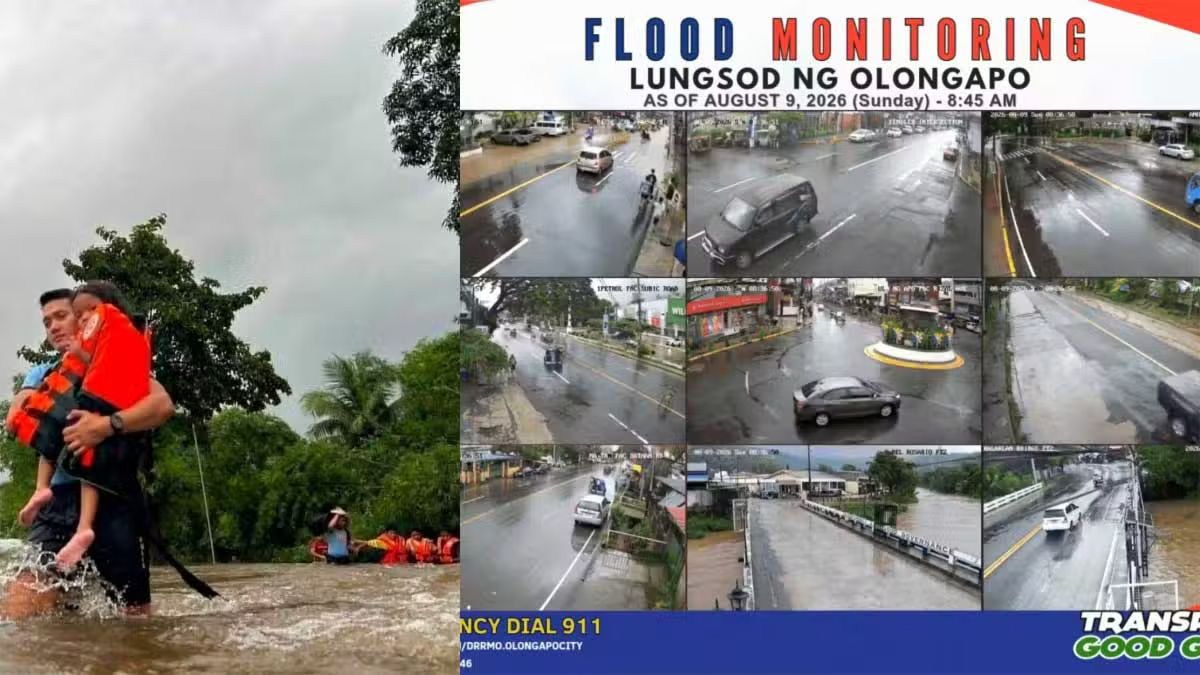
The Philippine government has escalated disaster response operations across the country as relentless rainfall from the southwest monsoon, locally known as habagat, compounds the destructive effects of two tropical weather systems. The National Disaster Risk Reduction and Management Council reported on Sunday that approximately 382,000 individuals—spanning roughly 110,000 families—have been impacted by the flooding, predominantly concentrated in eight regions across Luzon and Mindanao. The convergence of the seasonal monsoon with Tropical Depression Luis and Tropical Storm Maymay (internationally designated as Kujira) has created an exceptionally hazardous meteorological situation that authorities have warned will persist until at least Wednesday.
The death toll currently stands at nine, reflecting the acute dangers posed by the swollen waterways and unstable terrain. Among the fatalities was a member of the Philippine National Police who perished attempting to rescue two colleagues from a surging river in Negros Occidental, exemplifying the severe conditions responders face. Another victim, a 28-year-old resident of Batangas, died after electrocution while navigating a flooded highway section in Lipa City. Additional deaths involved drowning and landslide incidents scattered across northern and central Luzon, underscoring the multifaceted hazards presented by excessive precipitation and geological instability.
The Philippine Atmospheric, Geophysical and Astronomical Services Administration has projected that rainfall will remain heavy, particularly in mountainous and elevated terrain, through the remainder of the week. The weather agency has specifically flagged that conditions may intensify in areas that have already accumulated substantial precipitation, compounding the risk of secondary disasters such as additional landslides and reservoir overflow. This advisory represents the culmination of several days of escalating warnings issued since Friday as weather disturbances converged over the archipelago.
Critical infrastructure has experienced severe strain from the deluge. The Angat Dam in Norzagaray, Bulacan—a crucial freshwater supply for Metro Manila—experienced a dramatic rise of approximately 15 metres over ten days, reaching 164.80 metres above sea level by Sunday afternoon. This ascent from the reservoir's record low of 150.61 metres above sea level recorded on July 30 represents a significant restoration of water levels following earlier dry-season concerns. The upstream accumulation of water has necessitated downstream management, with the Ipo Dam approaching its spilling threshold and releasing approximately 314.91 cubic metres of water per second to manage inflow.
Regional flooding has manifested with striking variation across affected areas. In Bulacan, nearly 1,000 residents from multiple municipalities and cities were compelled to abandon their homes as floodwaters reached approximately 1.2 metres in certain locations, with the Bulusan River becoming impassable for standard vehicles. Central Luzon experienced the most extensive inundation, with 98 villages submerged and approximately 170,000 individuals affected; authorities implemented precautionary evacuations for 2,544 people across Nueva Ecija and Zambales. In the Calabarzon region south of Metro Manila, more than 7,000 families sought refuge in 117 evacuation centres dispersed across 29 localities.
The broader Luzon landmass has faced cascading transportation crises. Rising waters on the Chico River rendered two bridges in Cagayan impassable, whilst landslides and rockfall events compromised road networks in Nueva Vizcaya, Abra, and Mountain Province. In Benguet, floodwaters climbed to approximately 0.6 metres in sections of Barangay Pico at La Trinidad. San Marcelino in Zambales experienced breached dikes that isolated communities, whilst a bridge in Barangay Santa Fe was obliterated by torrential currents. The Philippine National Police reported that widespread inundation and traffic congestion have severely restricted movement along major thoroughfares across the island, necessitating systematic evacuation operations by local government units.
Metropolitan areas and secondary cities have also sustained notable impacts. Iloilo City experienced what authorities suspect was a tornado accompanied by strong monsoon-driven winds, resulting in damage to at least 52 structures, toppled vegetation and utility infrastructure, and displacement of more than 150 residents. Maritime operations have been similarly disrupted, with the Philippine Coast Guard reporting 543 stranded passengers, commercial drivers, and cargo workers at 28 ports across four regions. These logistical disruptions have cascading effects on supply chains and economic activity across affected provinces.
Police leadership has stressed the importance of public cooperation with evacuation directives whilst cautioning residents to remain vigilant rather than panicked. Philippine National Police chief Gen Jose Melencio Nartatez Jr stated that law enforcement had deployed extensive personnel and resources for evacuation and disaster response operations. He specifically urged communities to obtain information exclusively from official government channels and avoid disseminating unverified social media content that could precipitate unnecessary alarm amongst vulnerable populations already confronting acute displacement and property loss.
The disaster response comes amid renewed political scrutiny of the administration's infrastructure initiatives. The Makabayan coalition contended that the flooding episode demonstrates inadequacies in the Marcos Jr. administration's flood control infrastructure projects. With congressional deliberations on the 2027 national budget underway, opposition figures have called for heightened examination of unprogrammed appropriations mechanisms, which they argue facilitate discretionary spending arrangements conducive to corruption among lawmakers. This political dimension adds complexity to disaster response efforts, as infrastructure gaps become focal points for broader governance debates.
For Malaysian and Southeast Asian observers, the Philippine crisis underscores the region's shared vulnerability to intense monsoon activity and tropical cyclone impacts. The simultaneous influence of seasonal weather patterns and tropical storm systems amplifies meteorological hazards beyond what individual systems might produce independently. Nations throughout Southeast Asia, including Malaysia, face comparable risks from monsoon precipitation and its potential to overwhelm drainage infrastructure, trigger landslides in elevated regions, and displace substantial populations. The Philippine response, emphasizing inter-agency coordination and public information management, provides instructive case studies for regional disaster preparedness frameworks that increasingly emphasise predictive capacity and pre-positioned resources.

