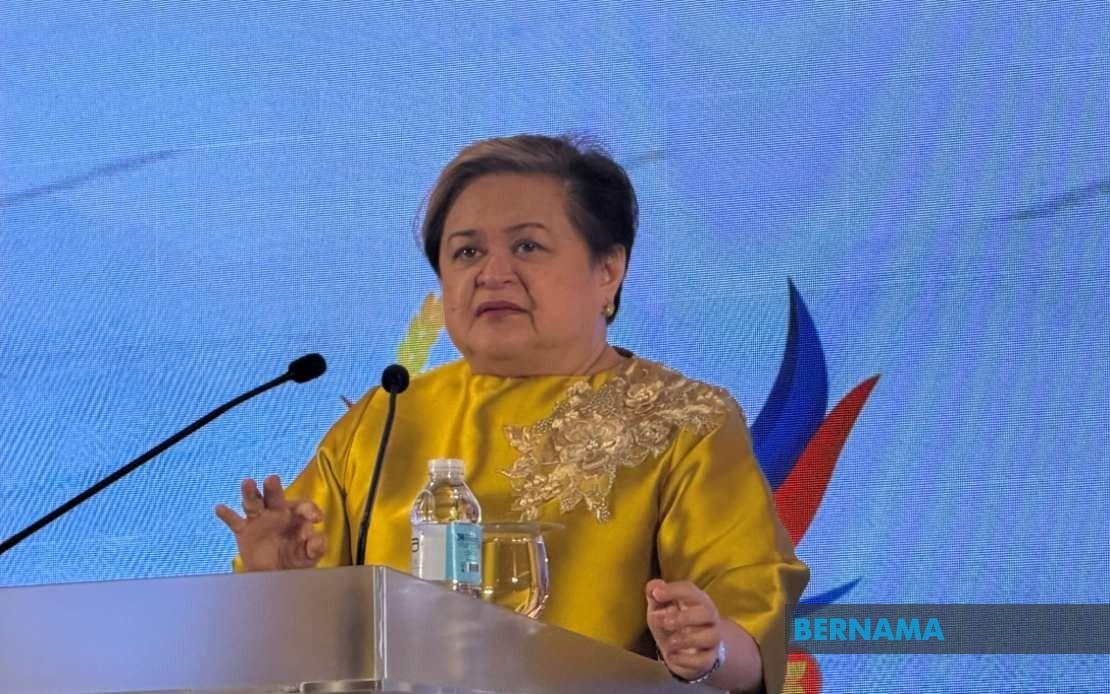
The Philippines has made an urgent appeal to fellow ASEAN members to bolster defences protecting vital maritime corridors that underpin the region's economic lifeblood, warning that the stability of regional commerce increasingly faces threats from global geopolitical turbulence. Speaking to regional media, Philippine Foreign Affairs Secretary Ma. Theresa P. Lazaro emphasised that resilience must be built around key waterways including the Strait of Malacca and the South China Sea, which together facilitate trillions of dollars in annual trade and energy shipments essential to the prosperity of Southeast Asia's economies.
Lazaro pointed to recent disruptions affecting the Strait of Hormuz as a cautionary illustration of how vulnerable global commerce remains to unexpected shocks. When major shipping arteries face blockages or instability, the ripple effects cascade through interconnected supply networks, driving energy costs upward, triggering inflationary pressures that burden consumers, threatening harvests and food availability, and ultimately straining the delicate logistics systems that keep goods moving from factories to markets. These consequences extend far beyond the immediate geography of any single disruption, affecting distant economies through mechanisms that traders and policymakers across Southeast Asia know only too well.
For ASEAN nations, the exposure runs particularly deep given how thoroughly regional economies have woven themselves into global trading architecture. Southeast Asia functions simultaneously as a manufacturing hub, a consumer market, and a transit zone through which the commerce of others flows. This integration creates obvious benefits—access to markets, capital, and technology—but it equally multiplies vulnerability to shocks originating anywhere along the supply chain. Significant disruptions to shipping corridors would translate directly into higher costs for regional manufacturers, production delays that damage competitiveness, and reduced efficiency that erodes ASEAN's attractiveness as an investment destination relative to other global alternatives.
Recognising these interconnections, Lazaro articulated a response framework centred on pragmatic cooperation rather than rhetoric alone. Her vision encompasses sustained vigilance over open sea lanes, targeted efforts to make supply chains more resistant to shocks, and coordinated approaches to energy security, food security, trade facilitation, and regional connectivity. Each element represents both a defensive measure against crisis and a proactive investment in the structural resilience of regional economies. The emphasis on multiple dimensions reflects understanding that maritime security cannot be isolated from broader questions about economic sustainability.
Communication capabilities emerge as a critical but often overlooked dimension of crisis management. Lazaro proposed that ASEAN develop more sophisticated protocols for crisis communication and coordination, particularly among foreign ministers who bear responsibility for steering national positions during emergencies. When crises erupt—whether from military confrontation, natural disaster, or economic shock—the ability to communicate quickly and coordinate responses across ten diverse nations determines whether ASEAN acts as a cohesive force or fragments into unilateral responses that undermine collective interests. Such protocols facilitate rapid information-sharing, enable consensus-building around common approaches, and allow the grouping to speak with a single voice when addressing external parties.
Lazaro had already advocated for such communication mechanisms during the Special ASEAN Foreign Ministers' Meeting focused on the West Asia situation, signalling that the proposal carries practical weight beyond theoretical discussion. She simultaneously called for expanded technical cooperation, improved information-sharing arrangements, and enhanced early warning systems that could help ASEAN anticipate and potentially prevent crises rather than merely reacting after disruptions occur. These forward-looking measures reflect a maturation of thinking about regional security, moving beyond reactive crisis management toward more preventive approaches.
The underlying logic emphasises that openness, transparency, and predictability serve as foundations for confidence in international commerce. Businesses making investment decisions, shipping companies plotting routes, and traders managing inventory all require reasonable assurance that rules remain stable and that governments act with consistency and clarity. When uncertainty clouds the operating environment, companies respond by raising prices, shortening supply chains, maintaining larger inventory buffers, or shifting operations to perceived safer jurisdictions—all responses that diminish regional competitiveness and efficiency. By contrast, a region known for transparent communication, clear protocols, and predictable behaviour attracts greater investment, sustains more efficient supply networks, and builds deeper international confidence.
Concretely, the Philippines has positioned itself to advance these objectives through its 2026 ASEAN Chairship, using that platform to champion establishment of an ASEAN Maritime Centre within Philippine territory. This institutional innovation would serve as a focal point for maritime cooperation across the grouping, addressing issues from safety and navigation to environmental protection and dispute management. The centre would operate across functional boundaries and pillars within ASEAN's complex institutional architecture, promoting integrated thinking that recognises how maritime questions intersect with energy policy, food security, trade rules, and political relationships.
The establishment of such a centre represents more than bureaucratic expansion. It signals commitment to maritime security as a standing priority rather than a sporadic concern addressed during moments of crisis. It creates infrastructure for sustained dialogue, research, capacity-building, and coordination among ASEAN members on issues that cut across national boundaries. For regional observers and international partners assessing ASEAN's seriousness about maritime resilience, the physical establishment of an institution dedicated to these purposes carries symbolic weight reinforcing verbal commitments.
For Malaysia particularly, which hosts the busy Strait of Malacca shipping lane and maintains significant maritime interests, the Philippine initiative aligns with long-standing concerns about safeguarding critical infrastructure. The Strait of Malacca processes roughly one-third of global maritime trade, making its security consequential not just for Southeast Asia but for global commerce. Malaysian policymakers have consistently advocated for regional cooperation on maritime issues, viewing collective approaches as more effective than isolated national efforts.
The broader context involves growing recognition across Southeast Asia that traditional notions of maritime security—focused primarily on naval vessels and military capabilities—increasingly require complementary attention to supply chain resilience, crisis communication, and economic interdependence. Military strength matters, but so do the institutional arrangements and cooperative mechanisms that allow nations to coordinate responses and maintain confidence during turbulent periods. The Philippines' push reflects this expanded understanding of what maritime security requires in an era of complex global supply networks and unpredictable geopolitical disruptions.

