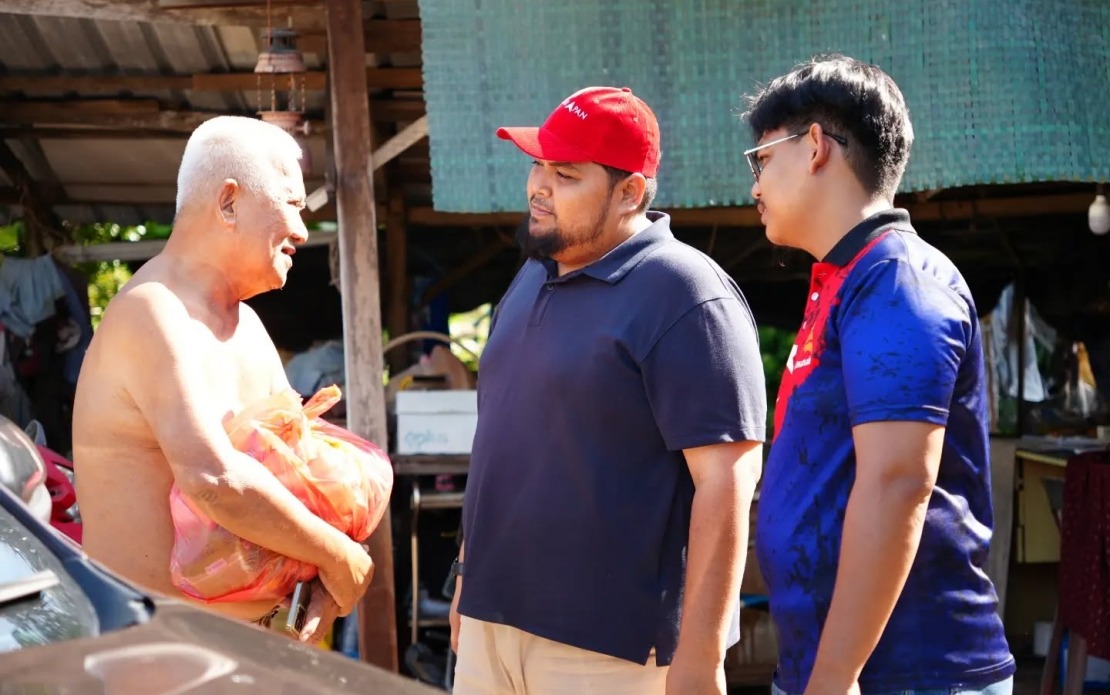
With the Johor state election just four days away, Pakatan Harapan's Maharani contender Muhammad Taqiuddin Cheman is recalibrating his campaign approach to resonate with younger constituents by placing employment prospects, entrepreneurial ventures, and workforce development at the forefront of his messaging. The former Pulai Sebatang assemblyman, widely known as Taqi, intends to dedicate his remaining campaign days to direct engagement sessions with youth communities throughout Muar to better comprehend the economic pressures and aspirations animating this demographic.
The persistent exodus of young talent from Muar underscores a troubling economic reality that has become defining for the district. Characterised unfairly as a "retirement town," Muar has seen successive generations of working-age residents depart in search of stable employment and entrepreneurial prospects, leaving behind a hollowed-out economic base. Those who remain often cluster in the semiconductor sector, a concentration that leaves the local economy vulnerable to sectoral downturns and limits the diversity of career pathways available to school-leavers and graduates. Taqiuddin's campaign diagnosis zeroes in on precisely this structural weakness, arguing that targeted interventions can reverse the brain drain and rebuild confidence in the district's economic future.
A concrete illustration of unmet demand emerged from Taqiuddin's recent interaction with young traders at District 84, where approximately 70 entrepreneurs operate in severely constrained conditions. These business operators have identified potentially viable commercial locations throughout Muar but lack institutional champions willing to navigate bureaucratic approval processes on their behalf. This gap between entrepreneurial ambition and administrative capacity represents a classic governance failure—one where direct advocacy and political will could materially improve outcomes. Taqiuddin positions himself as precisely such an advocate, offering to shepherd applications and expedite access to available commercial sites that could accommodate expanding traders.
Packatan Harapan's broader election manifesto provides structural backing for these localized commitments. The "Johor For All" platform dedicates RM500 million specifically toward young entrepreneur expansion initiatives, signalling party-wide commitment to unlocking capital and operational support for emerging business owners. This allocation, if executed effectively, could catalyse the establishment of small and medium enterprises across constituencies like Maharani, providing alternatives to migration and creating employment multiplier effects throughout the local economy.
Infrastructural development also features prominently in Taqiuddin's economic blueprint. The Maharani Energy Gateway (MEG) project, nearing completion, is positioned as a catalyst for regional investment and industrial activity. Once operational, MEG could attract manufacturing facilities, logistics operations, and related service industries that would generate sustained employment for both skilled and semi-skilled workers. Taqiuddin's campaign narrative frames his election as prerequisite for maximizing these development benefits and ensuring local communities capture downstream economic gains.
Skills development infrastructure represents another pillar of his strategy. Taqiuddin advocates for establishing quality Technical and Vocational Education and Training (TVET) institutions within the Maharani constituency, directly addressing the mismatch between available jobs and workforce capabilities. Rather than requiring young people to migrate for training, localising quality TVET provision would create a pipeline of workers equipped for industrial roles whilst reducing the immediate financial and social costs of relocation. This approach recognises that economic retention often turns on enabling local skill acquisition as much as job creation itself.
The campaign also acknowledges agriculture and fishing communities' specific vulnerabilities. Second-generation fishermen face structural headwinds as traditional livelihoods become increasingly marginal, yet present nonetheless with alternative pathways that enhance rather than replace their existing skills. Taqiuddin's framing suggests targeted support—perhaps through cooperative structures, value-addition initiatives, or skills diversification—could stabilise these communities whilst allowing younger members to build sustainable livelihoods. Similarly, the proposal to address shallow-water impediments at Parit Raja Laut and poor drainage affecting oil palm operations signals willingness to tackle the granular infrastructure deficits that constrain agricultural productivity and competitiveness.
The electoral contest itself reflects Maharani's political competitiveness. Taqiuddin faces three serious challengers: Mohamad Anuar Hayan representing Perikatan Nasional, the Barisan Nasional's Datuk Ashari Md Sarip, and MUDA's Muhammad Amir Fiqri. This four-way configuration means that voter consolidation around a single candidate becomes critical, and youth mobilisation may prove decisive. PH's strategy of explicitly targeting younger voters through issues directly affecting their life prospects represents a calculated gambit to secure a plurality where the voting base remains fragmented across ideological and partisan lines.
Taqiuddin's background in business ownership lends credibility to his entrepreneurship-focused messaging, distinguishing his campaign from competitors who may lack comparable private sector experience. This background enables him to speak with practised authority about regulatory barriers, financing obstacles, and market dynamics that young entrepreneurs encounter, positioning him as someone who understands rather than merely lectures about business challenges.
The timing of this youth-oriented campaign thrust reflects broader recognition within PH that demographic shifts demand targeted outreach. A generation of voters who came of age during economic slowdown, pandemic disruption, and stagnant wage growth exhibits different priorities than their predecessors, prioritising immediate economic security and opportunity creation over abstract policy platforms. By embedding his campaign within young voters' concrete daily concerns—where to open a shop, how to find stable work, whether to remain in Muar—Taqiuddin attempts to translate structural economic arguments into individual life narratives that resonate authentically.
For Muar specifically and Johor's election trajectory more broadly, this campaign offers a window into how major political coalitions are adapting messaging and policy emphasis to retain relevance with younger voters. The outcome in Maharani will signal whether explicitly youth-focused economic platforms and targeted interventions can reverse the outflow of talent that has characterised the district, or whether deeper structural transformation will prove necessary to make Muar genuinely attractive to a generation confronting constrained economic horizons across Malaysia's broader economy.

