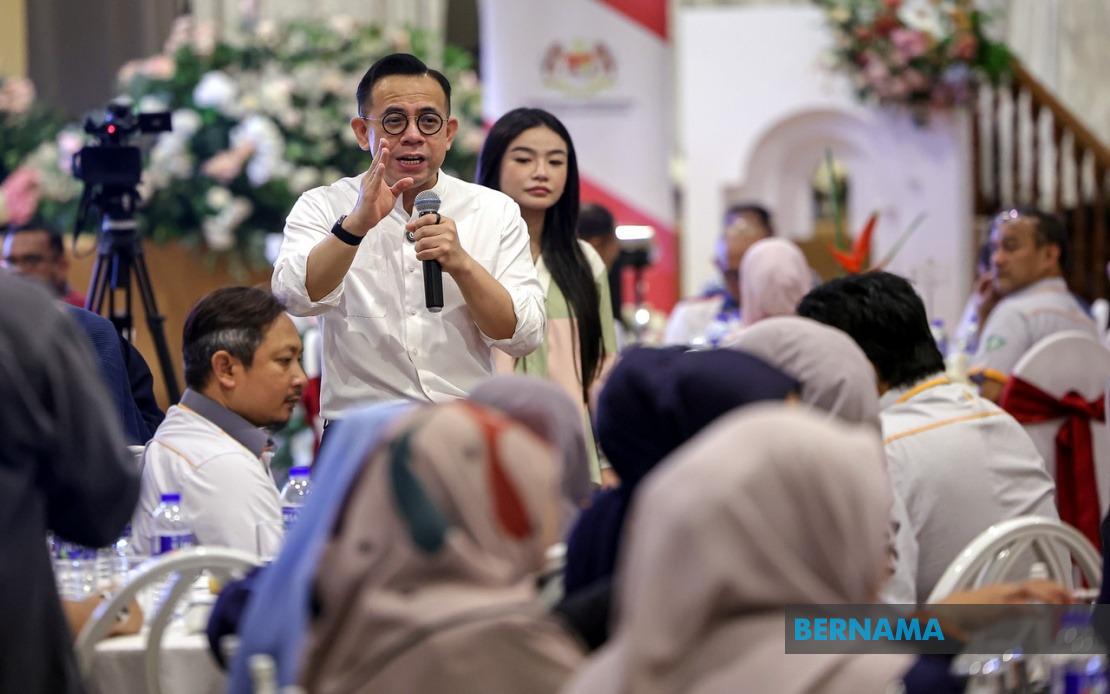
Pakatan Harapan's election manifesto for Negeri Sembilan represents far more than campaign pledges crafted to win votes—it embodies a continuation of demonstrated governance built by Menteri Besar Datuk Seri Aminuddin Harun's administration, according to Penang DAP chairman Steven Sim. Speaking in Seremban on July 21, Sim stressed that the manifesto's ten key commitments draw legitimacy from established programmes and policies that have already yielded measurable results across the state. This positioning sets PH apart in the electoral landscape by framing the election not as a choice between competing visions, but as a referendum on governance performance.
Sim's remarks underscore a fundamental campaign strategy: transforming an incumbent party's track record into electoral momentum. He argued that while any political movement can draft a manifesto, the distinguishing factor for Pakatan Harapan lies in its ability to point to concrete achievements rather than theoretical benefits. This approach carries particular weight in Negeri Sembilan, where economic indicators and infrastructure development have become tangible markers against which voters can measure government performance. By anchoring campaign messaging in accomplishment rather than aspiration, PH seeks to inoculate itself against opposition claims of unfulfilled promises.
The ten commitments outlined in the manifesto extend existing state government initiatives into a broader vision for continued development. Rather than introducing wholesale policy shifts, the manifesto emphasises enhancement and expansion of programmes already operational within Negeri Sembilan's governance framework. This continuity-focused approach suggests confidence in current policy directions while promising incremental improvement. For Malaysian voters increasingly sceptical of transformative campaign rhetoric, such an emphasis on proven track records may resonate more strongly than revolutionary proposals lacking implementation precedent.
Among the specific initiatives highlighted is the establishment of the youth entrepreneurs fund (TUB), designed to nurture young business owners in Negeri Sembilan. This programme falls within the portfolio of the Ministry of Entrepreneur Development and Cooperatives (KUSKOP), where Sim serves as minister at the federal level. The inclusion of this commitment in the state manifesto reflects alignment between federal and state-level governance priorities, demonstrating institutional coordination in addressing entrepreneurship and economic opportunity—a concern particularly acute among younger Malaysians facing uncertain employment prospects.
Sim's dual role as federal minister and campaign spokesperson creates a powerful mechanism for translating national policy support into state-level benefits. By emphasising that KUSKOP would continue working closely with the Negeri Sembilan government should Pakatan Harapan retain state control, Sim signals that the election outcome directly influences access to federal resources and ministerial attention. This framing carries implications for voters calculating the practical consequences of their electoral choices, particularly those dependent on entrepreneurship support and economic development initiatives.
The economic dimension of PH's campaign strategy deserves particular attention given Malaysia's broader macroeconomic environment. Negeri Sembilan has maintained relatively strong economic performance under the current administration, and the manifesto's emphasis on sustaining this trajectory addresses voter concerns about cost of living, employment, and prosperity. Rather than proposing radical economic restructuring, the manifesto implicitly promises steady, incremental improvement anchored in approaches that have already demonstrated effectiveness. This cautious optimism may appeal to middle-class and small business voters prioritising stability over disruptive change.
The manifesto's framing also reflects evolving campaign sophistication within Malaysian politics. Rather than exhaustive policy documents, PH has distilled its platform into ten key commitments—a number manageable for voter memory and media communication. This distillation suggests strategic thinking about how voters actually process political information and make electoral decisions. The emphasis on tangible benefits—not merely statistical improvements but changes genuinely felt in daily life—acknowledges widespread voter scepticism about politically convenient data and abstract economic metrics.
Context regarding the electoral timeline underscores the urgency of PH's messaging. The Election Commission has scheduled early voting for July 28, with general polling on August 1, compressing the campaign period and intensifying the importance of rapid, persuasive communication. Within this compressed timeframe, a manifesto grounded in demonstrable achievement rather than forward-looking speculation offers PH a campaign advantage. Voters need less time to verify claims about existing programmes than to evaluate promises about future initiatives.
The Negeri Sembilan state election carries broader implications for Malaysian federalism and coalition politics. As one of the few states where Pakatan Harapan remains in power, Negeri Sembilan's electoral outcome will signal voter appetite for opposition-led governance and inform strategic calculations for the next federal election cycle. A resounding PH victory would validate the coalition's continuity-focused campaign messaging and strengthen arguments for federal-level governance change. Conversely, erosion of PH's state majority would suggest that voters seek change or have lost confidence in incumbent performance—a narrative opposition parties would aggressively exploit nationally.
Sim's emphasis on political resolve to continue serving the people and sustaining economic performance carries implicit recognition of governance challenges. The phrase "tangible, not merely reflected in figures and slogans" acknowledges legitimate voter frustration with gap between headline statistics and lived experience. By directly addressing this disconnect, Sim attempts to pre-empt opposition narratives portraying PH governance as all marketing and no substance. This rhetorical move reflects understanding that credibility—not just policy substance—determines electoral viability in contemporary Malaysia.
The manifesto's emphasis on sustaining rather than transforming existing government policies may paradoxically contain risks. Voters desiring significant change or addressing acute grievances unresolved under current administration may perceive PH's continuity focus as complacency. Opposition parties will likely exploit such perceptions, positioning themselves as agents of change and framing the incumbent's track record as justification for electoral punishment rather than reward. Whether PH's proven track record messaging proves more persuasive than opposition calls for change will substantially determine the election's outcome and carry implications extending far beyond Negeri Sembilan's borders.

