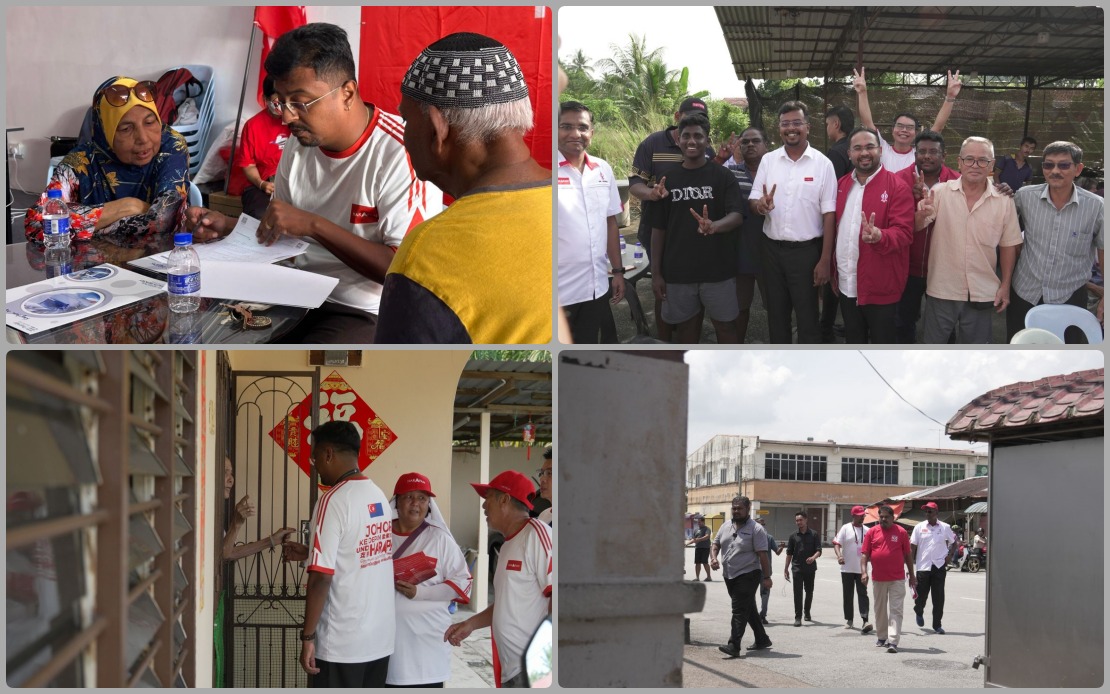
Dr. A. Ruban, the Pakatan Harapan (PH) candidate contesting the Paloh state assembly seat, was admitted to a hospital in Batu Pahat on July 7 for medical treatment related to a slipped disc that has flared up during his campaign activities. The condition, which has previously required surgical intervention, resurfaced after the candidate experienced significant pain that substantially restricted his mobility throughout the morning, prompting an immediate decision to seek professional medical care at midday.
According to campaign manager Abdul Majid Abd Aziz, Dr. Ruban's hospitalisation stems from complications exacerbated by the intensity of the electoral campaign. The candidate's pre-existing spinal condition, which had been managed through prior surgical procedures, deteriorated as the relentless demands of grassroots campaigning took their toll on his physical wellbeing. Abdul Majid attributed the flare-up to a combination of exhaustion and the compressed election schedule, which has kept Dr. Ruban constantly engaged with constituents across the Paloh constituency.
The campaign team indicated that Dr. Ruban's prognosis remains favourable, with medical professionals anticipating discharge within a day or two, suggesting his condition is not life-threatening. This optimistic assessment provided some reassurance to party supporters and voters concerned about their candidate's ability to participate in the final days of campaigning before the July 11 polling date. The candidate has been undergoing active treatment at the hospital, though details regarding the specific therapeutic interventions remain limited.
The timing of Dr. Ruban's hospitalisation represents a significant challenge for the PH machinery in Paloh, forcing a repositioning of campaign strategy with just days remaining before voters head to the polls. The constituency has emerged as a competitive battleground in the 16th Johor state election, drawing the attention of multiple political formations vying to secure this legislative seat. Abdul Majid declared that despite their candidate's physical absence from the campaign trail, the party remained fully committed to ensuring that Dr. Ruban's policy platform and vision for the constituency reached voters through alternative mobilisation methods.
Paloh voters will ultimately choose between four distinct political options in the July 11 election. Beyond Dr. Ruban representing the PH opposition coalition, the contest includes Perikatan Nasional (PN) candidate D. Jeevakumar, independent candidate G. Kamaleswaren, and the seat's incumbent Lee Ting Han, who carries the Barisan Nasional (BN) banner seeking re-election. This four-way configuration reflects broader fractures in Malaysian politics, where traditional two-coalition contests have been supplemented by a growing independent movement and the emergence of Perikatan Nasional as an alternative political force, particularly in certain constituencies.
Early voting in Johor occurred on July 7, allowing eligible voters to cast ballots ahead of the main election day. This staggered voting system provides flexibility for certain categories of voters but also compresses the timeline available for final campaign appeals and persuasion efforts. For Dr. Ruban and the PH campaign, the loss of a candidate's presence during these critical pre-election days represents a meaningful disadvantage in a closely contested race where personal connection and direct voter engagement frequently prove decisive.
The circumstances surrounding Dr. Ruban's hospitalisation highlight the physical demands placed upon political candidates, particularly those engaged in traditional door-to-door grassroots campaigning. Extended walking tours, multiple public appearances, limited rest periods, and the psychological stress inherent to electoral competition create cumulative physical strain that can aggravate pre-existing medical conditions. For candidates with prior health vulnerabilities, the intersection of demanding campaign schedules and underlying medical susceptibilities presents genuine health risks that must be carefully managed.
For the broader PH campaign apparatus in Johor, the incident underscores the importance of implementing campaign schedules that balance electoral imperatives with candidate welfare. Political organisations must increasingly grapple with balancing the competitive advantages of candidate visibility and personal voter engagement against the health risks and operational disruptions that result when candidates experience medical crises during crucial campaign phases. The situation in Paloh offers a cautionary case study regarding campaign intensity and candidate management.
Abdul Majid's assurance that campaign operations would continue uninterrupted suggests that PH has developed contingency arrangements, potentially including substitution campaigners or deputy representatives who can maintain the party's presence within the constituency during Dr. Ruban's recovery. Such backup strategies have become increasingly common in Malaysian electoral practice, recognising that candidate incapacity, whether through illness, scheduling conflicts, or other circumstances, can occur without warning, necessitating institutional flexibility and alternative mobilisation capacity.
The Paloh contest situates itself within the broader context of the Johor state election, a consequential provincial ballot with implications extending beyond the southwestern state. Johor has traditionally served as a political bellwether, with electoral outcomes frequently foreshadowing national-level trends and shifts in voter sentiment. The trajectory of contests in constituencies like Paloh may offer important signals regarding voter sentiment toward PH, the trajectory of PN as a political force, the resilience of BN in its traditional strongholds, and the extent to which independent candidates have penetrated previously consolidated two-party competition.
Dr. Ruban's hospitalisation also introduces an element of human interest into the electoral narrative, humanising the political process by highlighting the physical and emotional demands that public service aspirants endure. Malaysian voters often witness political campaigns as abstract institutional contests, yet the reality involves individual human beings navigating health challenges, family obligations, and personal circumstances whilst pursuing elected office. The incident serves as a reminder that behind electoral outcomes lie personal stories of sacrifice, dedication, and perseverance.

