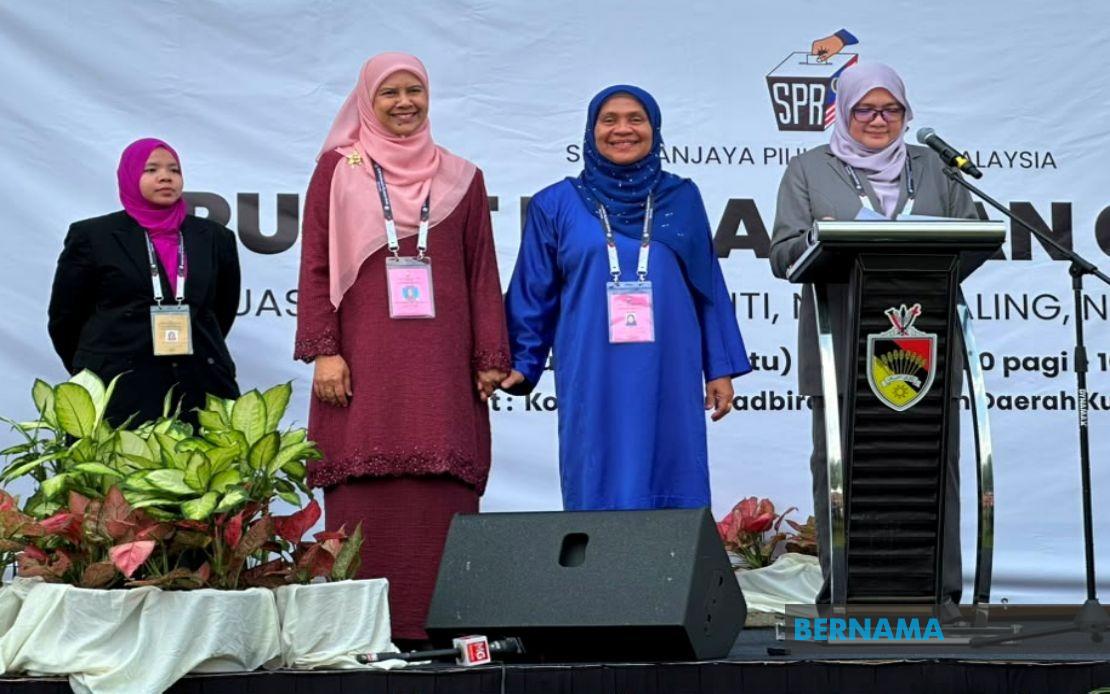
Negeri Sembilan's Pilah state seat will be contested by two women candidates in the upcoming 16th state election, marking a notable development in the electoral landscape of the state. The straight fight will pit incumbent Datuk Noorzunita Begum Mohd Ibrahim of Pakatan Harapan against Barisan Nasional's S. Leza Md Yasin, with both submitting their nomination papers within minutes of each other on nomination day in Kuala Pilah. The quick succession of filings—Noorzunita at 9.03 am followed by S. Leza at 9.09 am—signals the competitive nature of this contest as both camps mobilised their candidates promptly to meet the deadline.
The nomination of two female candidates for the Pilah seat reflects a gradual shift in representation within Malaysian state legislatures, where women have historically occupied a minority of seats. Noorzunita's incumbent status provides her with the advantage of name recognition and an established political machinery within the constituency, having served the seat under the Pakatan Harapan banner. Her positioning as an incumbent will likely feature prominently in her campaign narrative, allowing her to highlight development projects and constituency services delivered during her term. Conversely, S. Leza represents Barisan Nasional's effort to reclaim the seat, suggesting the coalition views Pilah as winnable territory despite the sitting member's presence.
The Negeri Sembilan state election will unfold across multiple constituencies with varying levels of electoral competition. While Pilah features a two-candidate contest, other seats present more fragmented races that may affect vote distribution and strategic voting patterns. The Juasseh state seat will see a three-way contest involving Pakatan Harapan's Mohd Aidil Abdullah, incumbent Datuk Ismail Lasim of Barisan Nasional, and Bersatu's Mohd Zuhami Md Yusof. This multiplicity of candidates complicates the traditional two-coalition framework that has dominated Malaysian electoral politics, as the Pakatan Harapan and Barisan Nasional competition now faces interference from Bersatu, a splinter faction that retains substantial political influence despite its reduced parliamentary presence.
Similarly, the Seri Menanti constituency will host a three-cornered battle among Pakatan Harapan's Mohd Kamarul Arifin Mohd Wafa, incumbent Muhammad Sufian Maradzi of Barisan Nasional, and Bersatu's Datuk Seri Megat D. Shahriman Zaharuddin. The Senaling state seat mirrors this pattern with Mohd Hanis Mohd Alimin representing Pakatan Harapan, Mohamad Qayyum Abd Jalil for Barisan Nasional, and Mohd Izzafi Khan standing for Bersatu. These multi-candidate contests introduce unpredictability into the election outcome, as voters may split along ideological, personality-driven, or factional lines rather than straightforward coalition preferences. The presence of Bersatu across multiple constituencies signals the party's determination to maintain relevance in state-level politics despite operating outside the primary national coalitions.
The Johol state seat presents another straight fight, this time between Pakatan Harapan's Mohd Zailan Mohd Munawar and incumbent Datuk Saiful Yazan Sulaiman of Barisan Nasional. The concentration of straight fights in Pilah and Johol suggests both constituencies are considered competitive heartland territories where either coalition believes it can secure victory without facing vote-splitting pressures from third parties. These contests will likely attract disproportionate attention from party machinery and campaign resources, as either a gain or loss in these seats carries symbolic importance for the respective coalitions.
The mobilisation of high-ranking government figures to accompany candidates during the nomination process underscores the political significance of this election for the federal administration. Pakatan Harapan fielded PKR Wanita chief Fadhlina Sidek, who serves as Education Minister, alongside Angkatan Muda Keadilan vice-chief Dr Mohammed Taufiq Johari in his capacity as Youth and Sports Minister, and Deputy Investment, Trade and Industry Minister Sim Tze Tzin. This deployment of ministerial firepower demonstrates the federal government's investment in securing or maintaining state control in Negeri Sembilan. Conversely, Barisan Nasional's campaign machinery brought Deputy Home Minister Datuk Seri Dr Shamsul Anuar Nasarah, an UMNO supreme council member, along with Perak Menteri Besar Datuk Seri Saarani Mohamad, highlighting the coalition's effort to coordinate support across multiple state administrations.
The electoral timeline established by the Election Commission provides candidates with a compressed campaign period relative to typical Malaysian electoral cycles. Early voting has been scheduled for July 28, with the main polling day set for August 1, offering a concentrated two-week campaign window. This condensed schedule means candidates must rapidly build momentum, mobilise grassroots support, and secure media coverage amid competing demands on voter attention. The early voting arrangement accommodates essential workers and those unable to vote on the main day, reflecting administrative best practices in electoral management that have become standard in Malaysian elections.
For Malaysian voters and regional observers, the Negeri Sembilan state election carries implications beyond local governance. State-level contests serve as bellwethers for national political sentiment, offering insights into shifting voter preferences and coalition strengths ahead of future federal elections. The performance of Pakatan Harapan and Barisan Nasional in Negeri Sembilan will be scrutinised by analysts assessing the durability of the federal government and the opposition's capacity to mount effective electoral challenges. Additionally, the role of Bersatu in multiple constituencies demonstrates how factional politics within the Malay-Muslim political establishment continues to fragment the electorate, potentially creating opportunities for non-traditional political actors to influence outcomes through split-vote dynamics.
The Pilah constituency battle between Noorzunita and S. Leza exemplifies the broader contest for state control while also representing the increasing visibility of women in competitive electoral races across Malaysia. Both candidates will campaign to articulate their vision for local development, connect with constituent concerns regarding cost of living and public services, and mobilise their respective party bases. The outcome in Pilah will offer data on whether incumbent advantage and Pakatan Harapan's federal position translate into electoral success at the state level, or whether Barisan Nasional's ground organisation and messaging resonates more strongly with local voters.

