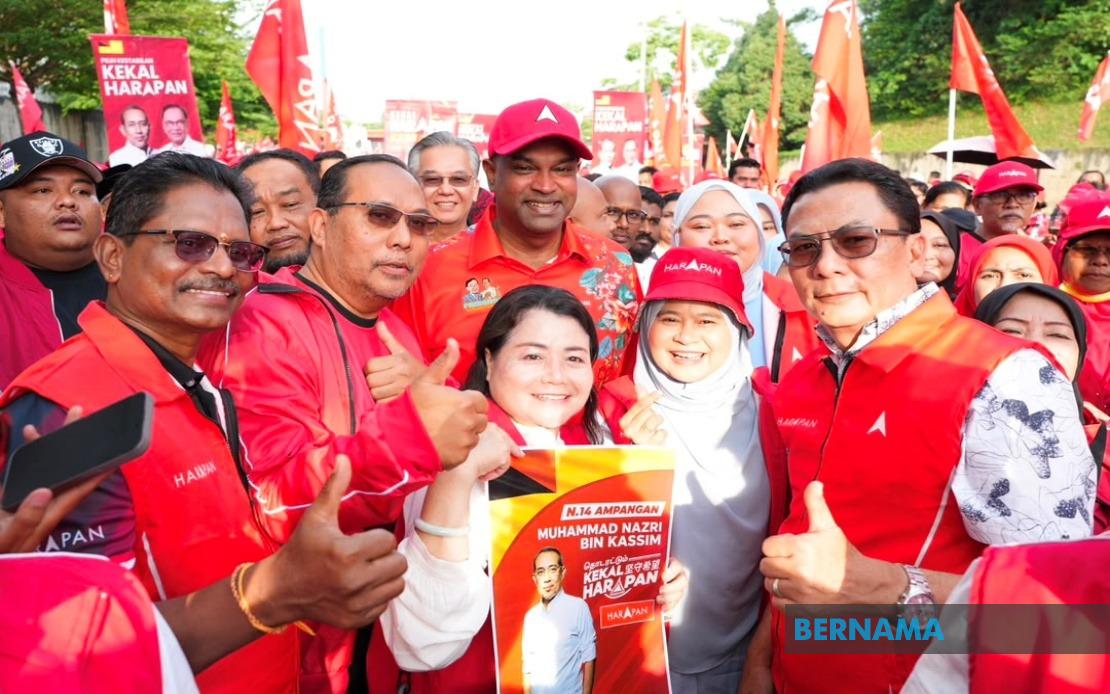
Datuk Seri R. Ramanan, the Sungai Buloh Member of Parliament and PKR vice-president, joined a high-profile show of support for six Pakatan Harapan candidates at the nomination centre in Seremban City Council Building on July 18, underscoring the coalition's determination to retain control of Negeri Sembilan in the forthcoming state election. The gathering demonstrated the coordinated backing of senior PH figures for the coalition's slate, with DAP deputy secretary-general Steven Sim among the prominent party leaders who appeared alongside Ramanan to energise campaign efforts before ballots are cast.
The six candidates receiving this prominent endorsement represent a cross-section of the Pakatan Harapan alliance, encompassing both established and new faces competing across diverse constituencies. Nor Azman Mohamad in Sikamat, Datuk Muhammad Nazri Kassim contesting the Ampangan seat, Zarinna Abu Zarin running in Lenggeng, Chew Seh Yong seeking to represent Lobak, J. Arul Kumar campaigning in Nilai, and Ho Weng Wah vying for the Temiang seat collectively showcase the coalition's breadth of candidate selection. The choice to have multiple senior PH figures converge at the nomination venue reflects strategic party thinking about the significance of this state-level contest and the need to project unity and organisational momentum.
The show of leadership presence at the nomination centre served a dual purpose within Malaysian electoral politics. Beyond the ceremonial endorsement of individual candidates, such gatherings communicate to party members and grassroots supporters that senior figures are personally invested in the campaign outcome. Ramanan's observations regarding the turnout of supporters and party machinery highlighted what PH leaders characterised as strong enthusiasm among their organisational cadres, a metric that veteran campaigners often interpret as indicative of ground-level morale and competitive positioning heading into the formal campaign phase.
Negeri Sembilan's 36-seat State Legislative Assembly had been dissolved on June 5, setting the stage for this 16th state election and opening a competitive window for all contesting coalitions and independent candidates. The Election Commission's schedule structured the electoral process methodically, with the nomination process completed and the formal campaign period commencing on July 18. Early voting was designated for July 28, allowing certain categories of voters to cast ballots ahead of the main polling day, while general voting was scheduled for August 1. This timeline compresses the official campaign window to approximately two weeks, intensifying the pace of candidate activities and party machinery engagement across constituencies.
Ramanan's statement regarding campaign strategy emphasised the importance of sustained engagement with constituents throughout this compressed timeframe. The PKR vice-president articulated the coalition's intention to maintain intensive people-to-people contact and organisational coordination across every assembly seat, positioning Negeri Sembilan's developmental continuity as a central campaign theme. This messaging approach seeks to frame the election as a choice between stability and progress under existing PH stewardship versus uncertainty under alternative governance, a rhetorical strategy commonly deployed by incumbent coalitions in state elections across Malaysia.
The significance of Negeri Sembilan elections extends beyond the state itself within Malaysia's political ecosystem. The results of state contests often function as indicators of broader sentiment toward national coalitions, offering both the ruling Pakatan Harapan and opposition blocs insights into their respective standing with voters. Negeri Sembilan, as a relatively compact state with moderate population density and established political structures, provides a manageable electoral laboratory where national political currents interact with local constituency dynamics. The outcome could potentially influence calculations regarding future political alignments and coalition strength at the federal level.
For Pakatan Harapan, maintaining its grip on Negeri Sembilan holds particular importance given the state's role in the coalition's broader Malaysian footprint. The appearance of both PKR and DAP leaders at the nomination centre underscored the coalition's commitment to defending this state seat, where PH has governed since the 2018 general election reshuffled Malaysia's political landscape. The collaborative visibility of different PH component parties—PKR and DAP—signalled to constituents that the coalition remained cohesive and coordinated in its electoral approach, potentially countering any narratives about internal tensions within the broader alliance.
The concentration of senior leadership attention on six specific candidates suggests PH's strategic assessment of which constituencies represented either significant opportunities for gains or vulnerable seats requiring reinforcement. Candidates receiving such high-profile backing typically occupy either pivotal seats where electoral outcomes remain uncertain or positions where strong party machinery turnout could prove decisive. The decision to feature both established political figures like Datuk Muhammad Nazri Kassim alongside less-prominent candidates reflected calibrated efforts to blend experience with new talent, a common pattern in Malaysia's electoral politics where parties seek to demonstrate both continuity and renewal.
Campaign dynamics in Negeri Sembilan unfold within the specific context of Malaysian electoral competition, where state elections increasingly become referenda on national government performance rather than purely local contests. The PH coalition's messaging around stability and development continuity would compete against opposition messaging regarding governance concerns or alternative policy directions. The compressed campaign period meant that parties needed to efficiently deploy resources, with leadership appearances serving as force multipliers for candidate campaigns by generating media attention and demonstrating institutional backing.
The nomination centre gathering illustrates how Malaysian political parties operationalise their organisational structures during election cycles. Beyond the formal submission of candidates' nomination papers, these nomination day events function as visible manifestations of party cohesion and grassroots activation. The presence of multiple senior figures creates opportunities for photographs and media engagement that extend campaign messaging beyond what individual candidates alone could generate, effectively amplifying the coalition's campaign reach during a crucial early phase when voter attention is beginning to crystallise around the upcoming election.
For Southeast Asian observers of Malaysian politics, the Negeri Sembilan contest represents a snapshot of how established coalitions attempt to consolidate electoral advantages in state-level competitions. The coordination visible in the joint appearance of PKR and DAP leadership reflects lessons learned from previous electoral cycles regarding the importance of maintaining coalition unity in public presentation, regardless of internal disagreements that may exist within broader alliance structures. Such displays of solidarity carry particular weight in Malaysian political culture, where voter perceptions of party capability and organisational coherence significantly influence electoral decision-making.
As the campaign period progresses toward the August 1 polling day, the foundational work conducted during nomination week—including visible leadership endorsements and grassroots activation—would shape subsequent campaign phases. The six candidates receiving prominent backing on July 18 would benefit from continued emphasis on their coalition credentials and access to PH's broader organisational machinery. The outcome in Negeri Sembilan, when results are declared, will provide substantive data regarding the coalition's electoral strength and the resonance of its governance narrative with state voters during a period of significant national political attention.

