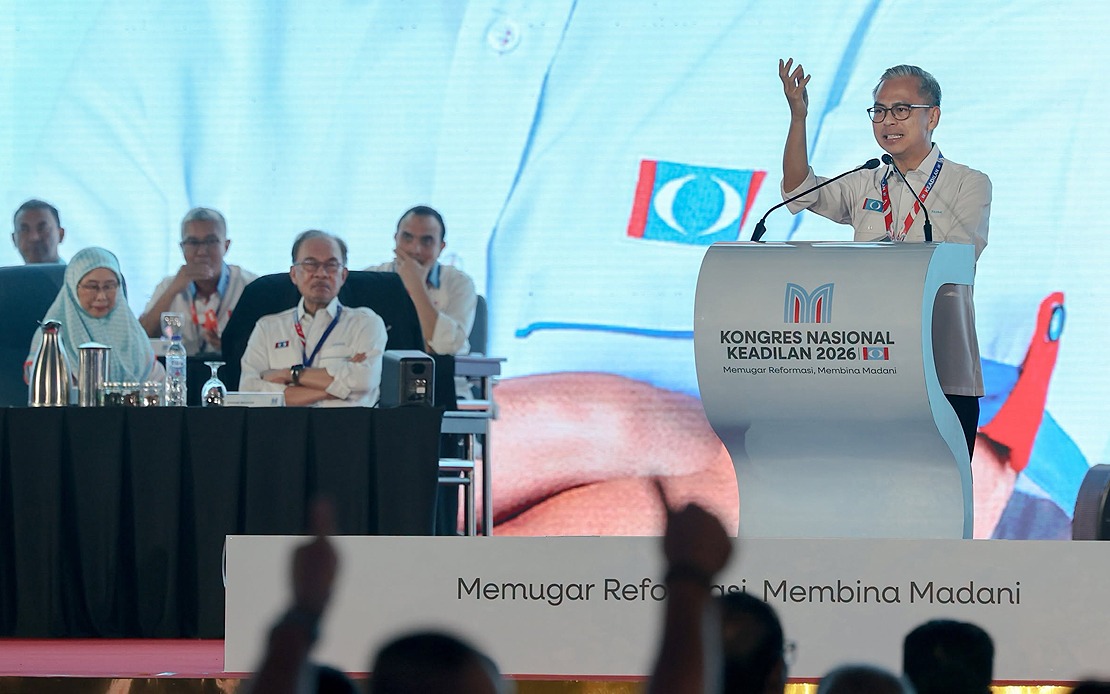
The Parti Keadilan Rakyat (PKR) concluded its 2026 National Congress in Kuala Lumpur on Friday, with party leadership framing the gathering as a decisive moment to reaffirm its foundational commitment to reform and reinvigorate its organizational capacity. The two-day assembly, which drew party delegates and members from across the nation, served as more than a ceremonial gathering—it functioned as a strategic venue for the party to assess its trajectory, acknowledge internal challenges, and recalibrate its approach to delivering tangible benefits to ordinary Malaysians.
PKR Information Chief Datuk Seri Fahmi Fadzil characterised the congress as a platform for introspection and renewal rather than mere rhetoric. In his assessment, the gathering allowed party delegates to examine PKR's organisational strengths and expose areas requiring immediate attention. This self-evaluative dimension appears particularly significant given Malaysia's evolving political landscape, where coalition governments at both federal and state levels demand sustained institutional discipline and coherent messaging. Fahmi's emphasis on this reflective component suggests that PKR leadership recognises the competitive pressures facing the party and the necessity of periodic internal stock-taking.
Central to the congress proceedings was PKR President Datuk Seri Anwar Ibrahim's address, which Fahmi noted delivered an unambiguous message: the reformasi struggle remains unfinished and demands sustained commitment. Anwar's intervention carried symbolic weight, reinforcing that the party's historical identity as a reform-oriented movement should continue guiding its policy positions and strategic decisions. For Malaysian observers, this reiteration underscores that despite PKR's participation in government—a position achieved through electoral success and coalition-building—the party maintains that its core mandate extends beyond administrative competence to genuine structural transformation.
Fahmi's subsequent remarks outlined an ambitious agenda for party members between now and the next major gathering. He called for grassroots reconnection, instructing delegates to return to their constituencies with renewed energy to engage constituents, solicit feedback, and identify pressing local concerns. This bottom-up approach reflects a strategic recognition that political legitimacy, particularly in Malaysia's competitive multiparty environment, depends on maintaining tangible links between elected representatives and their communities. The emphasis on listening and problem-solving at the grassroots level also addresses a perennial challenge for governing coalitions: the risk that parties become insulated within government structures and lose touch with their electoral base.
The call for organisational strengthening and disciplined teamwork carries particular relevance for PKR, which has experienced internal tensions and factional dynamics in recent years. By invoking the need for cohesion and coordinated action, Fahmi appears to be signalling that party leadership expects members to subordinate internal differences to collective objectives. This is not merely symbolic rhetoric—in Malaysia's parliamentary system, where coalition stability directly affects government viability, party discipline translates into legislative effectiveness and policy implementation capacity.
Fahmi's acknowledgment that political challenges will persist indicates a realistic assessment of the environment PKR operates within. Malaysia's competitive political arena features multiple coalitions, competing ideological frameworks, and shifting voter preferences. Opposition parties continuously challenge PKR's legitimacy and competence, while within the broader coalition government, other partners pursue distinct agendas. PKR's determination to remain anchored to its principles despite these pressures suggests the party views principle-consistency as a strategic asset—a way to differentiate itself and maintain voter confidence amid complexity.
The congress conclusion does not mark the end of PKR's work cycle; rather, Fahmi framed it as a transition point. Party machinery, he emphasised, must maintain operational momentum, with members expected to return to intensive work schedules. This language suggests that congress periods serve as opportunity moments to reset priorities and reinvigorate effort rather than endpoints to partisan activity. For Malaysian political observers, this continuous-work framing reflects how modern governing parties operate—there is no genuine off-season for either campaigning or constituent service.
The focus on ensuring that the party's struggle yields tangible benefits for ordinary people represents an implicit acknowledgment that PKR's legitimacy depends on delivery. Having transitioned from opposition to government participation, PKR must demonstrate that its reform agenda translates into improved public services, economic opportunity, and quality of life outcomes. This creates pressure to produce visible results within government, a challenge complicated by Malaysia's federal structure, divided state control, and budgetary constraints.
For Southeast Asia more broadly, PKR's congress reflects broader regional trends in how reform-oriented parties navigate the transition from opposition activism to governance participation. The tension between maintaining movement-like characteristics and functioning as a disciplined governing party plays out across the region. PKR's effort to preserve its reform identity while consolidating governmental power offers insights into how Asian political movements attempt to reconcile idealistic foundational principles with pragmatic administrative requirements.
The gathering also occurs against Malaysia's broader political calendar, with the next general election potentially several years away but not so distant that strategic positioning remains irrelevant. PKR's renewal messaging at this congress thus serves multiple functions: it energises the grassroots for sustained organisational work, reaffirms leadership continuity around established figures like Anwar, and projects to both party members and the broader electorate a sense of clear direction and unfinished reform ambitions.

