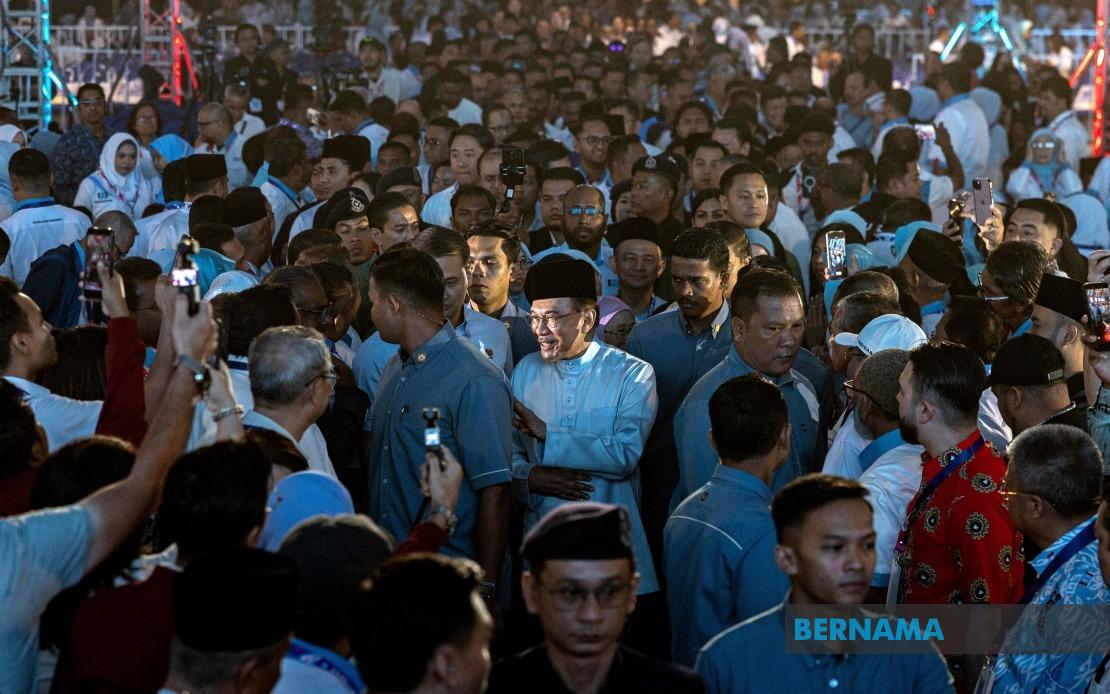
The upcoming 2026 PKR National Congress represents a critical juncture for the party to consolidate its forces and rebuild eroded public confidence, according to Tengku Datuk Seri Zafrul Tengku Abdul Aziz, the Prime Minister's senior political adviser and ex-officio member of the PKR Political Bureau. Speaking in Melaka on 15 August, Tengku Zafrul framed the congress not merely as a routine gathering but as a defining moment for introspection and renewal within Malaysia's leading multiethnic coalition party.
The call for renewed focus comes in the wake of disappointing results in recent state-level elections that exposed vulnerabilities in PKR's electoral machinery and messaging. Rather than attributing losses solely to external factors, Tengku Zafrul directed party members to conduct rigorous self-examination of internal processes and operational deficiencies. He emphasised that while PKR operates within the broader Unity Government alongside other coalition partners, the party cannot control their performance or strategic decisions. What remains within PKR's sphere of influence is the efficiency and effectiveness of its own organisational structures and field operations.
Central to Tengku Zafrul's assessment is the recognition that party machinery at all levels—from grassroots branches to the central leadership council—must function with greater coordination and clarity of purpose. He advocated for systematic evaluation of existing weaknesses that may have contributed to electoral underperformance and public dissatisfaction. This introspective approach suggests an acknowledgment that technical and organisational factors, rather than ideology or policy platforms alone, have hampered PKR's ability to translate voter sentiment into electoral victories.
A significant component of Tengku Zafrul's message focuses on the communication gap between PKR and the electorate. He pointed out that even when the government delivers tangible results, the failure to communicate these achievements effectively diminishes their political impact. This diagnosis reflects a broader challenge facing the Unity Government: voters may not fully appreciate policy outcomes if messaging remains inadequate or fragmented across multiple coalition partners. For PKR specifically, this underscores the need for more robust and coordinated public engagement strategies.
Beyond structural improvements, Tengku Zafrul advocated for a fundamental shift in how party members engage with ordinary Malaysians. He urged members to approach voter concerns with genuine openness rather than defensive posturing, emphasising the importance of listening before responding. This recommendation carries particular weight for a party that has faced criticism over issues ranging from cost of living pressures to service delivery expectations. The advice to acknowledge unresolved problems rather than dismiss them represents a departure from purely defensive political communication.
The three-part framework Tengku Zafrul outlined—listen, acknowledge, deliver—constitutes a simplified yet demanding operating principle. Listening requires setting aside predetermined narratives and genuinely understanding what communities perceive as their most pressing challenges. Acknowledging these grievances, especially when solutions remain incomplete, demands political courage and transparency. Finally, delivery implies concrete action within defined timeframes, converting promises into measurable improvements in people's lives.
For Malaysian observers and PKR members, these remarks carry implications that extend beyond party mechanics. They suggest that internal party cohesion has become a strategic priority, particularly as the 2026 general election approaches and coalition dynamics potentially shift. The emphasis on strengthening PKR's organisational capacity indicates awareness that electoral fortunes depend not only on broad coalition politics but on the competence and morale of individual party structures.
The broader context of PKR's recent challenges includes evolving voter expectations in an era of economic uncertainty. Malaysians have grown increasingly scrutinising of government performance on inflation, employment, and social services. A party that cannot articulate its role in addressing these concerns or demonstrate tangible improvements risks further erosion of support, particularly among urban and youth constituencies that have historically formed part of PKR's coalition base.
Tengku Zafrul's framing also reveals possible internal concerns about member morale and party discipline. His appeal for unity and collective purpose may reflect instances of fragmented messaging or individual members pursuing separate agendas rather than coordinated party campaigns. Strengthening the party machinery implies both resource allocation and enforcing greater alignment between leadership directives and field operations.
Regionally, PKR's capacity to strengthen itself matters beyond Malaysia's borders. As a major component of the federal government and the most consistently multiethnic-oriented major party in Malaysian politics, PKR's health influences broader regional perceptions of Malaysian governance stability and inclusive political participation. Voter confidence in PKR indirectly signals confidence in Malaysia's ability to manage coalitional democracy across communal lines.
The 2026 congress, scheduled to take place in Melaka, will test whether these calls for renewal translate into concrete institutional changes. Party delegates will scrutinise proposed reforms to internal decision-making processes, leadership accountability mechanisms, and campaign structures. Meaningful change requires not merely rhetorical commitments but structural adjustments that empower ground-level activists and ensure leadership responsiveness to voter feedback.
Ultimately, Tengku Zafrul's message reflects the reality that no political coalition can maintain public support indefinitely without demonstrating continuous responsiveness to evolving citizen expectations. For PKR, the coming months before the 2026 congress represent both a vulnerability—as voter attention may drift toward opposition narratives—and an opportunity to reset internal dynamics and reinvigorate public engagement with renewed clarity of purpose and operational effectiveness.

