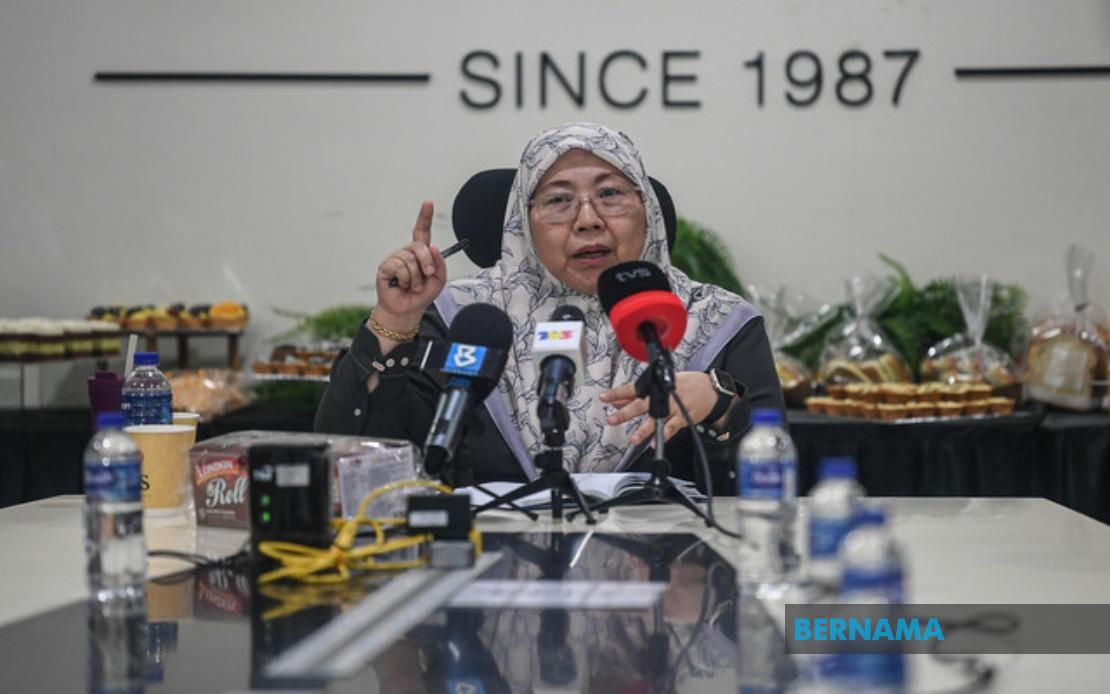
A group of PKR members and leaders defected to MIC this week, a move that party leadership has characterised as reflecting internal disappointment rather than ideological shift. Speaking in Johor Bahru on June 30, PKR secretary-general Datuk Dr Fuziah Salleh described the exodus as "rather strange," pointing instead to party research suggesting that those who left were motivated primarily by discontent over being overlooked for appointments. The defection carries significance for the coalition given the timing—just days before Johor voters will head to the polls in a critical state election that will reshape the political landscape across the region.
The exodus became public on June 28 when M. Murugan, who previously served as vice-chairman of the Johor PKR State Leadership Council, announced he would lead approximately 200 supporters into the Malaysian Indian Congress. Murugan's decision to switch parties and specifically target the MIC's Iskandar Puteri division underscores the competitive dynamics within Malaysian coalition politics, where multiethnic parties constantly jostle for Indian Malaysian representation. Fuziah's response, wishing the departing members success in securing "significant positions" in their new political home, carried an implicit suggestion that their complaints about being sidelined may not be resolved simply by changing parties.
The timing of these defections cannot be separated from the broader political manoeuvring across Malaysian coalitions as the 16th Johor state election approaches. With 172 candidates contesting 56 seats and voting scheduled for July 11 following early polling on July 7, all political parties are engaged in last-minute strategising. For PKR, losing 200 members in the weeks before such a significant electoral test poses challenges to mobilisation and ground-level campaign activities, even if party leadership downplays the ideological implications. The defection highlights a persistent vulnerability within coalition-based parties: the perpetual tension between member aspirations for leadership roles and the limited positions available to distribute.
Party insiders have long acknowledged that PKR's rapid growth following the 2018 general election created expectations among new members that could never be fully satisfied through formal appointments. The party operates within the larger Pakatan Harapan framework alongside DAP and Amanah, further limiting the senior positions available to its own members. This structural constraint has repeatedly surfaced in party grassroots discussions, and Murugan's exodus suggests that frustration has now crossed from internal conversation into actual defection. Whether this represents a broader trend or an isolated incident tied to particular local personalities remains unclear, but it signals that position-based grievances continue to drive membership decisions.
Fuziah's comments on the broader political context reveal PKR's strategic reading of developments across the coalitions. She specifically referenced PAS president Tan Sri Abdul Hadi Awang's call urging voters to reject Pakatan Harapan, interpreting this as evidence of renewed cooperation discussions between Barisan Nasional and the Islamist party. Such developments have profound implications for Johor, where the government in Kuala Lumpur would benefit enormously from a reduced opposition presence. Fuziah's warning to Johor voters to "carefully assess the situation" before making electoral choices attempted to frame the state election as a referendum on coalition stability rather than individual party performance.
The secretary-general deployed a strategic counter-narrative regarding Perikatan Nasional's positioning in the contest. She characterised PN's apparent attempt to appeal to disaffected BN supporters as potentially self-defeating, suggesting instead that such manoeuvring might expose internal tensions within the coalition itself. This argument rested on the observation that PAS's public distancing from Pakatan Harapan could be interpreted as signalling discontent within PN rather than strength. If PN's component parties were genuinely united, the reasoning went, they would coordinate messaging more carefully rather than allow statements like Hadi's to appear as unilateral party moves. Fuziah's conclusion—that PKR ultimately stood to benefit from such apparent disunity—reflected confidence that coalition fragmentation among opponents could translate into electoral gains.
The defection episode also illuminates the continuing role of Indian Malaysian voters in peninsular politics. MIC's decision to target the departing PKR members represented a calculated move to strengthen its community base in Iskandar Puteri, an area with significant Indian populations. The choice to accept Murugan and his supporters rather than dismiss them suggested that MIC viewed these defectors as bringing authentic grassroots credentials to its campaign efforts. For PKR, losing a former state-level leader to a BN-affiliated party carried symbolic weight beyond the numerical loss of 200 members, signalling vulnerability in its own Indian Malaysian constituency.
Looking beyond June 2023, the defection raises questions about PKR's internal management approaches and whether the party can develop retention strategies beyond position allocation. Malaysian political parties have historically struggled with this challenge, as membership motivation inevitably reflects both ideological commitment and personal advancement expectations. The party's tendency to attribute the Murugan exodus to position disappointment rather than conducting deeper analysis of member satisfaction may itself reflect organisational limitations. If discontent runs deeper than perceived, subsequent elections could see similar departures.
The election itself remains the more immediate focus, with Johor's 56 state seats representing crucial electoral real estate for all coalitions. Pakatan Harapan's performance in this state will largely determine the coalition's overall trajectory following the previous year's federal government formation. A strong showing could consolidate its position as a credible alternative governing force, while a poor result might trigger further internal questioning about viability. For PKR specifically, maintaining its support base against attrition becomes essential to demonstrating coalition stability and member loyalty in the crucial months ahead.

