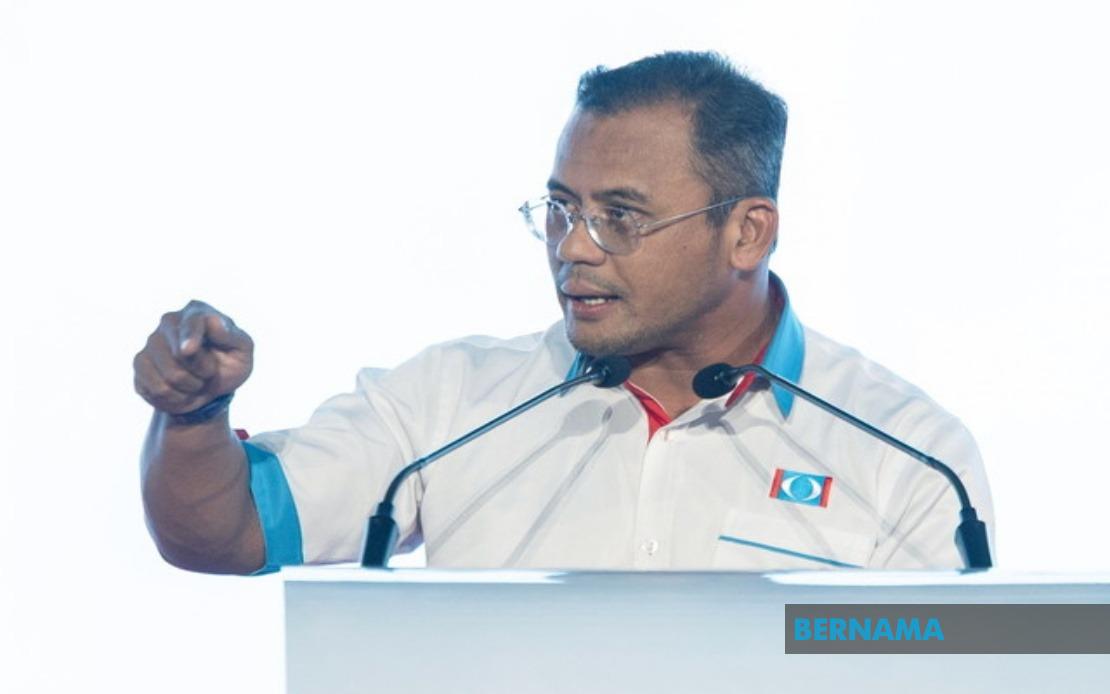
PKR's senior leadership has issued a clear directive that the party must continue championing a fair and inclusive political approach serving all communities, even as it upholds the constitutional recognition of Islam and the special position of the Malays. The message came during the second day of PKR's National Congress in Melaka, where senior party figures articulated a vision of multiculturalism grounded in constitutional respect and practical fairness.
Datak Seri Amirudin Shari, the party's vice president and Selangor Menteri Besar, framed the matter as a fundamental balancing act. He acknowledged that the Federal Constitution's provisions on Islam and Malay-Muslim rights form a bedrock that all political parties must honour. However, he insisted this constitutional anchor does not prevent PKR from extending equitable treatment across religious and ethnic lines. "We are fair to all Malays, Chinese, Indians, Christians, Buddhists and Hindus," Amirudin stated in his closing address at Melaka International Trade Centre, signalling that constitutional respect and communal fairness are not mutually exclusive.
Amirudin traced PKR's ideological foundation to the reform movement launched by party president Datuk Seri Anwar Ibrahim in 1998, which he credited with advancing democratic participation, fundamental human rights, economic equity, and institutional integrity. This historical framing positions PKR's inclusive stance not as a recent tactical shift but as an enduring commitment flowing from the party's origins during Malaysia's political upheaval in the late 1990s. For regional observers, this reflects a broader pattern within Malaysian politics where parties increasingly justify contemporary positions by appealing to foundational principles or historical grievances.
A sharper critique of divisive politics came from Datuk Seri R. Ramanan, the party's other vice president and Minister of Human Resources. Ramanan explicitly identified rival political operators as deliberately weaponising racial and religious identity to accumulate votes and fracture national cohesion. He warned that narrow electoral agendas, pursued through racial polarisation, pose a genuine threat to Malaysia's multicultural stability. His message was unambiguous: PKR must reject such tactics categorically and remain a bulwark for diversity.
Ramanan's comments carry particular weight given Malaysia's recent electoral cycles, during which identity politics has intensified, especially in state and federal campaigns. The proliferation of what analysts term "competitive Islamisation" and the strategic deployment of Malay-Muslim grievances have become standard tools in the political arsenal of several parties. By explicitly positioning PKR against these trends, Ramanan sought to differentiate the coalition from competitors and appeal to urban, religiously diverse constituencies who view racial polarisation with alarm.
Ramanan also delivered an internal organisational message, urging party hierarchies to prioritise unity and suppress ego-driven conflicts. His observation that infighting at senior levels demoralises grassroots cadres and weakens party machinery reflects a pragmatic understanding of how internal dysfunction cascades downward through party structures. When top leadership quarrels publicly, he noted, ordinary members become confused, local branches struggle, and ultimately opposition parties benefit. This appeal for cohesion suggests that PKR, despite its coalition role, faces internal management challenges that could undermine electoral performance if left unaddressed.
Another vice president, Datuk Chang Lih Kang, offered empirical evidence supporting the party's inclusive strategy. He pointed to the Chennah state assembly seat in the Negeri Sembilan election, where DAP secretary-general Anthony Loke, a non-Malay candidate, secured increased support from Malay voters despite facing what Chang characterised as identity-based political attacks. This result, Chang argued, demonstrates that voters increasingly reward genuine service and competence over racial appeals, and that the supposed electoral toxicity of supporting non-Malay candidates can be overstated. For Malaysian political observers, such examples become ammunition in ongoing debates about whether identity politics truly dominates Malaysian voting behaviour or whether other factors—incumbency, local development, personality, governance reputation—remain weighty.
The PKR Congress statements arrive amid a national political environment marked by considerable uncertainty. Coalition dynamics within Pakatan Harapan remain fluid, and the relationship between PKR and its allies in DAP and Amanah continues to generate friction over both policy and seat allocation. By prominently reaffirming commitment to inclusive politics and explicitly rejecting racial divisiveness, PKR appears to be shoring up its appeal among urban, middle-class, ethnically mixed constituencies where such messaging resonates strongly. Simultaneously, the repeated acknowledgment of constitutional provisions governing Islam and Malay rights serves to reassure conservative Malay-Muslim voters that inclusivity does not entail wholesale abandonment of communal or religious protections embedded in the Constitution.
The timing of these statements also reflects broader regional trends. Across Southeast Asia, parties are grappling with the tension between identity-based mobilisation and inclusive governance, particularly as urbanisation and educational advancement create electorates sceptical of zero-sum racial framing. Singapore's carefully managed multiculturalism, Indonesia's pluralist constitution, and Thailand's ongoing struggle with majority-minority relations all provide cautionary examples. PKR's explicit positioning thus places the party within a broader regional conversation about whether multiethnic democracies can sustainably govern through racialised politics or whether long-term stability requires managed diversity and institutionalised protection for all communities.
For Malaysian businesses, investors, and ordinary citizens concerned with political stability, the PKR messaging offers modest reassurance that at least one major coalition component is publicly committed to de-escalating communal tensions and rejecting divisive tactics. However, the gap between rhetorical commitment and actual behaviour often proves substantial in Malaysian politics. Whether PKR can sustain this positioning when facing electoral pressure, competition from more aggressively identity-focused rivals, or internal party disputes will determine whether these statements represent genuine strategic reorientation or temporary rhetorical positioning ahead of coming elections.

