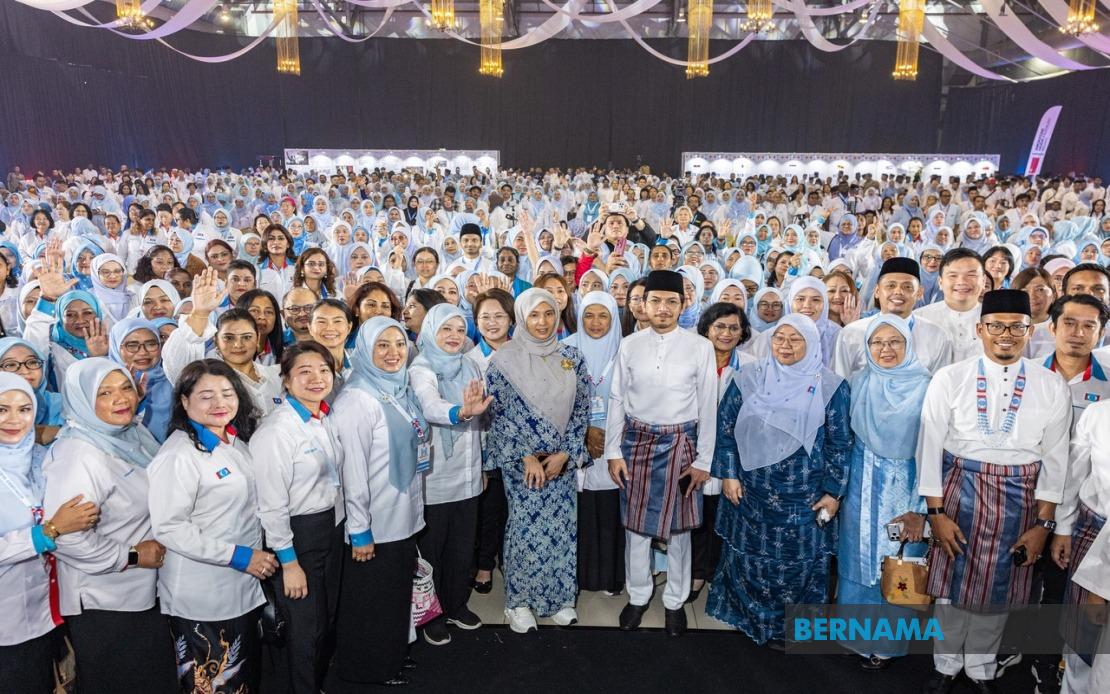
Parti Keadilan Rakyat (PKR) must construct a more forceful and persuasive political message to restore public confidence in the party, according to Angkatan Muda Keadilan (AMK) chief Muhammad Kamil Abdul Munim. Speaking at the 2026 AMK National Congress held at the Melaka International Trade Centre in Ayer Keroh, Muhammad Kamil stressed that superficial popularity alone cannot sustain a political movement through the rigours of electoral competition. The party's recent performances in the Sabah, Johor and Negeri Sembilan state elections have revealed critical shortcomings that demand urgent rectification across multiple operational levels.
Muhammad Kamil's assessment points to a fundamental disconnect between PKR's public appeal and its capacity to mobilise supporters into an effective electoral machine. He noted that whilst the party has historically benefited from waves of grassroots enthusiasm since 1998, with ordinary citizens actively participating in its machinery, this organic energy has not crystallised into consistent electoral success. The challenge intensifies now that PKR holds government responsibilities, which fundamentally alter the dynamics of political engagement and voter expectations. The party must acknowledge that governing demands a different strategic approach than opposition politics, requiring more sophisticated coordination between party structures and state apparatus.
The AMK chief emphasised that PKR's leadership and membership must embrace comprehensive organisational renewal. Rather than maintaining existing frameworks that have demonstrably underperformed, the party requires restructured approaches to political activity, campaign strategy and grassroots engagement. This transformation must be methodical and deliberate, moving beyond reactive responses to electoral losses toward proactive construction of sustainable competitive advantages. The party's machinery has operated largely on spontaneous momentum and ideological commitment, but this foundation proves insufficient when confronted by better-organised political opponents equipped with superior resource distribution and targeted voter mobilisation systems.
During the congress, which opened under PKR deputy president Nurul Izzah Anwar's patronage, Muhammad Kamil called upon party members to confront harsh electoral realities without surrendering to defeatism. The grassroots have communicated through their voting patterns that PKR must fundamentally recalibrate its approach. This requires more than cosmetic adjustments; it demands strategic repositioning that acknowledges previous shortcomings whilst projecting renewed capability to address voter concerns. The presence of PKR vice-president Datuk Seri Dr Zaliha Mustafa and Wanita PKR chief Fadhlina Sidek underscored the party's commitment to conducting this self-examination across all organisational levels and demographic constituencies.
Fadhlina Sidek reinforced these themes in her address, positioning the congress as an opportunity for institutional introspection rather than celebratory retrospection. She advocated transforming leader speeches into concrete operational directives, moving from rhetorical flourishes toward actionable programmes that strengthen organisational capacity. Fadhlina stressed that this platform should facilitate delegates in recognising the party's vulnerabilities and organisational deficiencies with unflinching honesty. Acknowledging weakness represents the necessary precondition for systemic improvement; parties that obscure or minimise genuine structural problems perpetuate conditions for continued electoral decline.
The emphasis on grassroots engagement proves particularly significant for Malaysian political dynamics. PKR's traditional strength has derived from its capacity to mobilise civil society participation and harness reform-minded constituencies across urban and semi-urban areas. However, recent electoral results suggest that competing parties have successfully replicated these mobilisation techniques whilst maintaining stronger traditional support networks. Rebuilding grassroots strength requires not merely expanding membership rolls but developing genuine organisational capacity at local levels where party representatives maintain sustained contact with communities, understand local grievances, and coordinate electoral activities with precision.
For regional observers, PKR's current positioning within Malaysia's political landscape warrants careful monitoring. As a coalition partner in the federal government, the party must balance reform aspirations against pragmatic governance responsibilities. This tension inevitably creates friction within multiparty governments, particularly when different coalition members prioritise conflicting objectives. PKR's renewal efforts will partly determine whether the current government maintains cohesion or fractures along predictable factional lines, outcomes with implications extending beyond Malaysia's borders given regional security and economic interdependencies.
The party's historical narrative of reformist activism, particularly its role in the 1998 Reformasi movement, continues influencing voter expectations. Younger voters increasingly question whether PKR has sufficiently translated its reform credentials into tangible policy outcomes benefiting ordinary citizens. The gap between campaign promises and governance realities has widened perceptibly, undermining the party's differentiation from other established political actors. Reconstructing compelling narrative thus requires demonstrating concrete achievements rather than merely articulating ideological positions.
Muhammad Kamil's exhortation to develop organisational structures capable of translating public support into electoral victories addresses a persistent Malaysian political challenge. Malaysia's federal system distributes power across national and state governments, requiring coordinated strategies that maintain coherence across multiple electoral cycles and jurisdictional levels. PKR's performance variations across different state elections suggest inconsistent organisational capacity and message dissemination. Uniform improvement requires establishing standardised operational procedures, systematic training for party activists, and accountability mechanisms ensuring consistent implementation of strategic directives.
The 2026 congress timing proves strategically significant, positioning the party for crucial election cycles that will substantially influence Malaysia's political configuration. Federal elections typically occur within constitutionally mandated timeframes, though exact timing remains uncertain. State elections follow unpredictable schedules based on dissolution decisions by incumbent governments. PKR's renewal trajectory over the next two years will substantially determine whether the party can arrest electoral decline or continues losing ground to competitors more adept at translating organisational resources into electoral outcomes.
Fadhlina's call for systematic self-reflection transcends conventional political rhetoric by emphasising the congress delegates' role as intermediaries between grassroots constituencies and party leadership. This framing positions the congress as genuine deliberative mechanism rather than stage-managed endorsement of predetermined leadership decisions. If implemented authentically, such participatory approaches could enhance grassroots morale and generate genuinely innovative solutions emerging from communities closest to electoral frontlines. Conversely, if upper echelon leadership subsequently disregards grassroots recommendations, the congress risks generating cynicism undermining the renewal effort entirely.
Looking forward, PKR's capacity to implement meaningful organisational changes remains contingent on leadership commitment, resource allocation, and sustained member engagement beyond congress rhetoric. Malaysian political history demonstrates repeatedly that parties announcing structural reforms frequently revert to established patterns once immediate electoral pressures subside. Genuine transformation requires persistent effort, sometimes spanning multiple election cycles, before demonstrable improvements in electoral performance materialise. The party's renewal journey will test whether contemporary PKR leadership possesses the strategic patience and organisational discipline necessary to construct sustainable competitive advantages against increasingly sophisticated political opponents.

