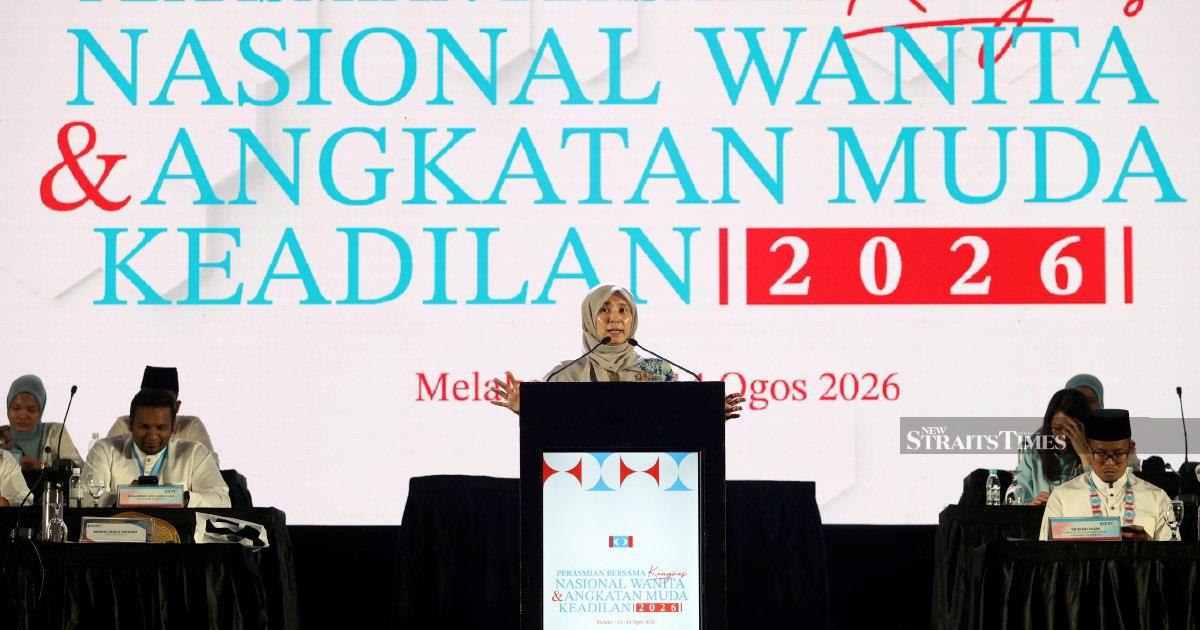
At a gathering in Ayer Keroh, PKR's deputy president Nurul Izzah Anwar has underscored the necessity for her party to articulate firm ethical boundaries—what she terms "red lines"—as it navigates an increasingly complex political landscape. Her remarks reflect growing concerns within progressive political circles that the pursuit of governance and electoral advantage can sometimes erode the foundational principles that parties enter politics to defend. The timing of Anwar's intervention is significant, coming as Malaysian politics continues to evolve following shifts in coalition arrangements and the consolidation of various political movements across the peninsula.
Nurul Izzah's emphasis on defining non-negotiable positions serves as a pointed reminder that political pragmatism, while sometimes necessary for effective governance, must never become the justification for tolerating corruption, misuse of state power, or other forms of institutional wrongdoing. This distinction matters greatly in the Malaysian context, where political coalitions have historically proven fluid and where shifting alliances have sometimes resulted in former adversaries finding common cause. The PKR deputy president's call suggests internal reflection within her party about how to maintain moral credibility whilst operating within complex coalition dynamics.
The concept of "red lines" in political discourse typically refers to absolute, non-negotiable principles that a party refuses to compromise on, regardless of short-term tactical advantage. For an opposition-oriented party like PKR, which has long positioned itself as a champion of democratic reform and accountability, such boundaries become particularly important. They provide a compass by which supporters can evaluate whether their party's leadership remains faithful to its founding mission or whether it has drifted into conventional horse-trading divorced from principle.
Within Malaysia's political ecosystem, the articulation of clear red lines carries practical implications. It signals to coalition partners what behavioural standards are expected in joint governance arrangements and establishes internal mechanisms for accountability that go beyond electoral cycles. When parties fail to establish such boundaries clearly, they risk scenarios where members find themselves defending actions that contradict the party's public positioning, thereby undermining internal cohesion and public trust simultaneously.
For Malaysian voters, particularly those who support reformist agendas, Nurul Izzah's intervention touches on a genuine anxiety about whether parties of reform can maintain their integrity once they attain power or enter power-sharing arrangements. History provides cautionary tales across Southeast Asia of movements that began with genuine anti-corruption platforms, only to gradually adopt the practices they once opposed. The PKR deputy president's willingness to address this concern publicly may indicate serious internal discussions about institutional safeguards against such gradual ethical erosion.
The practical challenge lies in translating such declarations into actionable governance standards. Red lines must be specific enough to guide decision-making in real-time political crises, not so vague as to permit arbitrary interpretation depending on circumstances. They require buy-in not merely from party leadership but from all levels of the organization, from state assemblymen to municipal councillors, where everyday decisions about governance, contracts, and resource allocation shape public perceptions of institutional integrity.
PKR's position within Malaysian coalition politics has evolved considerably since its founding. The party now holds ministerial positions and participates in state-level government in multiple jurisdictions. This expanded role creates inevitable tensions between revolutionary rhetoric and evolutionary compromise. Nurul Izzah's call for clarity on red lines appears designed to resolve this tension by establishing a framework that permits pragmatic coalition-building without sacrificing foundational commitments to anti-corruption and rule of law.
The regional context further sharpens the significance of Anwar's remarks. Across Southeast Asia, democratic movements face persistent challenges in maintaining their reform agendas once they assume power. Thailand, Indonesia, and the Philippines have all experienced cycles where political movements dedicated to accountability eventually faced accusations of the very abuses they originally opposed. Malaysia's own history includes similar patterns. PKR's explicit engagement with this dilemma suggests strategic thinking about how to avoid these well-documented pitfalls.
Another dimension worth considering involves PKR's relationship with its coalition partners, particularly Pakatan Harapan members and other aligned parties. Clear red lines from PKR create externalities affecting the entire coalition. If PKR establishes that it will not tolerate certain forms of misconduct from its own members, this implicitly creates pressure on partner parties to maintain comparable standards. Such standardization across a coalition can either strengthen democratic governance or create friction if partners operate under different ethical frameworks.
The internal party management implications are equally important. PKR members facing difficult ethical dilemmas—instances where personal political survival might conflict with institutional principles—require clear guidance about where the party stands. Without defined red lines, ambitious members might rationalize increasingly problematic decisions as acceptable compromises. With clearly articulated boundaries, the party creates a framework for internal discipline and member accountability that transcends individual interpretation.
Nurul Izzah's intervention also reflects broader debates within Malaysian civil society about the relationship between pragmatism and principle in democratic politics. These questions are not unique to PKR; they preoccupy reform movements globally. However, they carry particular urgency in Malaysia, where citizens have demonstrated willingness to significantly alter their political alignments when they perceive that parties have abandoned their founding commitments. The 2018 electoral surprise and subsequent shifts demonstrate that Malaysian voters remain capable of punishing perceived betrayals of democratic values.
Moving forward, the effectiveness of Nurul Izzah's call will depend on what happens next. Will PKR establish formal mechanisms for defining and enforcing red lines? Will these standards be subjected to independent review or oversight? How will the party discipline members who violate established boundaries, particularly if those members occupy senior positions? These implementation questions will ultimately determine whether the deputy president's intervention represents genuine commitment to institutional reform or merely rhetorical engagement with the issue.

