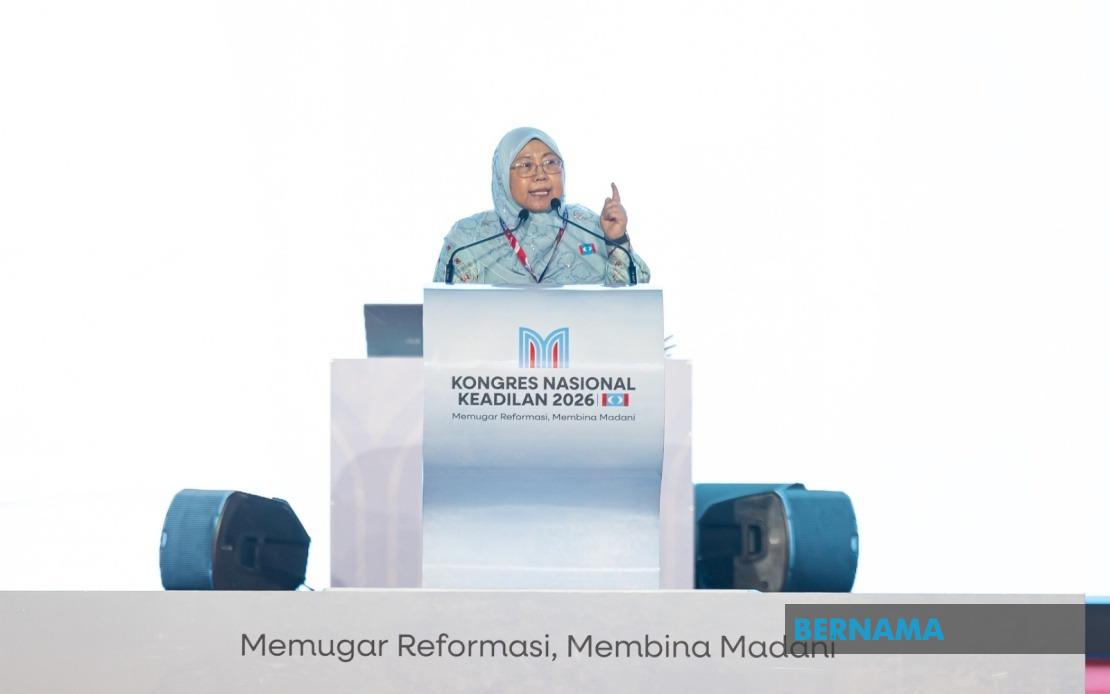
Parti Keadilan Rakyat must navigate its current political difficulties by embracing a spirit of collective responsibility rather than seeking to assign blame for recent electoral losses, according to the party's secretary-general Senator Datuk Dr Fuziah Salleh. Speaking at the 2026 PKR National Congress held at the Melaka International Trade Centre in Ayer Keroh on August 15, Fuziah stressed that PKR's membership and leadership cadre possess the maturity necessary to convert recent setbacks into a platform for genuine organisational strengthening and ideological recommitment.
The gathering, which convened 2,594 delegates alongside more than 2,000 observers drawn from chapters nationwide, presented a critical juncture for the party to recalibrate its strategic direction. International attendance underscored the congress's significance, with 26 diplomatic representatives from 19 nations present, including six ambassadors, indicating sustained international interest in Malaysia's opposition political dynamics and reform movements.
Fuziah explicitly cautioned against using the national congress—traditionally a space for party members to voice concerns and chart future direction—as a vehicle for blame attribution or retaliatory positioning against rivals over the party's contemporary predicaments. Such an approach, she argued, would squander an invaluable opportunity for genuine introspection and learning. Instead, she advocated for delegates to examine PKR's recent experiences with analytical detachment, drawing lessons from failures without allowing transient disappointments to undermine long-term strategic vision or party cohesion.
Central to Fuziah's messaging was a historical perspective designed to contextualise current challenges within the broader trajectory of PKR's existence. She invoked the party's experience following the 2004 General Election, when PKR's parliamentary representation collapsed to a single seat—a nadir that might reasonably have presaged organisational dissolution or irrelevance. Yet rather than capitulating, PKR persisted in methodical organisational development, cultivated grassroots membership networks, and maintained relentless dissemination of Reformasi principles throughout the Malaysian electorate. This historical precedent, Fuziah suggested, demonstrated that contemporary difficulties, however significant, do not constitute the party's ultimate test of resilience.
The congress operated under the thematic framework "Memugar Reformasi, Membina MADANI," a formulation that Fuziah interpreted as encapsulating PKR's dual imperative at this juncture. The Malay term "memugar" carries connotations of revival and restoration, signalling the party's need to reconnect with foundational ideological commitments that motivated its establishment during the Reformasi movement of the late 1990s. This conceptual approach distinguishes between wholesale ideological reinvention—which Fuziah explicitly rejected—and the more nuanced project of renewal and revitalisation of established principles within contemporary contexts.
Fuziah emphasised that the Reformasi struggle itself remains the substantive core from which PKR derives legitimacy and purpose, rather than representing historical baggage to be discarded. The congress theme thus functions simultaneously as acknowledgement of past achievement and call for active recommitment to original values, ensuring that organisational development proceeds from a foundation of ideological continuity rather than opportunistic repositioning. This framing proved particularly significant given ongoing debates within Malaysia's political sphere concerning the coherence and distinctiveness of opposition parties' platforms.
The assertion that "defeat is not the end of our struggle" carried particular resonance for delegates processing the implications of recent electoral performance. Fuziah's formulation reframed electoral outcomes from a binary success-or-failure paradigm into one wherein setbacks constitute testing moments that reveal organisational capacity for recovery and adaptive learning. This psychological reorientation possessed practical implications for party morale and membership retention, particularly among activists who might otherwise question continued investment of effort and resources in the PKR project.
For Malaysian political observers, Fuziah's commentary illuminated ongoing tensions within opposition politics concerning how parties simultaneously maintain ideological distinctiveness, demonstrate adaptability to shifting electoral dynamics, and preserve internal cohesion under pressure. PKR's position within this landscape remains complex, occupying space within the broader opposition coalition while maintaining autonomous organisational identity and programmatic agenda. The manner in which PKR processes recent disappointments carries implications extending beyond the party itself to the viability and trajectory of opposition politics more broadly.
The congress's international dimensions merit examination as well. The presence of 26 diplomatic representatives reflected international stakeholders' interest in Malaysian political developments and, by extension, the region's political stability and governance trajectories. International diplomatic engagement with opposition parties' formal gatherings suggests recognition that contemporary Malaysian politics transcends domestic parameters, intersecting with regional and global considerations around democratic practice, governance standards, and political pluralism.
Fuziah's repeated emphasis on maturity and institutional learning suggested PKR leadership's awareness of internal pressures that might manifest during congress proceedings. Large party gatherings frequently occasion public disagreements over strategy, resource allocation, and personnel decisions, with delegates utilising such forums to advance particular factional interests. By establishing a normative expectation around mature deliberation centred on collective institutional benefit rather than factional advantage, Fuziah effectively attempted to establish parameters for congress discourse before substantive debates unfolded.
The rebuilding agenda outlined at the congress connects directly to Malaysian political realities shaped by recent electoral performances and shifting coalitional alignments. PKR's trajectory over forthcoming years will substantially influence opposition capacity to mount credible challenge to incumbent governmental structures, with implications for democratic competition and electoral contestation. The party's success in channelling recent disappointments into constructive organisational development, rather than permitting internal recrimination to corrode institutional functioning, will determine whether contemporary setbacks prove temporary or indicative of longer-term organisational decline.

