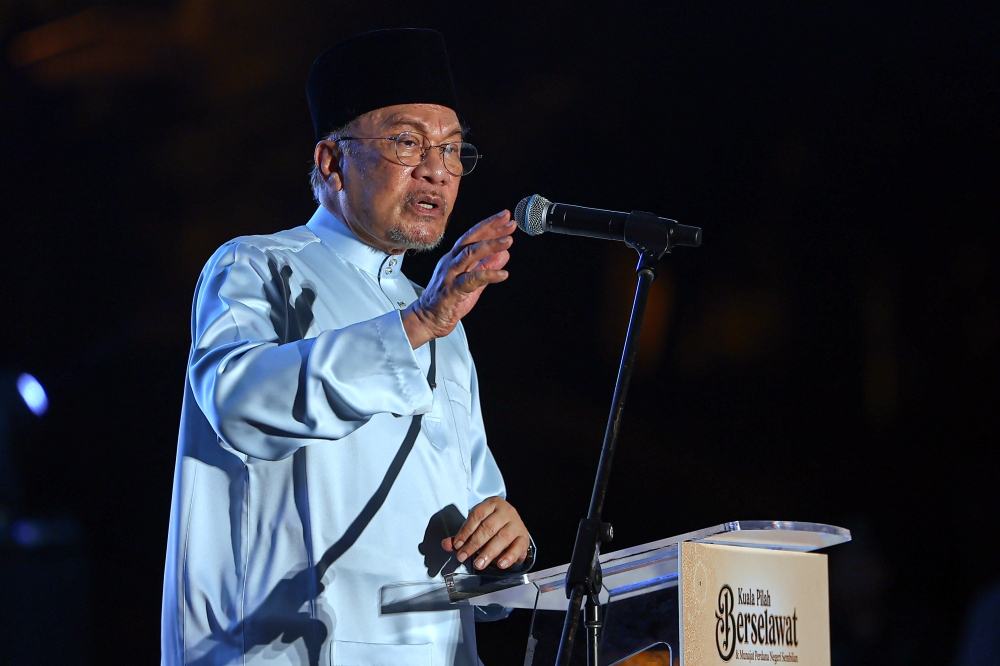
Anwar Ibrahim has called on Parti Keadilan Rakyat to reclaim its identity as a mass-based political force anchored in principles and public accountability, warning against the party becoming merely a vehicle for winning elections. Speaking in Kuala Lumpur, the PKR president emphasised that the party's fundamental purpose extends far beyond securing parliamentary seats, and that maintaining this distinction remains critical to its long-term relevance and credibility in Malaysian politics.
The statement reflects growing concerns within PKR's leadership about the party's trajectory and whether it risks losing its original mission as it navigates coalition governance and electoral competition. Anwar's remarks suggest internal conversations about what PKR stands for in an era where pragmatic political alliance-building sometimes conflicts with ideological consistency. This tension is familiar to many Southeast Asian political parties that transition from opposition movements to governing coalitions, often facing questions about whether they retain their founding principles.
Anwar highlighted the importance of integrity as a cornerstone of PKR's organisational culture and public engagement. He stressed that party members and leaders must demonstrate ethical conduct and transparent decision-making, setting examples that extend beyond formal policies into everyday interactions with constituents and fellow party members. This emphasis on integrity appears designed to counter perceptions that PKR, as part of the federal coalition government, has become indistinguishable from conventional political machinery focused solely on retaining power.
The party's evolution from a reform movement originating in the 1990s to a major coalition partner presents genuine strategic challenges. PKR emerged from popular discontent with governance and institutional integrity, positioning itself as an alternative to established political structures. Now, as part of governing coalitions at federal and state levels, the party must balance delivering on electoral promises while maintaining the principles that attracted its original supporters. This balancing act proves particularly difficult when coalition partners pursue policies that may conflict with PKR's stated values.
Anwar's intervention suggests that party leadership recognises the risks of member attrition and activist disengagement if PKR is perceived as becoming merely another establishment player. Political movements that transition to power often face this dilemma: their earliest supporters may become disillusioned if they see the party adopting the very practices it originally opposed. PKR's experience in government has already tested this dynamic, with some long-time members questioning the party's direction on issues ranging from institutional reform to social policy.
The emphasis on PKR's mass movement character also carries implications for how the party organises itself institutionally. Mass movements typically rely on grassroots participation, volunteer engagement, and bottom-up policy development, contrasting sharply with hierarchical structures centred on leadership personalities. Anwar appears to be signalling that PKR should maintain genuine internal democracy and member participation in decision-making, rather than consolidating power among senior figures insulated from party rank-and-file.
For Malaysian readers, this discussion matters because PKR's political trajectory influences the broader health of Malaysia's multiparty democratic system. If PKR successfully maintains a balance between governing competence and movement principles, it strengthens the argument that elected parties can retain ethical standards while in office. Conversely, if PKR becomes indistinguishable from other establishment parties, voter cynicism about political alternatives may deepen, potentially strengthening populist or protest-based political formations.
The regional context adds further complexity. Across Southeast Asia, political parties that emerged from democratic movements or anti-corruption platforms have struggled to maintain their differentiating principles once in government. Thailand's political history illustrates how reform-oriented parties that lose public trust in their commitment to stated ideals can face backlash and organisational collapse. Singapore's ruling People's Action Party has sustained legitimacy partly through maintaining institutions and processes that reinforce its proclaimed meritocratic values, even if contested. PKR's challenge resembles these precedents.
Anwar's remarks also address internal party management concerns. PKR includes diverse factions with competing priorities, from those focused on Islamist agendas to those prioritising secular governance reform. Maintaining a coherent identity as a mass movement requires managing these differences without allowing factional interests to dominate party direction. The emphasis on shared principles and integrity provides a potential unifying framework when specific policy disagreements emerge.
Looking forward, PKR faces decisions about how to demonstrate its continued commitment to its founding mission. This might involve emphasising transparency initiatives, supporting institutional reforms that limit executive power, or maintaining critical positions on governance issues even when uncomfortable for coalition partners. Such actions would signal to members and the public that the party has not simply become a tool for office-holding.
For the broader Malaysian political landscape, PKR's success in maintaining its movement character while governing has implications for how voters assess political alternatives. If the party can credibly demonstrate that electoral participation does not inevitably corrupt political movements, it provides a powerful counter-narrative to cynicism about democratic politics. Conversely, if PKR becomes regarded as just another faction pursuing power, it validates voter perceptions that Malaysian politics lacks meaningful ideological or principled differences.
Anwar's intervention suggests that party leadership recognises these stakes clearly. The challenge now lies in translating this rhetorical commitment into concrete organisational practices and policy positions that ordinary members and supporters can observe and evaluate. Whether PKR successfully navigates this tension will reveal important truths about the viability of principled political movements within competitive electoral systems.

