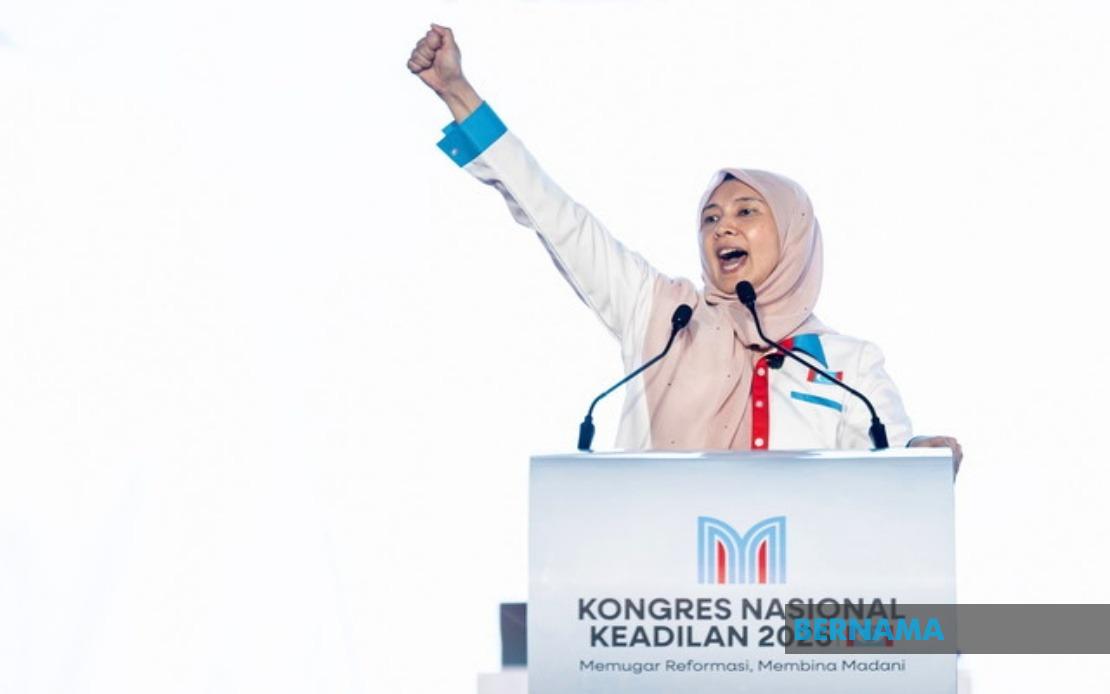
Nurul Izzah Anwar, PKR's deputy president, has reiterated a crucial message to her party: the reform imperative that brought the coalition to power cannot be abandoned simply because it now holds the reins of government. Speaking at the PKR 2026 National Congress in Melaka, she stressed that institutional and policy improvements must become an ongoing commitment rather than a completed checklist, with benefits passed down to successive generations of Malaysians.
The timing of her remarks carries particular significance for a party that rose to prominence through the reform movement, particularly the Reformasi wave of the late 1990s. Nurul Izzah, often referred to as the "Princess of Reform" due to her early and consistent advocacy for systemic change, underscored that PKR members cannot afford to become complacent now that the party shares governmental authority. This reflects a broader tension within ruling coalitions: the challenge of maintaining ideological clarity and reform momentum once the intoxicating pull of executive power takes hold.
Her address at the Melaka International Trade Centre highlighted concrete examples of how PKR's reform agenda has translated into tangible outcomes. The repeal of the Universities and University Colleges Act (AUKU) 1971 represents one such victory—a long-standing demand that student activism groups and civil society had championed for decades, framed as essential to restoring academic freedoms and institutional autonomy to Malaysia's higher education sector. The fact that PKR could finally achieve this once in government underscores what Nurul Izzah views as the continued necessity of reform-minded governance.
Beyond legislative achievements, Nurul Izzah connected macroeconomic performance to lived experience, a distinction often lost in government communications. While the MADANI administration can point to economic growth metrics, she argued that these figures mean little to ordinary Malaysians unless they translate into improved wages, job creation, and expanded business opportunities. This emphasis on distributional outcomes rather than aggregate growth statistics reflects a deliberate attempt to anchor government performance in the experiences of workers, entrepreneurs, and youth—constituencies historically aligned with reform movements.
The deputy president specifically highlighted three areas demanding sustained structural attention: the salary and wage framework, opportunities for small and medium enterprises, and pathways for women and young people into the mainstream economy. Each of these domains involves not merely legislative tweaks but deeper institutional redesign—the kind of unglamorous, sustained work that generates little media attention yet fundamentally shapes people's life chances. Her insistence on wage reforms aligned with productivity gains, in particular, speaks to concerns about real purchasing power amid inflation that has affected Southeast Asian economies.
Nurul Izzah's caution to PKR leadership carried a philosophical weight often missing from contemporary political discourse. She reminded party elites that governmental positions are temporary trusts, not personal acquisitions or status symbols. This message appears directed internally—a reminder that power should not corrupt the reform ethos that justifies PKR's existence. The notion that positions fade, titles become meaningless, and names eventually slip from memory, while only substantive work and institutional values endure, represents a form of political mentorship grounded in principles rather than patronage.
For Malaysian observers and regional watchers, Nurul Izzah's intervention highlights the perpetual challenge facing reformist parties once they enter government. The hunger for systemic change that energizes opposition movements can easily dissipate when those same movements gain executive authority and face competing demands from different constituencies. PKR's ability to maintain reform discipline while managing the complex machinery of governance will likely determine whether it becomes a vehicle for genuine institutional modernization or simply another establishment party focused on consolidating power.
The MADANI coalition itself—formed in 2023 with PKR playing a leading role—has faced criticism from former allies who view it as a compromise with the old political order. Nurul Izzah's emphasis on continuous reform can be read as an attempt to reclaim the moral authority and ideological clarity that distinguished PKR during the Reformasi period and its subsequent ascent to electoral prominence. By insisting that reform is not a destination but an ongoing process, she stakes a claim to PKR's authentic identity.
The practical implications for Southeast Asia's broader political landscape are considerable. Malaysia's coalition politics often involve delicate negotiations and compromises that can dilute reformist agendas. Nurul Izzah's call for structural persistence suggests PKR intends to resist this dilution, at least rhetorically. Whether party mechanisms can enforce such discipline across a diverse membership, particularly as individuals compete for advancement and influence, remains uncertain. Her message serves as both inspiration and warning: reform movements must remain vigilant against the corruption of power, even—or especially—when they themselves wield it.

