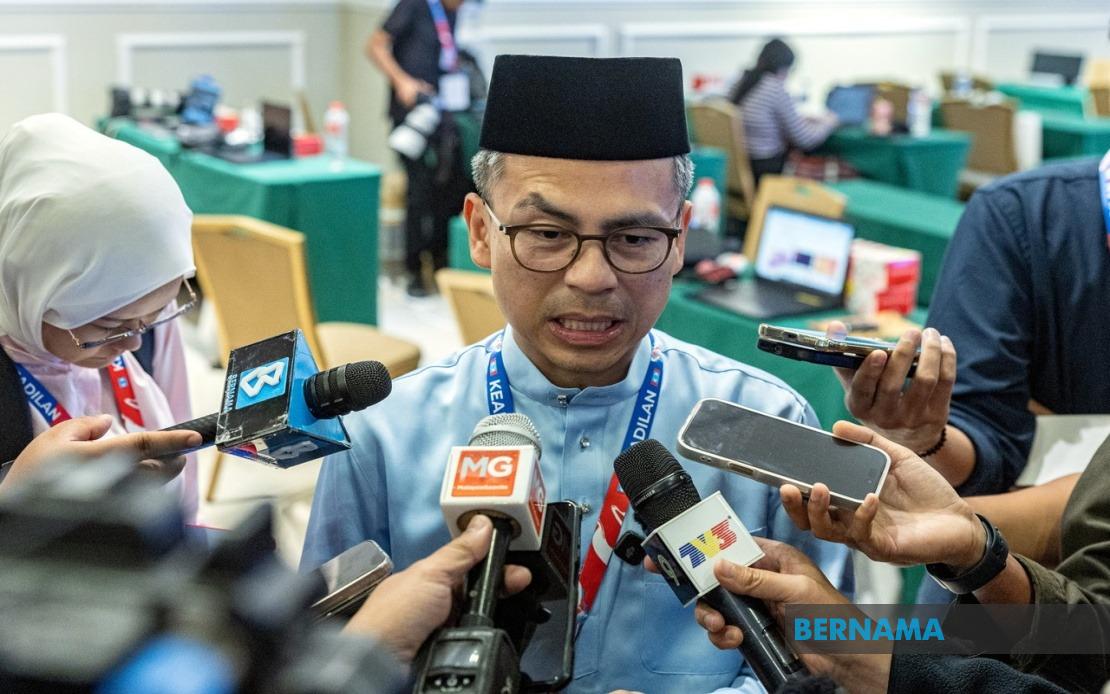
Parti Keadilan Rakyat is moving to overhaul its approach to public communications, recognising a persistent gap between government policy announcements and how ordinary Malaysians perceive economic progress in their daily lives. The initiative emerged from the PKR National Congress 2026, held at the Melaka International Trade and Exhibition Centre in Ayer Keroh, where party delegates raised multiple concerns about the effectiveness of current information-sharing channels and the visibility of government accomplishments.
Communications Minister Datuk Seri Fahmi Fadzil, who doubles as PKR's Information Chief, acknowledged that despite numerous government initiatives and documented economic gains, these successes have not translated into tangible improvements felt at the household level. This disconnect between macro-level policy achievements and micro-level public perception represents a significant challenge for the coalition government's narrative-building efforts. The minister indicated that addressing this communication chasm ranked among his top priorities as head of the Communications Ministry and as communications director of the broader Pakatan Harapan alliance.
The timing of this strategic review reflects growing recognition within PKR's leadership that traditional messaging approaches may be insufficient in reaching Malaysian households effectively. Delegates at the congress highlighted the need for a more robust and systematic method of disseminating information about government programmes and their intended benefits. These proposals signal internal acknowledgment that the party must adapt its communication infrastructure to compete more effectively in the modern information landscape, where multiple channels vie for public attention and trust.
Fahmi outlined plans for formal changes in how information flows from parliamentary levels to decision-makers in Putrajaya, indicating that while informal communication channels have existed previously, a more structured approach would ensure parliamentary-level concerns reach senior officials swiftly. This systematic enhancement would create clearer pathways for identifying public concerns and developing responsive policy solutions. The minister expressed openness to the various viewpoints raised during the congress and welcomed the demonstrated commitment from branch leaders to assume greater responsibility in information dissemination efforts.
The PKR Central Leadership Council demonstrated receptiveness to all proposals tabled by delegates, signalling that party leadership is prepared to undergo internal transformation before expecting broader public engagement improvements. This approach suggests a recognition that credibility in external communications depends first on internal alignment and operational coherence. The party intends to implement changes within its own structural framework and leadership operations before rolling out enhanced public-facing communication initiatives.
For Malaysian readers concerned about government transparency and policy effectiveness, this development touches on a fundamental issue affecting political legitimacy. When citizens perceive that government achievements fail to improve their household circumstances, regardless of whether those achievements are genuine, public support erodes. PKR's acknowledgment of this messaging deficit indicates the coalition recognises that policy success alone, without effective public communication, cannot sustain electoral confidence or public buy-in for future initiatives.
The proposed changes also carry implications for how Malaysia's government communicates macroeconomic data and structural reforms to ordinary citizens. Complex economic policy often requires translation into relatable terms and concrete examples showing impact on family finances, employment, housing, and costs of living. The current strategy review suggests government communicators need better tools and clearer messaging frameworks to bridge this explanatory gap.
Branch leaders' willingness to take greater roles in information dissemination represents a grassroots dimension to this strategy shift. Local party structures, being closer to community-level concerns, can provide valuable intelligence about which government messages resonate and which fall flat. This two-way communication channel between community representatives and central leadership could improve both the relevance and effectiveness of government communications.
The emphasis on strengthening communication strategy within Pakatan Harapan more broadly reflects pressure the coalition faces ahead of potential future electoral contests. Voters' perception of government performance depends significantly on how effectively those in power communicate their accomplishments. Without compelling narratives connecting national achievements to personal benefit, even well-executed policies struggle to generate political support.
Fahmi's statements during the congress suggest the Communications Ministry will prioritise developing more targeted messaging strategies specific to different demographic groups and geographic regions. What works as messaging in Kuala Lumpur may require substantial adaptation for rural constituencies or urban working-class neighbourhoods. Enhanced communication infrastructure should enable such customisation while maintaining consistent core messages about government direction and priorities.
The broader context for this communication review includes Malaysia's competitive political environment, where opposition parties actively contest the government's narrative about economic performance and policy direction. An enhanced, more coherent government communication strategy becomes essential for countering opposing narratives and maintaining public confidence in the coalition's governance capabilities.
Implementation details will emerge during the congress's closing session, where formal recommendations will be presented. The success of these communication improvements will ultimately be measured by how effectively future government messaging translates into improved public perception of economic conditions and policy impact. This represents both a challenge and opportunity for PKR and its coalition partners to strengthen the connection between policy implementation and public understanding.

