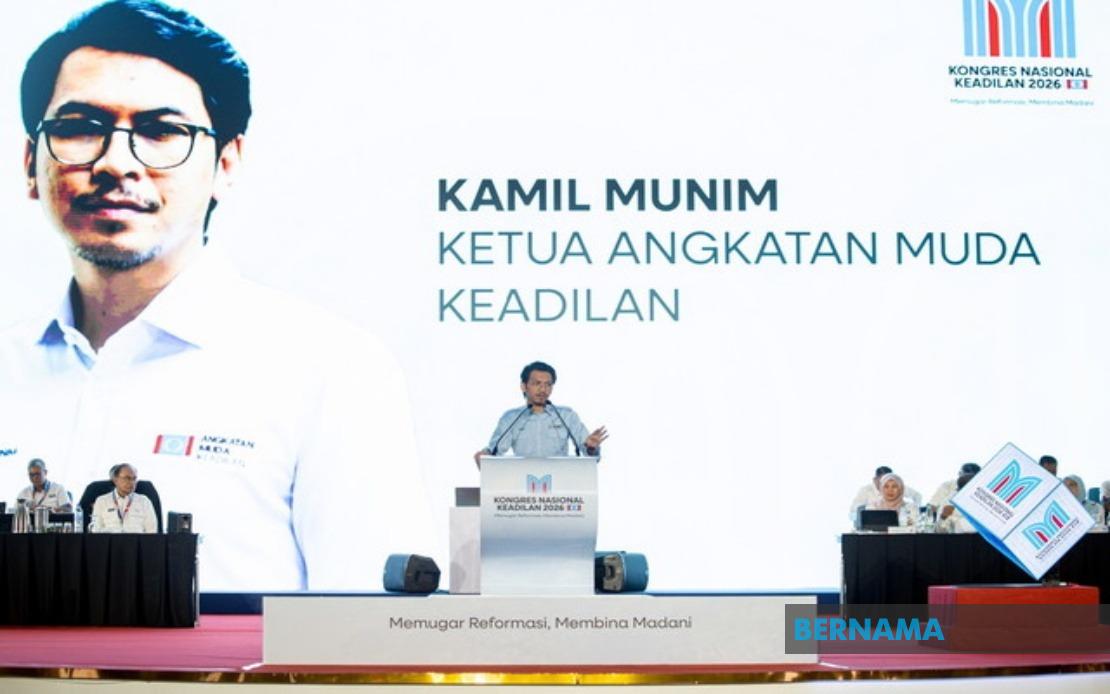
PKR Youth (AMK) must undergo fundamental strategic reform to capture the support of voters aged 45 and below, who represent the dominant cohort in Malaysia's electoral landscape, according to the faction's chief Muhammad Kamil Abdul Munim. Speaking at the PKR National Congress in Melaka, he stressed that recent electoral setbacks in Johor and Negeri Sembilan had exposed gaps in the party's ability to resonate with the country's largest voting demographic and demanded immediate reassessment of existing approaches.
The electoral results from both state polls delivered a sobering reality check for the coalition, prompting party leadership to conduct a thorough evaluation of its competitive strengths and tactical shortcomings. Muhammad Kamil's remarks represent an acknowledgment that despite positive public reception of the MADANI Government's performance, the party's ground-level connectivity with key voter segments remains insufficient to guarantee electoral success. This recognition came during his concluding address on the second day of the national congress, held at the Melaka International Trade Centre, signalling that party strategists view the demographic challenge as critical to future viability.
Data analysis of Malaysia's electoral roll reveals that voters under 45 constitute the single largest constituency available to political parties seeking to build winning coalitions. This demographic's size and heterogeneity present both opportunity and complexity for parties attempting to craft messaging that resonates across diverse socioeconomic circumstances, geographic locations, and ideological orientations. For PKR, which positions itself as a reformist vehicle, the failure to decisively mobilise this natural base suggests either messaging problems, organisational weaknesses, or substantive disconnect between party platforms and voter expectations within this age cohort.
Muhammad Kamil emphasised that grassroots leadership cadres must expand their focus beyond administrative functionality to develop genuine community engagement capabilities. Rather than concentrating exclusively on organisational maintenance and procedural matters, party representatives require deeper contextual understanding of the specific concerns, anxieties, and aspirations that animate voter behaviour at the local level. This distinction between administrative competence and political leadership capacity addresses a perennial challenge facing parties with extensive membership bases, where operational management can inadvertently crowd out the relational work necessary for sustained democratic legitimacy.
The party chief highlighted that despite generally favourable assessments of government performance, considerable ground-level dissatisfaction persists in identifiable pockets that party surveys have yet to adequately address. These gaps between macro-level policy outcomes and micro-level voter sentiment represent precisely the territory where electoral surprises occur, particularly when opposition parties successfully exploit untended grievances. For a coalition government with significant international visibility and substantial legislative responsibilities, the challenge intensifies because voters increasingly expect performance improvements across multiple dimensions simultaneously rather than sequential progress on singular issues.
Muhammad Kamil called for systematic engagement with community groups, especially in rural constituencies where direct party-citizen contact remains comparatively limited. Such targeted outreach serves dual purposes: it generates granular intelligence about locally-specific concerns while simultaneously demonstrating party responsiveness to communities that frequently perceive themselves as peripheral to national political discourse. Rural engagement strategies carry particular weight in Malaysian politics given the geographic distribution of parliamentary constituencies and the persistent urban-rural gaps in infrastructure, service delivery, and economic opportunity.
The PKR Youth chief invoked the party's historical capacity for electoral disruption as evidence of organisational potential. He cited 2008, when PKR contributed substantially to denying Barisan Nasional the two-thirds parliamentary supermajority that had seemed unassailable, and 2018, when Pakatan Harapan successfully captured federal power. These reference points, separated by a decade, underscore a cyclical pattern that suggests PKR possesses latent capacity for mobilising surprise electoral outcomes, though the mechanisms underlying such breakthroughs remain incompletely understood within party structures. Understanding whether those victories resulted from coherent strategic planning or opportunistic capitalisation of external circumstances bears directly on whether party leadership can engineer comparable results through deliberate effort.
The anticipated proximity of the next general election reinforces urgency around strategic recalibration. Federal Malaysian elections occur at maximum five-year intervals, and the current political cycle has entered phases where coalition governments typically begin experiencing operational friction and voter fatigue. For PKR specifically, the window for repositioning as a vehicle for continued reform narrows as the electoral calendar advances. Learning from recent state-level defeats requires not merely acknowledging what went wrong but operationalising specific corrective measures across party structures before federal balloting occurs.
Muhammad Kamil's diagnostic framing identifies a fundamental challenge for established reformist parties: maintaining the programmatic coherence and ideological distinctiveness that initially attracted supporters while simultaneously demonstrating managerial competence that inevitably involves compromise and incremental adjustment rather than transformative change. Younger voters, for whom the novelty of Pakatan Harapan governance has worn off and for whom memories of pre-2018 opposition positioning have faded, judge PKR substantially on contemporary performance rather than historical achievements. Bridging this expectations gap requires not merely strategic communication refinement but potentially substantive reconsideration of policy priorities to reflect evolving demographic preferences.
The emphasis on comprehensive party readiness encompasses both ideological messaging and organisational infrastructure. Convincing voters at grassroots levels demands that local party representatives possess not only commitment but also substantive knowledge about policy details, government achievements, and compelling counter-arguments to opposition criticism. This represents a significantly higher bar than historical campaigning models emphasised, reflecting broader changes in voter information access and deliberative sophistication, particularly among younger demographics with direct digital access to policy critiques and comparative performance data.
Moving forward, PKR faces the practical challenge of translating these strategically sound principles into sustained implementation across a geographically dispersed, ideologically heterogeneous membership base. Exhortations to deepen community engagement and broaden leadership capabilities require supporting structures, resource allocation, and accountability mechanisms to prevent strategic declarations from becoming merely rhetorical gestures. The party's capacity to operationalise Muhammad Kamil's vision will substantially determine whether PKR can successfully retain and expand its support among Malaysia's largest electoral demographic or whether voters under 45 drift toward alternative political vehicles offering more compelling visions of governance, reform, and national direction.

