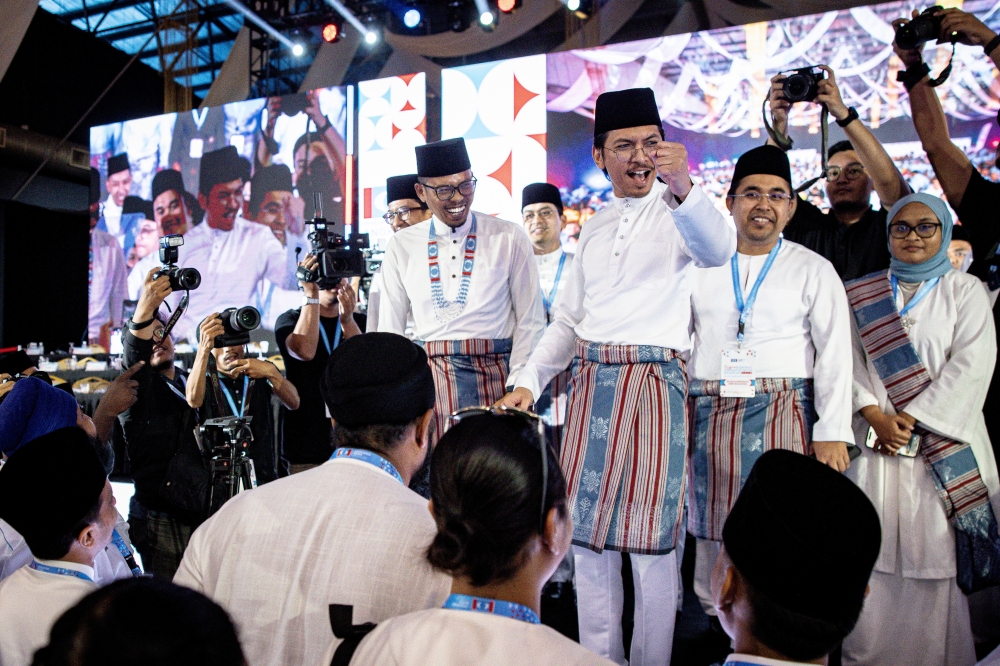
The youth wing of the People's Justice Party has positioned itself at the forefront of efforts to dismantle the Universities and University Colleges Act, aligning with Prime Minister Datuk Seri Anwar Ibrahim's legislative agenda while simultaneously seeking to channel student momentum toward a broader reimagining of Malaysia's tertiary education landscape. The endorsement represents a calculated effort to harness youth political energy around a flagship reform initiative that has gained traction across multiple segments of civil society and academic circles since the government signalled its intention to move forward with the repeal.
The UUCA, a longstanding legislative framework that has governed the operations and autonomy of Malaysia's public universities for decades, has become a focal point for advocates of educational freedom and institutional reform. The law has historically restricted student activism and campus political expression, requirements that proponents of change argue have hampered the development of critical thinking and democratic participation among Malaysia's university population. By backing the Prime Minister's announcement, PKR Youth is positioning the party as a champion of liberalising forces within the education sector, a strategic move that appeals to younger voters and student constituencies increasingly vocal about their concerns regarding campus governance and intellectual freedom.
Beyond the immediate goal of repealing the act, PKR Youth has made a deliberate call for students themselves to become active participants in shaping what comes next. This framing transforms the debate from a top-down legislative exercise into a grassroots movement, encouraging university undergraduates and postgraduate researchers to articulate their own vision for what reformed higher education institutions should look like. The strategy acknowledges that student voices have historically been marginalised in policy discussions affecting universities, and seeks to correct that imbalance by creating space for campus communities to contribute substantively to the design of successor frameworks.
The repeal of the UUCA would represent a significant departure from Malaysia's approach to university governance, which has emphasised institutional order and administrative control over student-led activism and campus political expression. Countries like Thailand, Indonesia, and the Philippines have at various points grappled with similar questions about the appropriate balance between institutional stability and student rights, making Malaysia's experience relevant across Southeast Asia. Observers of regional higher education trends note that allowing greater student autonomy has not inevitably led to chaos, though it has frequently surfaced tensions between student movements and institutional authorities over resource allocation, curriculum design, and the relationship between universities and broader political struggles.
For Malaysian students, the implications extend beyond symbolic recognition of their voice in university affairs. Greater freedom of assembly and expression on campus could reshape how students engage with contemporaneous political and social questions, from climate policy to labour rights to regional geopolitics. Universities become spaces where ideas are contested openly rather than managed behind administrative barriers, a shift that proponents argue strengthens intellectual discourse while critics worry could politicise academic environments. The particular contours of whatever legislation replaces the UUCA will therefore carry outsized significance for how Malaysian higher education evolves over the coming decade.
PKR Youth's intervention also reflects broader factional dynamics within the ruling coalition. By throwing organisational weight behind this initiative, the party positions itself as responsive to demands for substantive democratic reform, distinguishing its brand from potential rivals within the government for influence over education policy. The move signals to younger supporters that the party takes their concerns seriously and is willing to challenge entrenched institutional practices, even when doing so requires political capital and attention to implementation complexities. In a political environment where youth engagement with established parties remains unpredictable, such symbolic gestures carry strategic importance.
The timing of the announcement, following sustained advocacy by student organisations, civil society groups, and education academics, reflects a convergence of political will and grassroots pressure. Over recent years, student coalitions have organised public forums, submitted position papers to government agencies, and engaged in careful diplomacy with sympathetic political figures to build the case for legislative change. PKR Youth's public backing signals that this sustained organising has successfully registered at the level of political party institutions, creating an opening for legislative progress. However, the gap between announcing an intention to repeal legislation and actually shepherding new bills through parliament, particularly in a complex multiparty coalition government, remains substantial.
The practical question of what replaces the UUCA requires attention to details that can dramatically shape outcomes. Will successor legislation grant universities greater institutional autonomy whilst also imposing mechanisms for student representation in governance? Will campus political organising face constraints different in form but similar in effect to current restrictions? How will universities balance operational efficiency with democratic participation? These technical questions, less glamorous than the headline announcement of repeal, will ultimately determine whether students and academics experience genuine liberalisation or merely a reshuffled bureaucratic framework.
For Southeast Asian observers monitoring Malaysia's educational reform trajectory, the outcome carries implications beyond Malaysia's borders. Other governments in the region face similar questions about appropriate constraints on campus activism and student participation in university governance. The Malaysian example, should the repeal succeed and be followed by visible improvements in academic freedom and student engagement, could influence similar reform conversations in neighbouring countries navigating comparable tensions between stability and openness. Conversely, if implementation proves chaotic or unforeseen complications emerge, sceptics across the region will cite the experience as cautionary.

