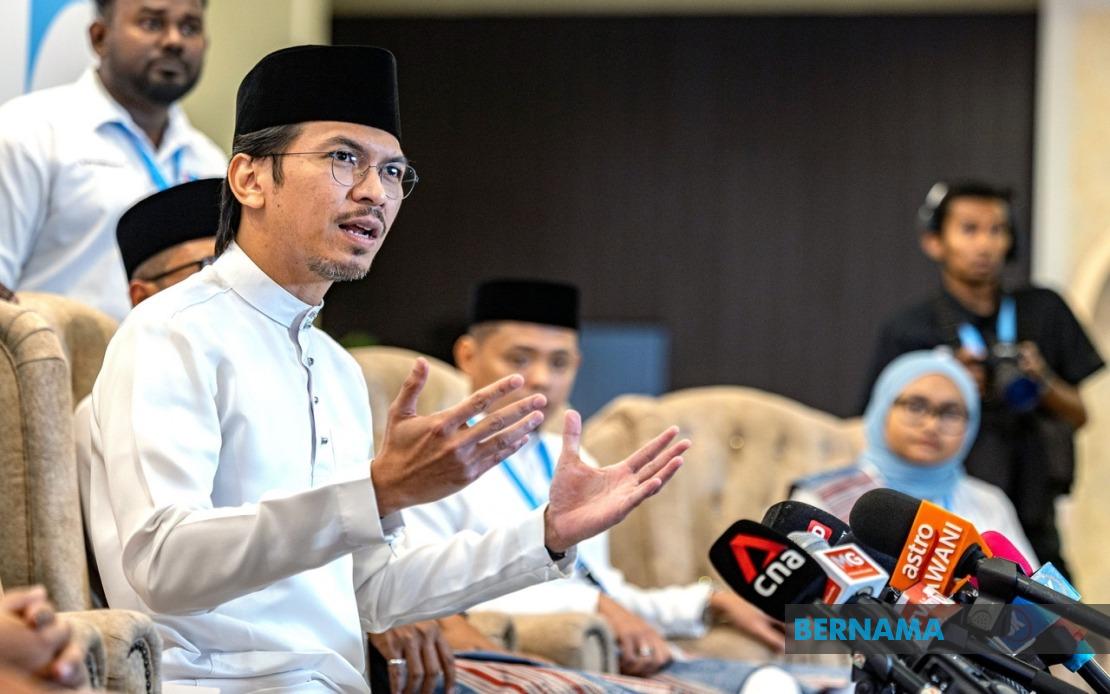
The Parti Keadilan Rakyat (PKR) youth movement has moved to reassure party supporters that recent member defections pose no threat to the organization's continued strength and operational effectiveness. Speaking at the 2026 Angkatan Muda Keadilan (AMK) National Congress in Melaka, AMK chief Muhammad Kamil Ahmad Munim characterized the exodus as a minor issue unworthy of serious concern, emphasizing that the party's trajectory remains solidly upward despite some members choosing to realign elsewhere.
The assertion comes as Parti Bersama Malaysia (Bersama), a newer political entity co-founded by Datuk Seri Rafizi Ramli, has publicly claimed that roughly 25 per cent of its current membership rolls consist of individuals who previously held PKR cards. This revelation had prompted questions about whether PKR was experiencing a meaningful haemorrhage of support, particularly among sections of the grassroots dissatisfied with the party's current direction. Muhammad Kamil's response sought to contextualize such departures within a broader narrative of party consolidation rather than institutional weakness.
While acknowledging that some members have indeed departed, citing diminished confidence in party leadership, the AMK chief insisted that the youth wing respected individuals' constitutional right to make such personal political choices. He stressed that neither the youth movement nor the parent organization views these exits as indicative of deeper structural problems. Rather, the framing suggested that those leaving represent an insignificant fraction of PKR's total membership base, and their absence would not materially alter the party's capacity to function, organize, or prepare for upcoming electoral contests.
The backdrop to this statement involves PKR deputy president Nurul Izzah Anwar, who is currently on an extended leave of absence from her formal duties. Questions have circulated regarding whether her unavailability might create operational gaps or signal internal discord within the party's upper echelons. Muhammad Kamil addressed this concern by noting that PKR has established clear institutional mechanisms to distribute responsibilities among remaining senior figures. Vice-president Datuk Seri Saifuddin Nasution Abdullah and election director Datuk Seri Amirudin Shari have stepped into enhanced operational roles, ensuring that the party's administrative machinery continues functioning without visible disruption.
The timing of these remarks is significant for Malaysian political observers. PKR remains a core component of the Pakatan Harapan coalition, and any perception of instability within the party could reverberate across the alliance's broader strategic positioning. The emergence of Bersama as a new political vehicle, attracting former PKR members and competing for reformist-minded voters, represents a genuinely novel challenge to PKR's hegemony within that political space. For more than two decades, PKR has positioned itself as the primary vehicle for those seeking substantive political reform and alternative governance models in Malaysia.
Muhammad Kamil's assertions reflect a deliberate communications strategy designed to project confidence and organizational resilience. He pointed to the substantial attendance of delegates at the recent AMK congress as tangible evidence of grassroots commitment and engagement. High participation levels, in this framing, demonstrate that the membership remains mobilized and committed to PKR's broader mission, undeterred by recent departures or leadership transitions. The youth wing leader emphasized that party operations continue seamlessly across all structural levels, from the national headquarters down through state and branch organizations.
The question of member departures carries particular weight in Malaysian politics, where electoral calculations hinge heavily on organizational capacity and grassroots enthusiasm. Even ostensibly small defections can acquire symbolic significance if they suggest directional trends or ideological realignment among core constituencies. By characterizing recent exits as numerically inconsequential, Muhammad Kamil sought to prevent such departures from becoming a narrative of decline that might demoralize remaining members or signal weakness to potential allies and rival parties.
For Southeast Asian political analysts, PKR's current trajectory illustrates broader tensions within reformist political movements across the region. As parties mature and accumulate the compromises inherent to governing coalitions, they often encounter challenges from newer entrants that position themselves as purer or more ideologically consistent alternatives. Bersama's ability to attract disillusioned PKR defectors reflects this dynamic, even if the numbers remain relatively modest. The emergence of splinter formations competing for overlapping voter bases adds complexity to Malaysia's already fragmented political landscape.
The division of senior responsibilities that Muhammad Kamil highlighted represents a pragmatic institutional response to Nurul Izzah's leave. Rather than allowing her absence to create a leadership vacuum, PKR has distributed her functions across multiple senior figures, thereby maintaining organizational continuity. This approach mirrors practices adopted by other major Malaysian parties when senior leaders face temporary unavailability due to health, personal, or other considerations. The strategy aims to prevent any perception that PKR operates as a personality-driven organization overly dependent on specific individuals.
State and branch-level leadership have communicated PKR's institutional adjustments to the broader membership, according to Muhammad Kamil, and this grassroots dialogue appears to have proceeded without significant friction or public dissent. Members have reportedly accepted these arrangements with equanimity, suggesting that PKR's vertical lines of communication and internal legitimacy mechanisms remain functional. This contrasts with scenarios where leadership transitions or transitions in operational responsibility precipitate internal strife or public recrimination.
Looking toward upcoming electoral contests, both state elections and the next general election cycle, PKR's organizational health carries electoral consequences extending beyond the party itself. The Pakatan Harapan coalition depends on PKR's continued capacity to mobilize voters and field competitive candidates across diverse constituencies. Any genuine organizational deterioration could undermine the coalition's broader electoral prospects, while conversely, demonstrated organizational strength enhances the alliance's credibility with voters considering whether reformist alternatives merit their support.
Muhammad Kamil's statement ultimately attempted to shift the narrative away from member departures as symptomatic of systemic problems toward a portrayal of PKR as a resilient organization navigating normal democratic processes. Whether this framing proves persuasive to observers will depend on whether subsequent developments validate the claim that recent exits remain marginal and inconsequential, or whether departures accelerate and broaden across different demographic and geographic segments of the membership base.

