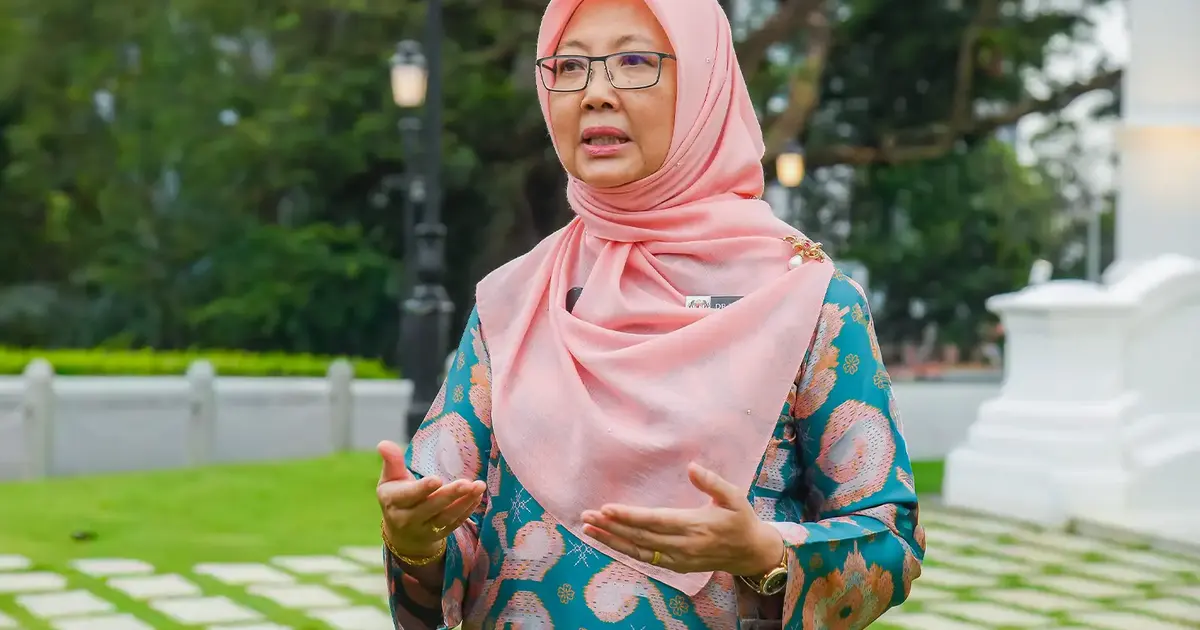
PKR vice-president Zaliha has expressed bafflement at Johor BN chairman Onn Hafiz Ghazi's recent call for Pakatan Harapan to publicly identify its preferred candidate for menteri besar, questioning the practicality of such a demand when no assurance exists that the coalition's chosen figure would ultimately fill the post.
The timing and nature of Onn Hafiz's request have struck observers as unusual given the fluid political landscape in Johor. Coalition politics at the state level remain unpredictable, with multiple parties holding sway over potential government formation. Zaliha's reaction underscores a fundamental tension in Malaysian politics: the gap between opposition demands for transparency and the reality that nomination processes for chief ministers involve complex negotiations that cannot always be concluded in advance of public announcements.
Onn Hafiz, who leads Barisan Nasional's operations in Johor, has positioned his party's demand as a reasonable call for clarity from the coalition that has consistently positioned itself as an alternative to the current administration. However, Zaliha's response highlights that such transparency demands may overlook the structural constraints facing any incoming administration, particularly one built on coalition arrangements across ideologically diverse parties.
The backdrop to this exchange lies in the intricate power dynamics within Johor politics. State-level negotiations often involve securing commitments from multiple coalition partners, including those at the federal level, before any candidate can be formally presented to the Yang di-Pertuan Agong for appointment. Jumping ahead to name a specific figure without these backstage arrangements could compromise negotiating positions and weaken the coalition's hand in securing optimal terms for government formation.
Zaliha's puzzlement also reflects deeper strategic calculations within the coalition. Premature identification of a menteri besar candidate could invite scrutiny of that individual's background and policy positions before the coalition has achieved electoral success. It might also trigger internal jostling among coalition members, each potentially arguing that their representative deserves consideration. By refusing to be drawn into naming names, Pakatan Harapan maintains flexibility and avoids unnecessarily exposing frontline candidates to months of personal and political scrutiny.
For Malaysian voters, this exchange illustrates the distinction between campaign messaging and governance realities. While greater transparency in succession planning would benefit democracy, the nature of coalition politics means that certain decisions genuinely cannot be finalised until after elections occur. The composition of a winning coalition determines what negotiating power each component party holds, which in turn shapes who can realistically be appointed to chief ministerial roles.
Onn Hafiz's demand may also carry electoral calculations. By requesting that Pakatan Harapan name its candidate, Barisan Nasional creates a scenario where the opposition assumes risk by exposing a public face that could then be attacked during campaigning. If the coalition refuses, as it has through Zaliha's response, Barisan Nasional can then claim that the opposition lacks transparency and clear vision for the state's governance. This rhetorical positioning benefits the ruling coalition regardless of whether the opposition's reasoning is sound.
The episode also reflects broader questions about how Malaysian coalition politics should evolve. Some argue that pre-election designation of chief ministerial candidates would strengthen democratic accountability and give voters clearer choices. Others contend that such inflexibility would damage the coalition-building processes essential to stable government formation and might discourage talented individuals from entering politics if they faced months of exposure as designated candidates before election results were known.
Zaliha's position carries particular significance given PKR's role within Pakatan Harapan. As the largest party in the coalition by parliamentary representation, PKR has traditionally supplied menteri besar candidates in states where the coalition holds power. However, decisions about Johor specifically must account for the participation of DAP, Amanah, and potentially other partners, whose support would be needed to form a government. Announcing a PKR figure as the preferred candidate without securing prior buy-in from coalition partners could provoke tensions that destabilise Pakatan Harapan's unity during a critical political moment.
The Johor state-level dynamics carry weight beyond that single state. Johor remains a Barisan Nasional stronghold with significant electoral, symbolic, and strategic importance. A change of government there would reshape Malaysia's political landscape and potentially energise opposition movements across other states. This elevates the stakes surrounding even seemingly procedural questions like candidate designation, making Zaliha's caution understandable from a strategic perspective.
Looking forward, this exchange suggests that Johor politics will remain contested terrain where conventional transparency demands collide with coalition pragmatism. Voters will need to evaluate both coalitions on their substantive platforms and track records rather than expecting definitive answers about chief ministerial candidates months before elections occur. For Pakatan Harapan, maintaining coalition unity while managing public expectations about governance clarity remains an ongoing challenge.