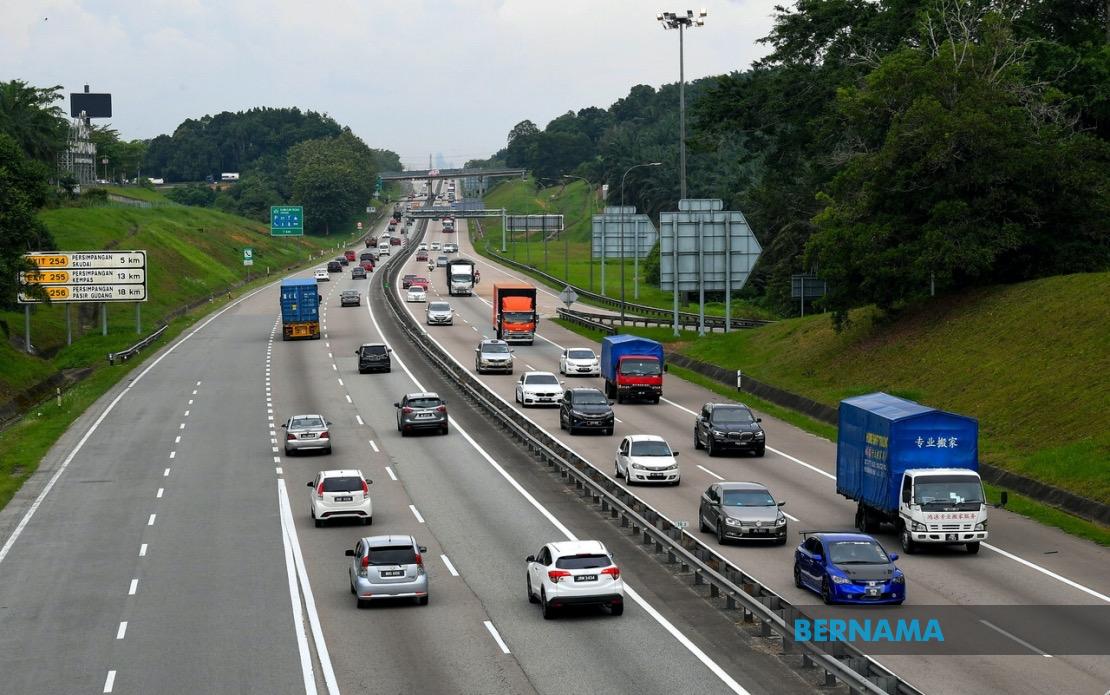
PLUS Malaysia Berhad is preparing for a significant surge in highway traffic as the nation celebrates National Day and enters the school holidays, forecasting approximately 2.2 million vehicles traversing its network during peak travel days between August 28-31 and September 4-7. The anticipated volume represents the kind of concentrated mobility challenge that Southeast Asia's expanding middle class regularly presents during festive periods, as families and leisure travellers converge on major arterial routes simultaneously.
To manage this influx intelligently, PLUS is promoting the MyPLUS-TTA (Travel Time Advisory) feature within its mobile application, a data-driven scheduling tool designed to stagger departures and spread demand across available highway capacity. The system provides drivers with optimal travel windows based on real-time congestion patterns, enabling users to avoid the most congested periods and reduce bottlenecks at critical junctures. This approach reflects a broader shift in traffic management away from reactive policing toward predictive analytics and user empowerment, a model increasingly adopted across developed Asian economies.
The PLUS App itself functions as a comprehensive journey companion beyond mere traffic prediction. Users can access real-time traffic feeds, request emergency roadside assistance through integrated SOS functionality, locate rest and service areas, identify electric vehicle charging stations, and obtain estimated toll costs before commencing travel. For Malaysian drivers, many of whom are becoming more conscious of journey planning and cost management, such integrated digital infrastructure reduces uncertainty and enables better budget allocation for road trips.
Operationally, PLUS has substantially reinforced its on-ground presence to handle the anticipated congestion. The company is deploying additional personnel at toll collection points and rest areas, expanding PLUSRonda patrol coverage to respond more rapidly to incidents, and maintaining heightened vigilance through its central Traffic Monitoring Centre. This layered staffing strategy acknowledges that technology alone cannot resolve complex traffic situations; human judgment and swift response capabilities remain essential when breakdowns, accidents, or unexpected obstacles occur on Malaysia's vital highway network.
A notable innovation being deployed involves Smart Lane technology at 33 designated locations across the network. These dynamically managed lanes can reverse direction or adjust usage patterns based on real-time demand, effectively creating additional capacity where congestion threatens to develop. However, Smart Lane operation requires driver awareness and compliance; users must remain attentive to directional signage, reduce speed within activated lanes, and avoid using emergency lanes outside designated Smart Lane areas to prevent both hazards and legal penalties.
Coordination among government agencies forms another pillar of PLUS's congestion management strategy. Partnerships with the Royal Malaysia Police (PDRM), the Road Transport Department (JPJ), the Malaysian Highway Authority (LLM), and related authorities create a unified emergency response framework. When incidents occur—a common trigger for cascading delays—this integrated approach enables rapid incident clearance, vehicle recovery, and traffic restoration, minimising disruption to the broader travelling public.
Facility maintenance at rest and service areas has also received enhanced attention, recognizing that driver fatigue and inadequate facilities contribute significantly to accidents during long-distance travel. PLUS has prioritized cleanliness standards, toilet maintenance, and prayer room upkeep across its R&R network, acknowledging that comfortable, well-maintained stops encourage drivers to take necessary breaks rather than pushing through fatigue. For Malaysian travellers undertaking the common long-distance journeys to Kuala Lumpur, Penang, or Johor Bahru, such standards directly impact travel safety and overall experience.
PLUS emphasizes pre-journey vehicle preparation, a particularly relevant advisory given Malaysia's tropical climate and the demanding conditions imposed by sustained motorway operation. Drivers are encouraged to verify engine condition, fluid levels, and tyre integrity before setting out, reducing the likelihood of breakdowns that would block lanes and cascade delays. Similarly, ensuring adequate balance on Touch 'n Go cards or linked e-wallets prevents payment delays at toll plazas, while confirming JustGO app payment links remain active eliminates friction at tolling points.
Behavioural guidance rounds out PLUS's communication strategy. Adherence to speed limits, maintenance of safe following distances, attentive driving without mobile phone distraction, and strategic rest stops represent fundamentally sound practices that become even more critical during high-volume periods. As congestion intensifies and frustration builds, driver discipline deteriorates; PLUS's reminders serve as gentle reinforcement of principles that seem self-evident but frequently erode under real-world pressure.
For travellers requiring immediate assistance or current traffic updates, PLUS maintains PLUSLine at 180088-0000 as a direct contact channel, while the PLUS App and official social media platforms provide continuous information flow. This multi-channel communication approach ensures that drivers can access support through their preferred medium, whether telephonic, digital, or social media-based.
The scale of anticipated traffic—2.2 million daily vehicles—underscores how Malaysia's highway infrastructure functions as critical national circulatory system, particularly during periods when leisure and cultural observances drive mass simultaneous movement. The August-September holiday window has become increasingly important for Malaysian families as educational calendars align with school breaks, creating predictable but substantial demand surges that test both infrastructure capacity and management capability.
As Malaysia continues economic development and vehicle ownership expansion, managing such periodic traffic spikes efficiently becomes increasingly important for economic productivity, public safety, and traveller satisfaction. PLUS's multi-faceted approach—combining technological innovation, adequate staffing, inter-agency coordination, and driver education—represents a reasonably comprehensive framework for addressing this recurring challenge, though the true test arrives when millions of vehicles actually traverse the network during the specified peak periods.

