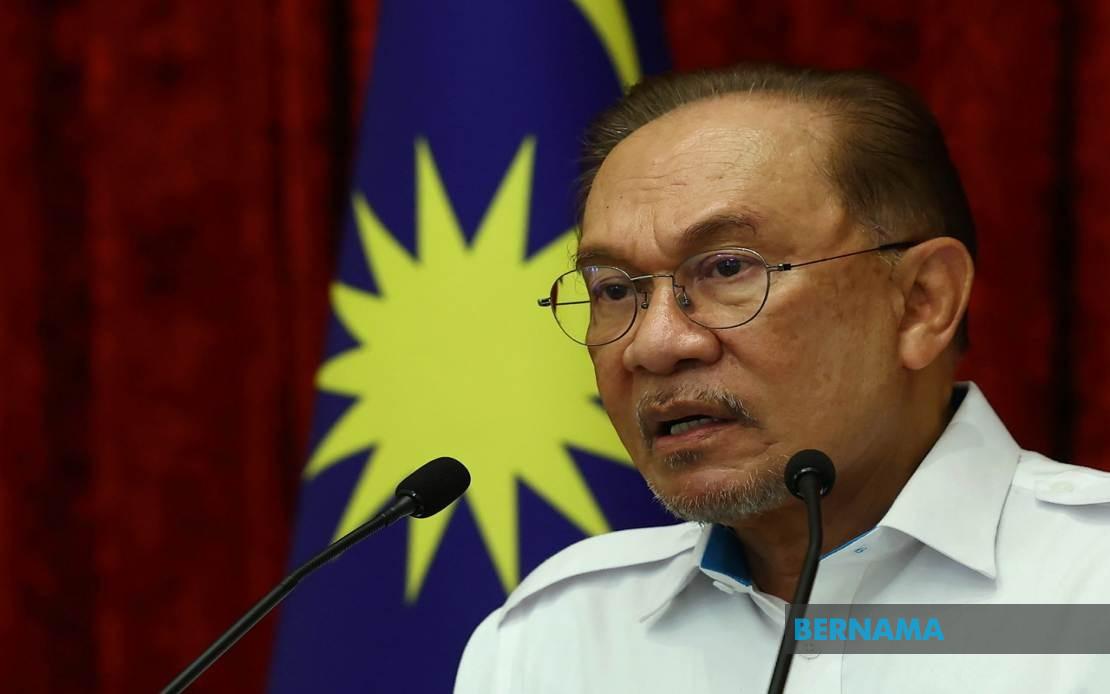
Prime Minister Datuk Seri Anwar Ibrahim has apologised for his absence at a special sitting of the Dewan Rakyat convened to examine the Royal Commission of Inquiry report into Tabung Haji's operations, a significant institution managing Islamic pilgrimage savings for Malaysian Muslims. Through a statement issued by his senior press secretary Tunku Nashrul Abaidah, the Prime Minister expressed his inability to be present physically at the parliamentary proceedings, though he pledged to maintain close oversight of the debate from his place of treatment.
The timing of the Prime Minister's absence coincides with his recovery from an elective surgical intervention. His personal medical team, led by Datuk Dr Asri Ranga Abdullah Ramaiah, announced that Anwar had undergone a laparoscopic procedure to address a para-umbilical hernia, a condition typically treated through minimally invasive surgical techniques designed to reduce recovery time compared to traditional open surgery approaches.
At 79 years old, the Prime Minister celebrated his birthday on the preceding day, with Tunku Nashrul acknowledging the outpouring of well-wishes and prayers from the public and official circles during this period of medical treatment. The press secretary emphasised that Anwar remains grateful for the sustained support and good intentions expressed by Malaysians, reflecting the broader concern for a leader who has navigated numerous health challenges throughout his political career.
The Prime Minister's commitment to monitoring the RCI debate remotely underscores the gravity he assigns to the Tabung Haji inquiry. This royal commission was established to investigate governance, financial management, and operational issues at the institution, which holds substantial sums in trust for over 1.9 million Malaysian Muslims saving for the Hajj pilgrimage. The RCI's findings and subsequent parliamentary discussion carry substantial implications for public confidence in Islamic financial institutions and hajj administration.
Official updates on the Prime Minister's recovery indicate progressive improvement in his overall health condition. Tunku Nashrul characterised his recuperation as proceeding according to medical expectations, with particular emphasis on ongoing physiotherapy administered under the care of a specialist medical team. This structured rehabilitation programme is crucial for restoring full physical capability and energy levels essential for demanding high office.
The parliament sitting itself represents an important accountability mechanism within Malaysia's democratic system. Through formal debate and scrutiny of the RCI findings, parliamentarians can interrogate the report's conclusions, propose remedial measures, and signal commitment to strengthening governance at Tabung Haji. For Malaysian Muslims who depend on the institution to safeguard their hajj savings, such legislative engagement offers assurance that systemic weaknesses identified by the commission will receive parliamentary attention.
From a governance perspective, the Prime Minister's decision to delegate physical participation while maintaining substantive engagement reflects pragmatic leadership during a period of temporary incapacity. By explicitly stating his intention to follow proceedings closely, Anwar signals that his temporary absence from the chamber should not be construed as diminished interest in or responsibility for the policy outcome. This approach allows the government to ensure continuity in oversight of a sensitive institutional inquiry.
The Tabung Haji inquiry carries particular weight given the institution's role in Malaysian society and its significance within the Islamic financial ecosystem. Any findings of mismanagement, investment losses, or governance failures would warrant serious remedial action to restore public trust. The institution serves as a crucial financial intermediary for Muslims planning to fulfil their religious obligation to undertake the Hajj, making its integrity essential to fulfilling this pillar of Islamic faith for Malaysian believers.
Parliamentary discussion of the RCI report also provides an opportunity for cross-party debate on broader questions of institutional oversight and financial stewardship in the Islamic finance sector. Opposition lawmakers may use the occasion to scrutinise past governance under different administrations, while government MPs can outline remedial measures contemplated by the current cabinet. Such exchanges, conducted transparently within parliament, contribute to public understanding of institutional challenges and official responses.
The Prime Minister's recovery trajectory will continue to be monitored by Malaysian observers and international diplomatic circles alike. Any extended period of medical incapacity raises questions about succession protocols and the continuity of decision-making authority, though current constitutional arrangements and cabinet structures provide mechanisms for governance to proceed. The Prime Minister's ability to resume full-time engagement with parliamentary duties remains an important consideration for political stability and investor confidence.

