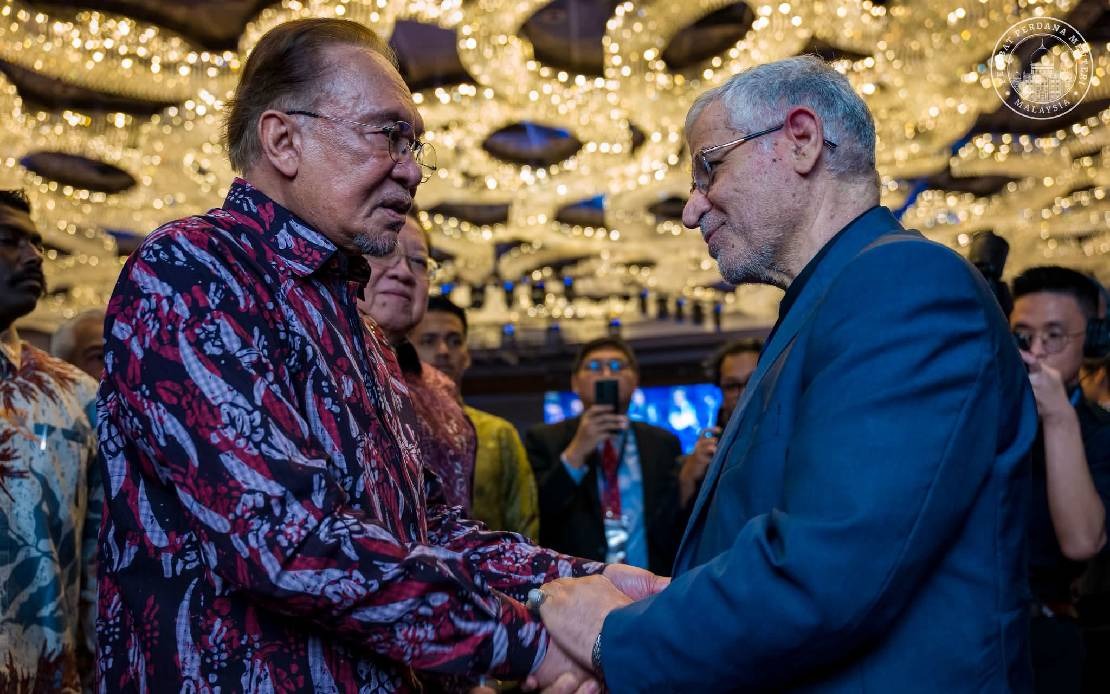
Prime Minister Datuk Seri Anwar Ibrahim has conveyed formal apologies to the Iranian Government for his inability to attend the state funeral and farewell ceremonies of Supreme Leader Ayatollah Ali Khamenei, citing unavoidable domestic commitments that prevented him from making the international journey. The Prime Minister communicated this message directly to Iranian Ambassador to Malaysia Valiollah Mohammadi during a bilateral meeting held on the sidelines of the 39th Asia-Pacific Roundtable conference in Kuala Lumpur, underscoring Malaysia's respect for the momentous occasion and the deep significance it holds within the Islamic world.
Khamenei, who was 86 years old, passed away on February 28 following a coordinated military assault involving the United States and Israel. His death marked the conclusion of a 35-year tenure as Iran's supreme authority, a position of immense spiritual and political weight that shapes not only Iran's domestic trajectory but also its regional standing and foreign policy orientation. The loss has reverberated across the Middle East and among Islamic nations globally, prompting high-level delegations and diplomatic gestures from numerous governments seeking to maintain cordial relations with Tehran.
The state farewell ceremony represents an elaborate six-day observance beginning on July 4, encompassing funeral processions through both Tehran and Qom, the two holiest cities in Shia Islam, before culminating in the interment at the Imam Reza Shrine in Mashhad on July 9. This extended ceremonial period reflects the profound reverence accorded to Khamenei's legacy within Iran and the broader Shia Islamic tradition, with expectations of substantial attendance from international delegations, religious leaders, and political figures from allied nations. The timing and magnitude of these ceremonies underscore the geopolitical implications of Iran's leadership succession during an era of heightened regional tensions.
To ensure Malaysia's dignified representation at these significant proceedings, Anwar designated Agriculture and Food Security Minister Mohamad Sabu as the official Malaysian delegate. This appointment carries symbolic importance, as it demonstrates Malaysia's commitment to maintaining substantive diplomatic engagement with Iran despite the Prime Minister's personal inability to attend. The selection of Mohamad Sabu, a senior cabinet figure with considerable standing within the government hierarchy, signals the seriousness with which Malaysia approaches its relationship with the Islamic Republic and reflects the protocol-conscious nature of high-level state funerals.
Anwar's public acknowledgment of his regrets, conveyed through a Facebook post addressing the broader Malaysian audience, reflects the delicate balance that nations must strike between domestic governance imperatives and international diplomatic obligations. The Prime Minister's transparent explanation of his unavoidable official commitments demonstrates an understanding that absence from such significant ceremonies requires proper justification, particularly given the historical ties between Malaysia and Iran rooted in shared Islamic heritage and longstanding diplomatic cooperation.
For Malaysia and other Southeast Asian nations, engagement with Iran carries multifaceted significance. Beyond the ceremonial and religious dimensions, the relationship encompasses trade, energy security, and regional stability considerations. Iran remains a consequential regional power with considerable influence over shipping lanes, energy markets, and geopolitical dynamics affecting Southeast Asian interests. Maintaining constructive diplomatic channels during periods of leadership transition becomes strategically important, as it preserves continuity in bilateral relations and positions Malaysia favourably for future engagement with Iran's new leadership structures.
The timing of these funeral ceremonies coincides with a period of considerable regional instability, with the Middle East experiencing elevated tensions from the Israel-Palestine conflict and wider great power competition. Malaysia's diplomatic presence at such occasions, even through delegated representation, affirms its status as a concerned stakeholder in Middle Eastern affairs and its commitment to the principles of international diplomacy and mutual respect among nations.
Khamenei's passing necessitates careful consideration within Malaysia's foreign policy framework. His successor will shape Iran's approach to critical issues including nuclear negotiations, regional proxy conflicts, and its overall stance toward Western powers and regional rivals. Malaysia's measured diplomatic response, including the formal apology and high-level delegation, positions the nation to maintain productive relations regardless of how Iran's new leadership determines its strategic priorities.
The broader context of Malaysia-Iran relations extends beyond ceremonial gestures. The two nations share historical connections spanning decades, encompassing cultural exchanges, trade partnerships, and cooperation within Islamic forums. The funeral provides an opportunity to reaffirm these bonds while also signalling Malaysia's principled approach to international relations, where respect for the sovereignty and traditions of other nations remains paramount. Through this episode, Malaysia demonstrates that diplomatic protocol and genuine relationship management require thoughtful attention even when immediate economic or security interests may not appear directly at stake.

